What Is POTS Treatment?
POTS treatment usually starts with salt, fluids, compression and graded exercise, then adds off-label medications such as beta blockers, ivabradine, midodrine, fludrocortisone or pyridostigmine (Chung, 2026). No drug is approved specifically for POTS, and most of 13 women in a 2026 interview study called their medications life-altering (Uppal, 2026a). Our team tests brain blood flow first, because in our team's view the fast heart rate is often rescuing it, then rehabilitates the reflexes that failed.
What Is POTS Treatment Trying to Fix?
When you stand, blood shifts toward your legs and belly, and pressure dips for a few seconds. In a tilt study of 11 people with POTS, blood flow velocity in the brain fell about 17 seconds before breathing rose, and before sympathetic activity and heart rate climbed (Del Pozzi, 2014).
Why Does Your Heart Rate Climb When You Stand With POTS?
Our team reads the faster heart rate as the body's rescue for that drop. As the clinic puts it, it's "the way that your brain and body prevent you from passing out." In our team's view, POTS is often that rescue succeeding. Orthostatic hypotension is the rescue failing, so pressure falls. Orthostatic cerebral hypoperfusion syndrome (OCHOS) is the same drop in brain flow without a large heart rate rise, and our POTS vs OCHOS page explains how POTS and OCHOS relate.
Our team reads heart rate as a lagging indicator: it tends to follow the brain blood flow problem rather than lead it, so lowering it with a medication can still leave you feeling bad. The question that guides treatment is what the heart rate is compensating for. A 2026 review argues the fast rate can also add to symptoms (Marchetta, 2026), and the medication section covers what that means.
Can Blood Pressure Be Normal While the Brain Is Short on Blood?
Your brain controls its own blood flow separately from your body's blood pressure, so a normal arm cuff reading doesn't prove the brain is getting enough. When the brain's own regulation fails, its flow turns "pressure passive" and follows whatever the body's pressure does. Our team calls cerebral perfusion "the second circulatory system that no one talks about." Our posture and brain blood flow page explains where neck position and testing fit in.
What Are the First-Line POTS Treatment Options?
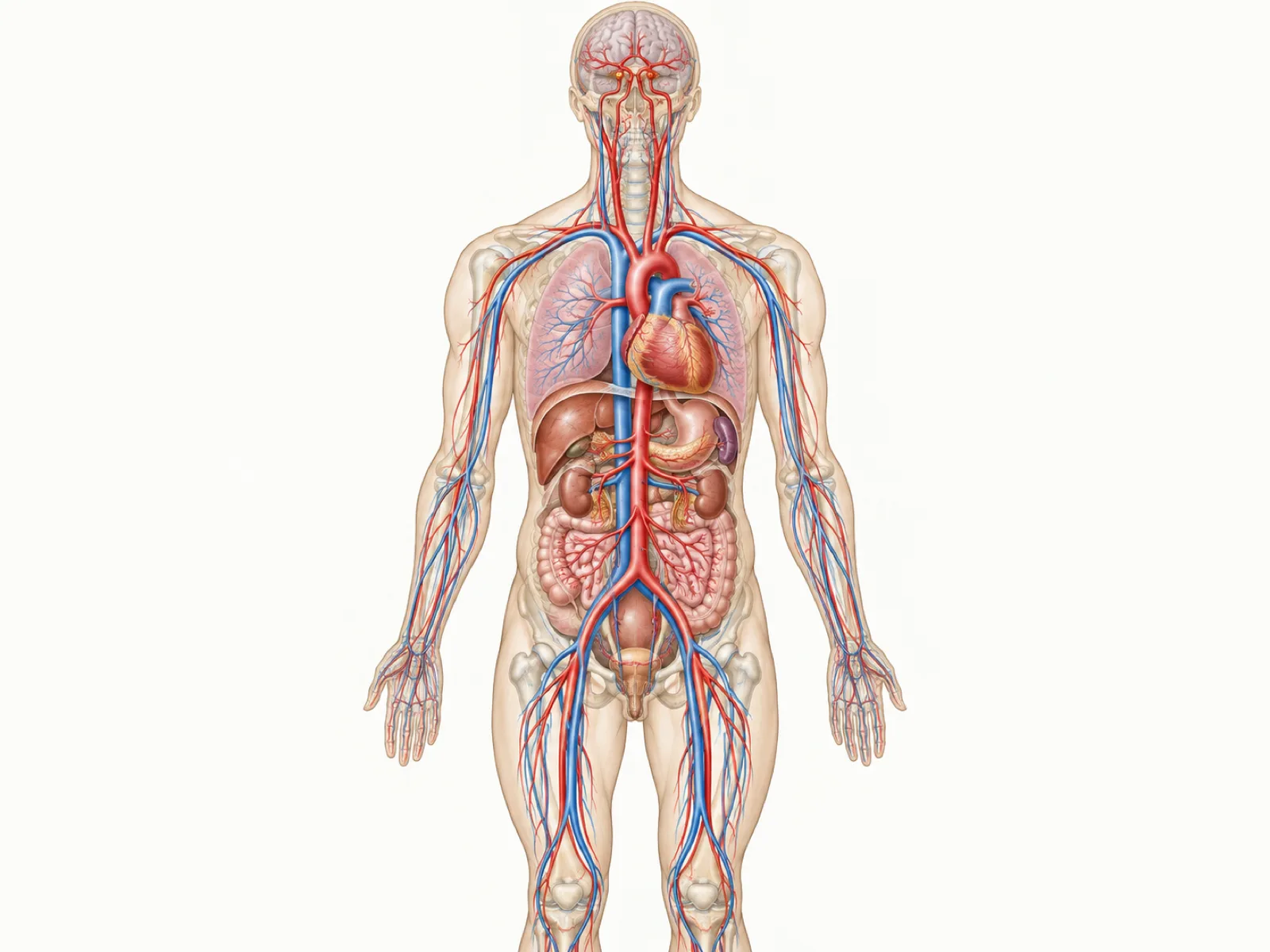
Standard first-line care is more fluid and sodium, lower-body compression garments, structured supervised aerobic training, and avoiding heat, dehydration and long periods of standing (Chung, 2026). A graded approach starts with salt, water, exercise and compression stockings and adds medication if it's needed (Lei, 2019). A 2021 expert consensus suggests 2 to 3 liters of water and 8 to 10 grams of salt a day, spread out (Vernino, 2021). Our team's foundations for everyone are food, water, rest, sunshine and exercise, and the other tools get added where testing says they belong.
What Helps During a POTS Flare?
In a flare, lie down with your legs raised. If you can't, cross your legs and tense your thighs or squat, moves a review lists for acute symptoms (Fu, 2018). Our team calls these crutches, because they hold things steady while the cause is found. Our POTS flare-ups page walks through a flare step by step.
Why Do Salt and Fluids Stop Working for Some People With POTS?
The standard advice to drink more and add salt assumes low blood volume. Studies do find lower plasma volume in many people with POTS, but in our team's view volume isn't the core problem for most, because relief fades and doses keep climbing. When the relief fades and the doses keep growing, the clinic reads that as a sign the target is off. Salt and fluids can still be "really great tools for some people" in the short term, in our team's words. Our POTS hydration page covers the salt and water details.
Which Medications Are Used for POTS?
Every POTS medication is used off-label, because none is approved by the FDA or Health Canada specifically for POTS (Lei, 2019). The options include beta blockers, ivabradine, midodrine, fludrocortisone and pyridostigmine, and small studies and a lack of large randomized trials limit the evidence for many of them (Chung, 2026).
In a qualitative study of 13 women, most called their medications "beneficial and life-altering," because they made basic activities, work, exercise and social engagement possible again (Uppal, 2026a). Our team describes medication as "a little push in one direction" that helps you through short stretches on the way to recovery.
In our team's view, that push is also the ceiling of medication. A 2026 scoping review found that brain fog, attention, processing speed and memory problems may persist despite standard drug and non-drug treatment (Prassanna, 2026), which is why our team measures brain blood flow directly. Our page on why dysautonomia treatments fail goes deeper on that gap.
Our team doesn't prescribe medication. Talk to your doctor before changing any.
POTS Medications Compared: Evidence and Ceiling
| Medication | What the evidence shows | Ceiling |
|---|---|---|
| Beta blockers (propranolol) | Propranolol lowered standing heart rate, and a low dose eased symptoms more than a high one (Raj, 2009). In a small trial, quality of life improved only after exercise training (Fu, 2011). | Our team's TCD observation is described below. |
| Ivabradine | Across 9 studies and 245 patients, standing heart rate fell 18.5 bpm, and palpitations, lightheadedness and exercise intolerance improved (Kumar, 2026). | The studies were small, varied and mostly observational (Kumar, 2026). |
| Midodrine | Across 14 studies and 968 patients, evidence was limited, particularly in adults. It may be a second-line or third-line option for people who stay symptomatic (Kwok, 2026). | Our team's TCD observation is described below. |
| Fludrocortisone | Fludrocortisone is on the list of POTS drug options (Chung, 2026). | Trial data specific to POTS are scarce. |
| Pyridostigmine | A 2026 review included it, but its abstract doesn't separate the drug's results (Marchetta, 2026). In 1 woman with genetic variants in acetylcholine processing, the COMPASS-31 score fell from 56.15 to 32 (Stephenson, 2026). | A single selected case can't show how many people respond. |
Do Beta Blockers Work for POTS?
Beta blockers are good at bringing the heart rate down, and for some people that also quiets palpitations, the sense of anxiety and the tremoring feeling in the chest. In a Vanderbilt trial, a low 20 mg dose of propranolol lowered standing heart rate and improved symptoms, and an 80 mg dose lowered heart rate further with less symptom benefit (Raj, 2009). In another trial, 19 patients took propranolol or placebo for 4 weeks, double blind, and then all of them trained for 3 months. Both lowered standing heart rate, and quality of life improved only after training. The authors concluded that exercise training is superior to propranolol at restoring upright hemodynamics, normalizing renal-adrenal responsiveness and improving quality of life (Fu, 2011).
Why Don't Beta Blockers Fix POTS for Some People?
As our team puts it, a beta blocker "doesn't necessarily solve the problem that the heart rate was trying to solve." If the faster rate is holding up brain blood flow, slowing it can remove that defense. Our team has seen this on transcranial Doppler: in some patients, brain blood flow drops further on standing after the heart rate is pulled down, and they report more fog and dizziness. In the clinic's experience, anti-hypertensive medications can do something similar, because bringing pressure down can pull brain perfusion down with it. In the video below, our team answers a patient on metoprolol who still has symptoms standing up.
Does Ivabradine Help POTS?
Ivabradine is a selective If channel inhibitor that lowers heart rate without affecting blood pressure or how hard the heart muscle contracts. In a 2026 meta-analysis of 9 studies and 245 patients, it lowered standing heart rate by 18.5 bpm (95% confidence interval 13.8 to 23.3). Symptom improvement, especially in palpitations, lightheadedness and exercise intolerance, was reported consistently across classic, pediatric, hyperadrenergic and post-COVID-19 subgroups. The authors noted that the evidence rests on small, varied, mostly observational studies and called for large randomized trials (Kumar, 2026).
A 2026 randomized crossover trial compared the 2 drugs directly in 28 women with POTS, with 4 weeks each on ivabradine, propranolol and placebo. Both drugs lowered peak standing heart rate (99 and 100 beats per minute, against 118 on placebo), with no significant difference between them, and ivabradine raised systolic blood pressure on tilting a little more than propranolol did (4.9 vs 1.9 mm Hg). The authors wrote that heart rate lowering was consistent, while symptom and quality-of-life effects were more selective (Uppal, 2026b). A letter on the trial, titled "Propranolol and Ivabradine Are Equally Effective in POTS But Not Equipoise in Real Life," pointed out that propranolol is considered safe in pregnancy and ivabradine isn't (Goff, 2026).
In the clinic's reading, a slower heart rate on ivabradine leaves the question of what the rate was compensating for unanswered, and the meta-analysis abstract reports no brain blood flow measure. Our team discusses where ivabradine fits in POTS in the video below.
Does Midodrine Help POTS?
Midodrine tightens the body's blood vessels, which pushes more blood back to the heart and, in theory, raises the pressure feeding the brain. Our team's testing shows that doesn't always happen. In some cases midodrine makes no difference to brain blood flow on standing, and in others it makes it worse. The drug changes systemic blood pressure, and in the clinic's view the problem it's meant to solve sits in the brain.
The research is thin. A 2026 systematic review of 14 studies and 968 patients found limited evidence for midodrine in POTS, especially in adults, and said it may be considered as a second-line or third-line therapy for people who stay symptomatic (Kwok, 2026).
In the video below, our team explains where midodrine helps most: when diastolic pressure drops on tilting, which the clinic reads as neuropathic firing. For people whose blood pressure is normal, the team questions prescribing a drug meant to raise a pressure that isn't low. The concern is that midodrine becomes a "kick the can down the road" drug. Used for a set period while you build strength through exercise, it "can be really useful." Ask your doctor what the drug is meant to fix and for how long.
Does Fludrocortisone Help POTS?
Fludrocortisone is on the list of POTS drug options alongside beta blockers, ivabradine, midodrine and pyridostigmine (Chung, 2026). Trial data specific to POTS are scarce, so its size of benefit, who responds and its effect on brain blood flow remain open questions. Ask your doctor what result they expect and how you'll both know whether it worked.
Does Pyridostigmine Help POTS?
A 2026 review of heart rate-lowering treatments included pyridostigmine, but its abstract doesn't separate the drug's results (Marchetta, 2026). The only drug-specific report we found is 1 woman, aged 30, with genetic variants in acetylcholine processing, whose COMPASS-31 score fell from 56.15 to 32 (Stephenson, 2026). A single selected case can't show how many people respond, who they are or how long the benefit lasts.
What Other Treatments Are Used for POTS?
The same 2026 review also covered clonidine and transcutaneous vagus nerve stimulation, and its abstract pools them with the other therapies, so there's no result for either one alone (Marchetta, 2026). Clonidine, methyldopa and guanfacine turn down sympathetic output from the brain, and our hyperadrenergic POTS page covers that research. Our SSRIs and POTS page covers antidepressants.
What Are the Side Effects of POTS Medications and Beta Blockers?
In the qualitative study of 13 women, side effects were common but generally manageable. Propranolol often brought fatigue and low blood pressure, and ivabradine often caused early headaches and visual symptoms that faded. Treatment burden, financial barriers and gaps in information persisted for many of the women (Uppal, 2026a).
In the ivabradine meta-analysis, side effects were infrequent and mild, most often brief visual disturbances (Kumar, 2026). In the midodrine review, high blood pressure occurred in 7 of 85 people (8.2%) across 3 studies, and the authors advised against midodrine for older patients with hypertension (Kwok, 2026).
The US prescribing labels on DailyMed add a few more. Midodrine's most serious risk is high blood pressure while lying down, so its label advises taking the last daily dose 3 to 4 hours before bedtime. Fludrocortisone increases potassium loss, and its label says dose and salt intake need monitoring to avoid high blood pressure, swelling or weight gain. Pyridostigmine's listed side effects include nausea, vomiting, diarrhea and abdominal cramps.
Does Lowering the Heart Rate Improve POTS Symptoms?
What Does the 2026 Research on Heart Rate-Lowering Therapies Show?
A 2026 systematic review pooled 20 studies with 707 participants. Every study reported less orthostatic tachycardia or tachycardia burden, and 17 of the 20 (85%) reported symptom improvement alongside it. The therapies were beta blockers, ivabradine, pyridostigmine, clonidine, transcutaneous vagus nerve stimulation and ablation. The authors concluded that excess tachycardia in POTS may be more than an epiphenomenon or a compensation, and may be a clinically relevant, treatable contributor to symptom burden (Marchetta, 2026).
Slowing the heart helps many people, and our team doesn't dispute that. The open question is how well the relief holds up. In the clinic's experience, a medication that drops the heart rate can bring some relief that will "crumble again" under exertion. In our team's view, averages can hide the people a treatment doesn't fit, which is why the clinic measures each person's response.
As our team puts it, "you can't treat POTS as one thing." Its neuropathic, hyperadrenergic and hypovolemic subtypes point to different mechanisms. Our hyperadrenergic POTS page covers the subtype where norepinephrine runs high.
Does Exercise Treat POTS?
In a retrospective review of cardiovascular exercise, 11 of 48 people (23%) in the treated group still met the heart rate criteria for POTS afterward, compared with 27 of 29 (93%) of people who were offered the program and didn't do it. Fainting became less frequent in the treated group, and their EuroQol quality of life score rose from 61 to 71 after 6 months (Gibbons, 2021).
In a 60-person randomized trial in COVID-19-induced POTS, tailored exercise didn't outperform standard care for health-related quality of life and was linked to less upright time, though several secondary outcomes improved in both groups (Svensson, 2026).
In our team's view, the mixed results point to dose and fit. Standard programs also start with exercise lying down (Fu, 2018), and the clinic adds ETCO2 or Doppler monitoring to set each session. Once the tissue starts to heal, the team adds load and builds strength. Our exercise advice that fails POTS, POTS exercise intolerance and POTS vs deconditioning pages cover the details.
Why Test Before Treating POTS?
Our team's concern is that care often jumps from symptoms straight to a treatment and skips the question of what caused them. The clinic works through 6 questions in order, and treatment comes last.
- The first question covers metabolic and immune function: blood sugar, thyroid, anemia and iron, B vitamins and hormones, with any acute infection handled first.
- Organ function is a safety check that covers a basic metabolic panel, kidney and liver function, D-dimer, an echocardiogram and an EKG, plus pulmonary function if you're short of breath and a brain MRI to rule out structural or bleeding causes.
- Neurological, vascular and structural links come next. In the team's words, "this is where most POTS patients live": neck or spine injury, the craniocervical junction and hypermobility.
- The life timeline lists every injury, illness, immunization, medication, surgery and anesthesia listed next to symptom onset, because a trigger can sit under the threshold until a second event tips it.
- The primary driver is the one part of the chain that drives the others. Heart rate is the usual compensation, and in hyperadrenergic POTS our team looks past the norepinephrine spillover to why it's happening in the first place.
- Interventions come last, with foundations for everyone, then crutches, then medications, then targeted rehabilitation, where the dose, the place and the method all have to be right.
Then the team runs the same tests again. As the clinic puts it, "you can do whatever that protocol is and then you can retest and you can see if it changed."
What Testing Does Our Team Run for POTS?
Our team's view is that heart rate and blood pressure alone are probably inadequate measures, so the clinic's autonomic battery goes further. It tracks heart rate and blood pressure continuously, along with end-tidal capnography, transcranial Doppler of the middle cerebral arteries, deep breathing, Valsalva, a tilt, dynamic cervical range of motion, cognitive testing, cervical proprioception and dynamic MRI or x-ray. The tilt runs at 70 degrees with Doppler recording, and about 10 minutes of tilt is enough for most people, the window the POTS criteria use (Vernino, 2021). Our tilt table test guide and autonomic testing page walk through each test.
Should You Stop POTS Medication Before a Tilt Test?
Where possible, the clinic prefers that you pause compression garments and medications before the test, and that's your doctor's call. A Doppler test before and after a change shows whether your brain blood flow on standing moved, so our team tilts first and then checks what a medication changes.
See how we test it in 3D
Follow brain blood flow as you go from lying down to upright.
Take the 3D TourHow Does Our Team Treat the Brain Side of POTS?
Our team sees neurorehabilitation as the primary treatment, because it targets the mechanism underneath the symptoms. The brain-side inputs come first, ahead of the legs: vestibular, proprioceptive, visual and postural. Our chiropractic neurologists stress that you can choose the right method and still get it wrong if the dose, the place or the way it's done is off. There are no published trials of the clinic's full protocol yet. Our team tracks each person's response with the same tests it ran at the start, and our POTS recovery page covers what recovery studies show.
What Does the Brain Need to Recover From POTS?
The brain needs 3 things, like a recipe, in the right dose and the right order: oxygen, then glucose, then stimulation. Neurons depend on blood to deliver oxygen and glucose, and they have to stay matched to that supply, a link called neurovascular coupling. Oxygen and glucose without stimulation aren't enough. As our team puts it, "all we've done is just fill up the gas tank but nobody's turned the key."
Stimulation is dosed to the capacity of the cells. Too much overworks them, and too little lets them atrophy. If you feel worse after neurological or vestibular rehab, the dose may be above your capacity, and the fix is fewer reps and easier work.
Can You Retrain the Reflexes That Control Blood Flow?
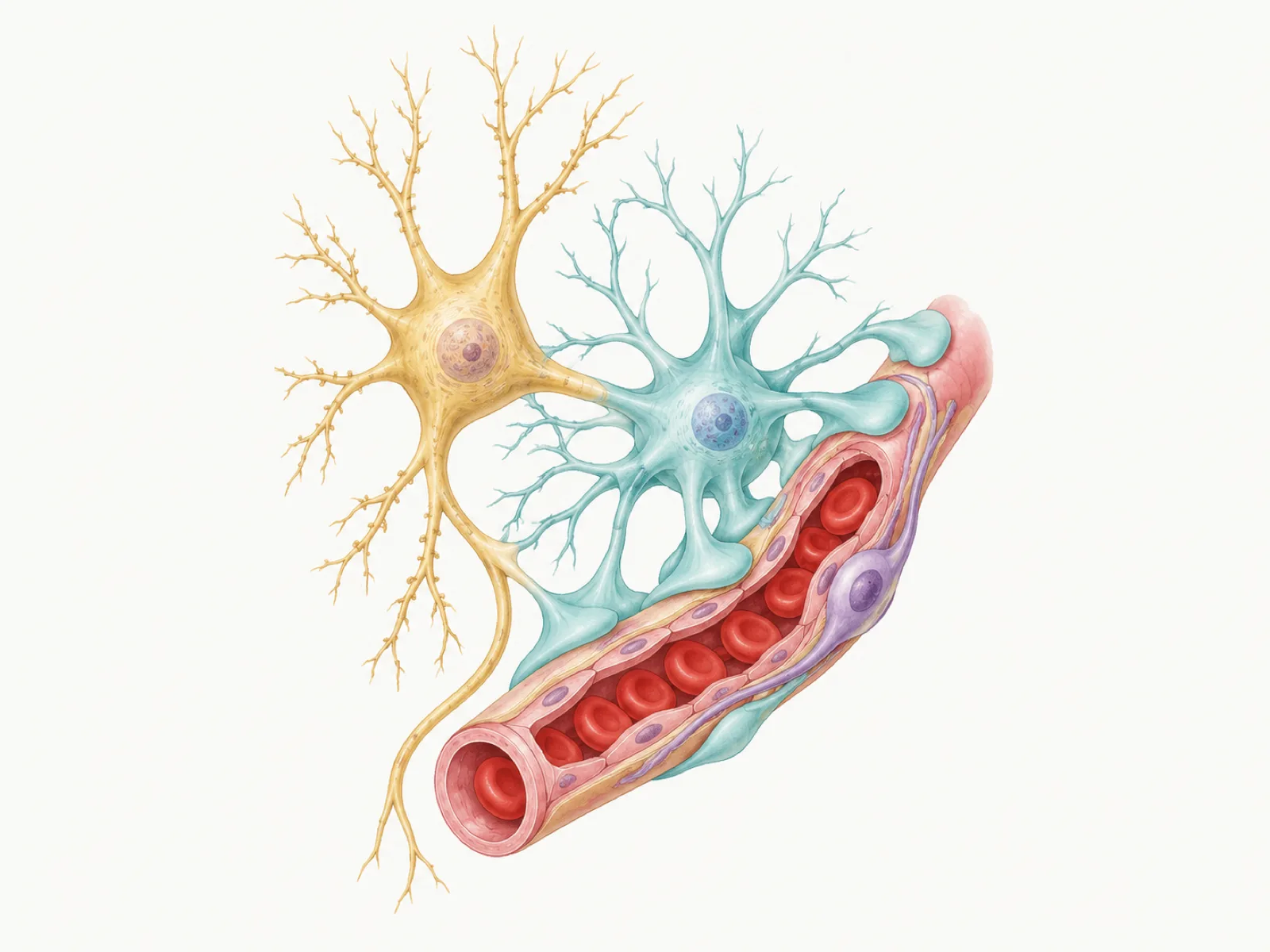
Your body relies on 4 control systems working together: the baroreflexes, vasoreactivity to CO2 and pH, cerebral autoregulation and neurovascular coupling. In our team's view, the sensors that close the loop may respond too slowly. The clinic finds the point where the system can respond, starts there and works back up. As the team puts it, "if you can learn how to do math, if you can learn how to read and write, if you can learn how to swing a baseball bat or play a violin, then chances are you can learn how to do these simple reflexes."
What Is Neurological Stimulation for POTS?
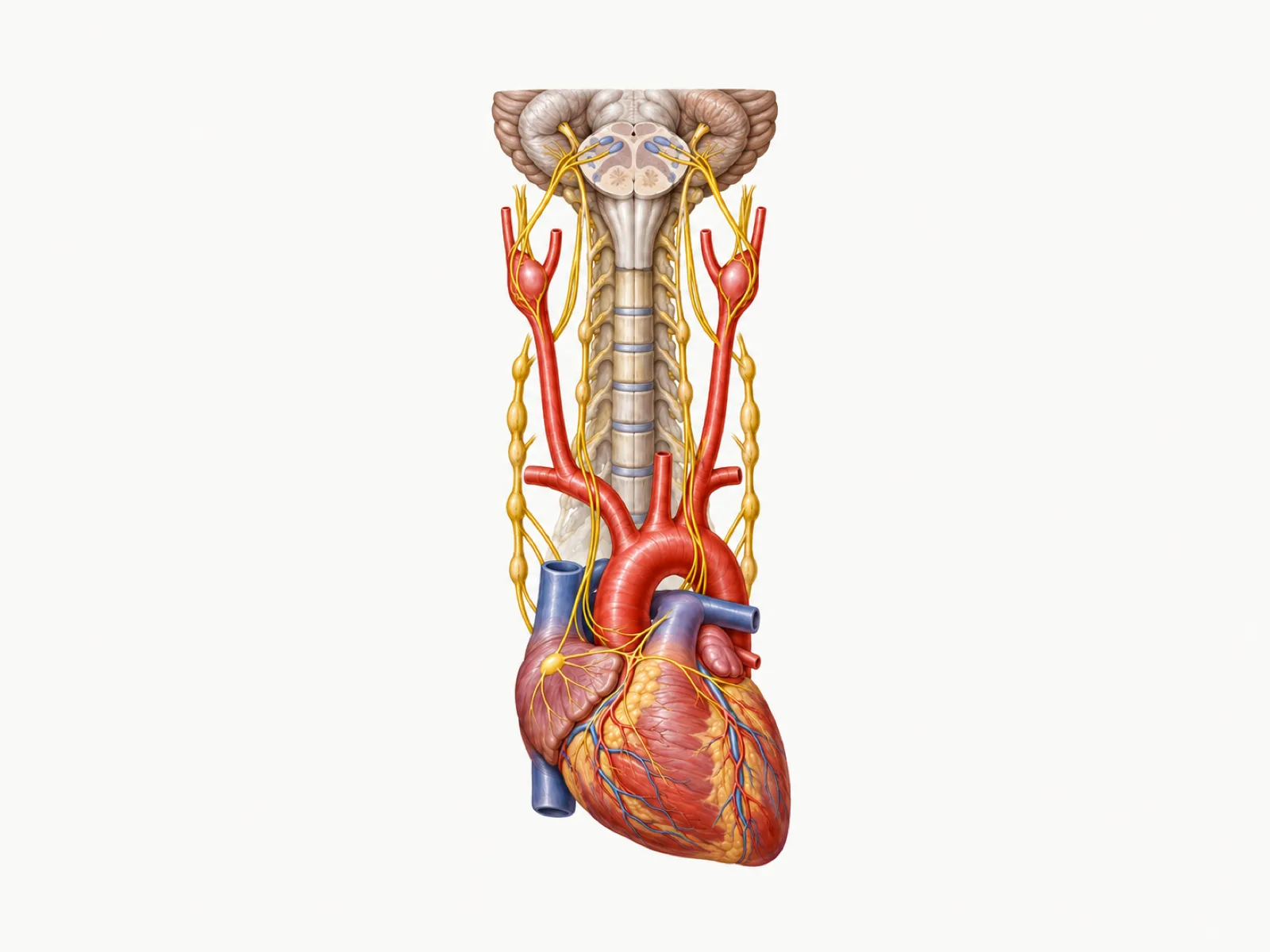
Neurological stimulation means stimulating peripheral nerves through the skin. Our team describes it as non-invasive and easy to do, and once it's known to work for you, the clinic can help you use it at home. In our team's view, people who don't feel their body well can have uneven brain blood flow, and "in order to move something you have to be able to feel it first."
What Does Vestibular Rehabilitation Do for POTS?
Vestibular rehabilitation uses exercises that retrain how the brain uses balance signals, which also feed blood pressure control when you move. One of the clinic's tools is whole-body rotation in a GyroStim, used to improve the brain's sense of where the body is in space, which our team links to the automatic delivery of blood to the head. The movements are "really slow calculated movements," and the team adds them when progress hits a ceiling tied to brainstem integration. Before that, the clinic checks subjective visual vertical and aims for readings under about 2 degrees. Our vestibular dysfunction types page covers the vestibular side in more detail.
Does Hypermobility Change POTS Treatment?
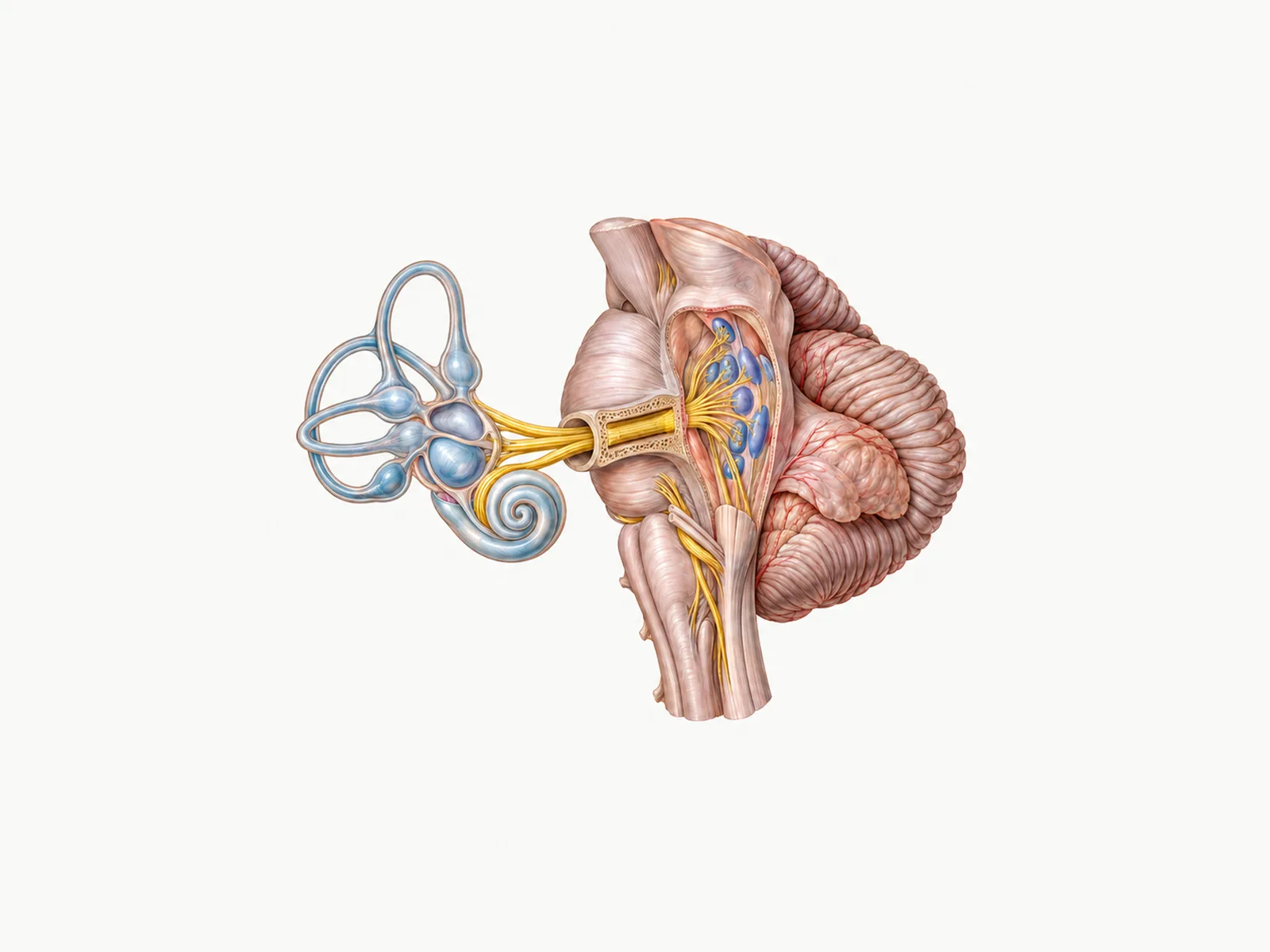
Our team finds that some people who seem hypermobile have low muscle tone instead, so the clinic checks tone before assuming the joints are the whole story. In our team's view, putting load through the muscles, ligaments and tendons lights up the brain. As our team puts it, the problem is "not necessarily gonna be fixed by what you put into it but it's gonna be fixed by the load that you put on it." A good first exercise is an isometric hold at about 20% of your strength for a count of 10. Check with your doctor before trying it.
In our team's view, the neck's tissue needs to keep its integrity "so that people can control the movements of their head without restricting blood flow." Our neck as part of the problem page covers that link.
What Should You Eat With POTS?
There's no single POTS diet. For some people, nutrition sits at the core of what's going on, through deficiencies, anemia and blood sugar problems, and the metabolic checks in the first of the 6 questions catch those. Our team asks one question: does the way you eat have a drastic impact on your symptoms?
Our default recommendation is meat, vegetables, nuts and seeds, which means whole, unprocessed food with little or no added sugar. Elimination diets can bring short-term relief. In our team's experience, cutting a food without addressing the sensitivity behind it often just moves the reaction to another food.
Not sure where to start? The free POTS Roadmap walks through the 6 steps our team uses to find what's driving symptoms and where to begin.
Get the free RoadmapPOTS Treatment FAQ
How do you treat POTS without medication?
Standard non-drug care is more fluid and salt, lower-body compression, exercise that starts lying down, and counter-pressure moves such as leg crossing when symptoms hit (Chung, 2026; Fu, 2018). Our team adds brain-side rehabilitation, with testing first so each step targets the cause that testing finds.
How strong is the evidence behind non-pharmacological POTS treatment?
It's modest: the best exercise data come from 1 small trial of 19 people (Fu, 2011), a retrospective review where 23% of exercisers still met POTS criteria versus 93% of non-participants (Gibbons, 2021), and a 60-person randomized trial in COVID-19-induced POTS that found no quality-of-life edge (Svensson, 2026). A 2026 JAMA review says many therapies rest on small studies (Chung, 2026).
What is the best beta blocker for POTS?
In a Vanderbilt trial, a low 20 mg dose of propranolol lowered standing heart rate and improved symptoms, and an 80 mg dose lowered heart rate further with less symptom benefit (Raj, 2009). Your doctor chooses the drug and the dose, so talk to them before changing anything.
Is ivabradine better than a beta blocker for POTS?
Neither came out ahead in a 2026 randomized crossover trial of 28 women with POTS: both lowered peak standing heart rate by a similar amount, and ivabradine raised systolic blood pressure on tilting a little more (Uppal, 2026b). The authors wrote that symptom and quality-of-life effects were more selective than the heart rate effect, which supports choosing the drug person by person.
Can you treat POTS at home?
Many first-line steps happen at home, including salt, fluids, compression, positioning and graded exercise (Chung, 2026). Our team adds that neurological stimulation can move home once it's known to work for you, which comes after testing.
Which medications can make POTS worse?
In our team's testing, beta blockers and other blood pressure-lowering drugs can pull brain blood flow down further in some people, and midodrine makes it worse in some. These are clinic observations from testing, so talk to your doctor before changing any medication.
Sources
- Lei LY, Chew DS, Sheldon RS, et al. Evaluating and managing postural tachycardia syndrome. Cleveland Clinic Journal of Medicine. 2019;86(5):333-344. doi:10.3949/ccjm.86a.18002
- Del Pozzi AT, Schwartz CE, Tewari D, et al. Reduced Cerebral Blood Flow With Orthostasis Precedes Hypocapnic Hyperpnea, Sympathetic Activation, and Postural Tachycardia Syndrome. Hypertension. 2014;63(6):1302-1308. doi:10.1161/HYPERTENSIONAHA.113.02824
- Fu Q, VanGundy TB, Shibata S, et al. Exercise Training Versus Propranolol in the Treatment of the Postural Orthostatic Tachycardia Syndrome. Hypertension. 2011;58(2):167-175. doi:10.1161/HYPERTENSIONAHA.111.172262
- Marchetta M, Hogwood AC, Golino M, et al. Heart Rate-Lowering Therapies for Tachycardia in Postural Orthostatic Tachycardia Syndrome: A Systematic Review. Mayo Clinic Proceedings. Published online October 21, 2026. doi:10.1016/j.mayocp.2026.10.007
- Kumar V, Qadri SH, Nardelli da Silva AB, et al. Ivabradine in the Treatment of POTS Before and After COVID-19 Pandemic: A Systematic Review and Meta-Analysis. Journal of Cardiovascular Pharmacology. 2026;88(2):115-122. doi:10.1097/FJC.0000000000001823
- Kwok CS, Lee S, Afzal A, et al. Midodrine Hydrochloride as a Treatment for Postural Orthostatic Tachycardia Syndrome: A Systematic Review and Meta-Analysis. Journal of Cardiovascular Pharmacology. 2026;88(2):96-103. doi:10.1097/FJC.0000000000001822
- Chung TH, Raj SR. Postural Orthostatic Tachycardia Syndrome (POTS). JAMA. 2026;336(13):1149-1164. doi:10.1001/jama.2026.14809
- Uppal J, Deol P, Giri P, et al. Do Medications Actually Help in Patients with Postural Orthostatic Tachycardia Syndrome?: A Qualitative Study. CJC Open. 2026;8(5):543-549. doi:10.1016/j.cjco.2026.01.002
- Prassanna AR. Persistent Cognitive Dysfunction in Postural Orthostatic Tachycardia Syndrome: A Scoping Review of Neural Mechanisms, Interventions, and Critical Research Gaps. Cureus. 2026;18(7):e112862. doi:10.7759/cureus.112862
- Gibbons CH, Silva G, Freeman R. Cardiovascular exercise as a treatment of postural orthostatic tachycardia syndrome: A pragmatic treatment trial. Heart Rhythm. 2021;18(8):1361-1368. doi:10.1016/j.hrthm.2021.01.017
- Svensson AM, Svensson-Raskh AU, Törnberg AC, et al. Effectiveness of Individualized Physical Exercise in COVID-19-Induced Postural Orthostatic Tachycardia Syndrome. JACC: Advances. 2026;5(11):103328. doi:10.1016/j.jacadv.2026.103328
- Stephenson KM, Foster B, Blitshteyn S. Genetic variants in acetylcholine processing and significant improvement with pyridostigmine in a patient with postural orthostatic tachycardia syndrome: a case report. European Heart Journal - Case Reports. 2026;10(2):ytag033. doi:10.1093/ehjcr/ytag033
- Raj SR, Black BK, Biaggioni I, et al. Propranolol Decreases Tachycardia and Improves Symptoms in the Postural Tachycardia Syndrome: Less Is More. Circulation. 2009;120(9):725-734. doi:10.1161/CIRCULATIONAHA.108.846501
- Fu Q, Levine BD. Exercise and non-pharmacological treatment of POTS. Autonomic Neuroscience. 2018;215:20-27. doi:10.1016/j.autneu.2018.07.001
- Vernino S, Bourne KM, Stiles LE, et al. Postural orthostatic tachycardia syndrome (POTS): State of the science and clinical care from a 2019 National Institutes of Health Expert Consensus Meeting - Part 1. Autonomic Neuroscience. 2021;235:102828. doi:10.1016/j.autneu.2021.102828
- Uppal J, Deol P, Giri P, et al. A Randomized Crossover Trial of Ivabradine, Propranolol, and Placebo in Postural Orthostatic Tachycardia Syndrome. JACC: Advances. 2026;5(6):102795. doi:10.1016/j.jacadv.2026.102795
- Goff A, Nguyen C, Hunyor I, et al. Propranolol and Ivabradine Are Equally Effective in POTS But Not Equipoise in Real Life. JACC: Advances. 2026;5(9):103151. doi:10.1016/j.jacadv.2026.103151
- Midodrine hydrochloride tablets, prescribing information. DailyMed, US National Library of Medicine. Label published October 14, 2026. dailymed.nlm.nih.gov
- Fludrocortisone acetate tablets, prescribing information. DailyMed, US National Library of Medicine. Label published July 6, 2026. dailymed.nlm.nih.gov
- Pyridostigmine bromide tablets, prescribing information. DailyMed, US National Library of Medicine. Label published October 23, 2026. dailymed.nlm.nih.gov
Get Your POTS & Dysautonomia Roadmap
A free guide to understanding what's actually happening in your brain, and what to do about it.
Get the Free Roadmap