POTS & Dysautonomia

POTS Treatment That Targets the Neurology Behind the Symptoms

We measure and train the systems that regulate blood flow to the brain — the variable standard POTS care never looks at.


Is this you?

If any of these sound familiar, you're in the right place.

Schedule Your Appointment
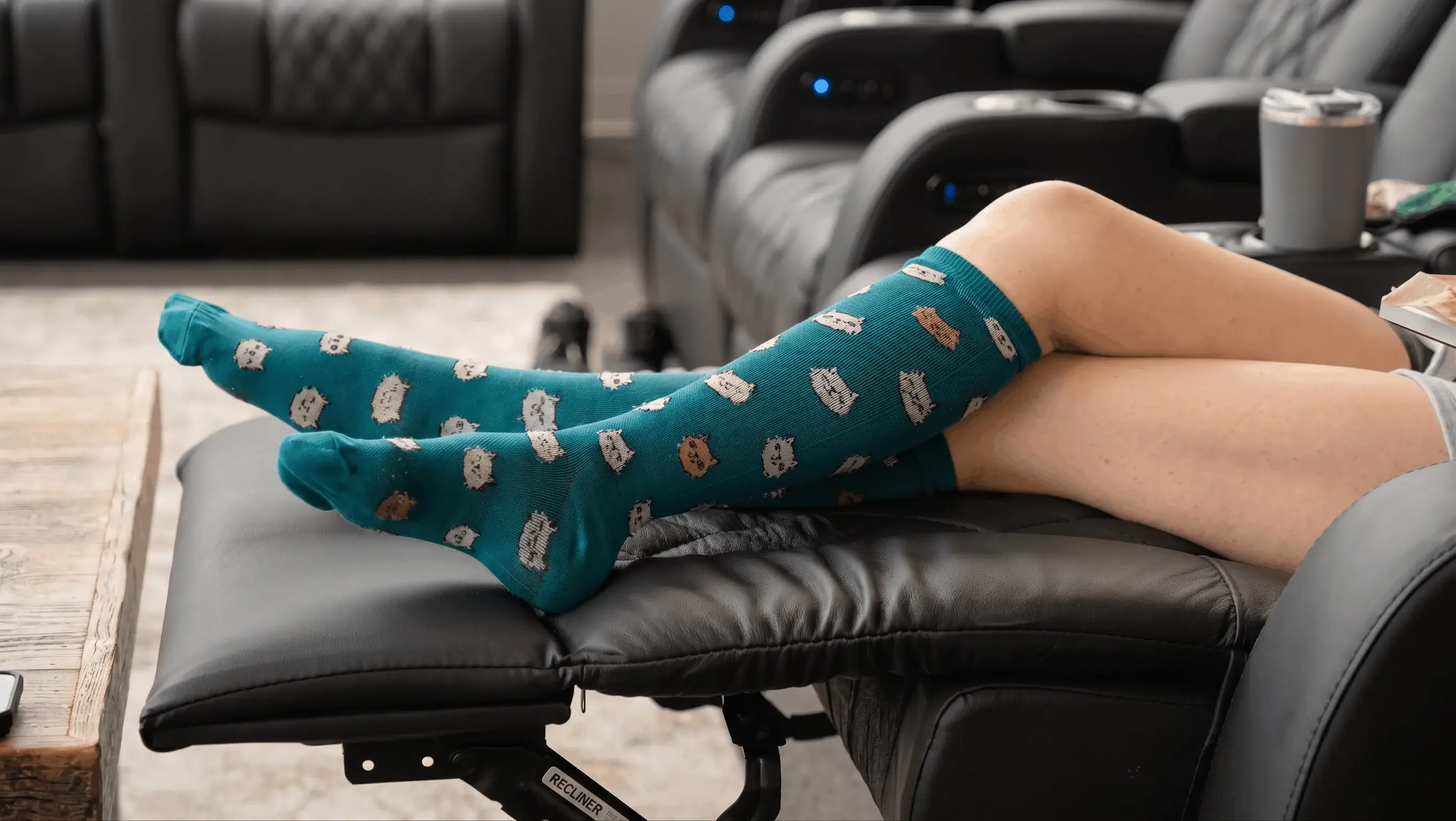
Keiser Clinic patient in waiting room recliner

Most POTS workups look to confirm a label. Ours is built to explain the driver.

You may be familiar with what is conventionally standard in autonomic testing: HR/BP, labs, maybe a tilt table test. While that is helpful to rule problems out and validate patients with a label, it is often not enough to answer the questions that actually matter.

Data Callout
69% of POTS patients are initially misdiagnosed with anxiety. Why? Because when doctors only measure arm-cuff vitals, a racing heart looks like anxiety — so they stop looking, and nobody measures the failures happening inside the brain.

It starts with your first week.

Your first day at the clinic is a full day of neurological testing. It measures the systems that regulate blood flow to your brain, not just heart rate and blood pressure. From there, you proceed directly into personalized treatment for the rest of your first week.

Schedule Your Appointment

What to expect

  • A full day of neurological and autonomic testing on your first day
  • Personalized treatment built on your findings for the rest of your visit
  • A reservation holds your first week

What your diagnostic day includes

Our diagnostic workup brings cutting edge methods used in leading dysautonomia research labs, but most advanced autonomic centers still don't have them in routine practice. We do — and we use these methods with every patient.

A Note From Our Team

We know what it feels like to be on the other side of this.

Several of our doctors have been patients or caregivers themselves. They know what it feels like to be dismissed and sent home with no answers. When you become a patient here, you have a care team of doctors who understand where you've been — and what it actually takes to get better.

Your treatment plan doesn't exist until your data does.

Your rehabilitation is not a program that existed before you walked in the door. Nothing is prescribed before we know exactly where the failure is and what's driving it. Instead of guessing with off-label medications, we prescribe an individualized neurological treatment — dose-specific to your needs.

We know POTS is nuanced.

Whether you're neuropathic, hyperadrenergic, or hypovolemic — we strip away the labels and identify the mechanism that's failing in you specifically, so that we can treat the actual problem rather than the presentation of it.

Your racing heart is not the problem.

It's your body's best attempt to solve one. When the brain isn't getting enough blood, the heart races to compensate. That's not disease, that's adaptation — we restore the brain's ability to control its own blood supply, so the heart no longer needs to compensate.

We objectively measure progress.

Subjective improvement can be placebo or temporary. We don't just rely on how you feel to measure progress. We retest you objectively throughout your visit, comparing data points to verify real measurable improvement.

After you leave.

Virtual follow-up is included with your visit. Your protocols go home with you, and we're here to support you along the way. If questions come up or you need guidance, you can reach out through your patient portal for feedback, protocol adjustments, and ongoing support, helping you stay consistent with what's working until you no longer need us.

Most patients who come to us carry more than one of these diagnoses. These pages exist because that is often how people find us, not because we treat each diagnosis on a separate track. Our testing measures what your brain and nervous system are actually doing. The label you arrive with does not change that.

"Standard treatment has a ceiling. We work above it — in the brain."

Some of what you may be prescribed during your visit

Vestibular Rehabilitation

Vestibular Rehabilitation

Retrains the balance system when dizziness, motion sensitivity, visual instability, or autonomic symptoms are being worsened by vestibular dysfunction.

Visual-Spatial and Oculomotor Retraining

Visual-Spatial & Oculomotor Retraining

Targets the visual control systems that stabilize gaze and helps the brain build a more accurate map of the body in space. This can reduce neurostrain, disorientation, overload, and instability under cognitive and sensory load.

Peripheral Nerve Stimulation

Peripheral Nerve Stimulation

Uses targeted stimulation, including tools like the Neuro20 suit, to improve sensory input from the body and give the nervous system better information to regulate from.

Cervical and Manual Therapy

Cervical & Manual Therapy

Addresses mechanical strain and poor sensory signaling coming from the neck and upper cervical region, where instability can interfere with brainstem function, and autonomic regulation.

Neuromuscular Retraining

Neuromuscular Retraining

Rebuilds cleaner movement patterns so activity becomes more tolerable and less likely to trigger compensation, overload, or crash responses.

Cognitive and Dual-Task Training

Cognitive & Dual-Task Training

Challenges the brain's ability to regulate under mental load, helping improve function when symptoms flare with thinking, multitasking, or divided attention.

Exercise Rehabilitation

Exercise Rehabilitation

Uses carefully dosed activity to improve tolerance and function without relying on generic exercise protocols like CHOP or GET that ignore cerebral blood flow, autonomic limitations, and issues related to fatigue.

Photobiomodulation

Photobiomodulation

Uses red light and laser therapy to support tissue recovery, reduce irritation, and complement neurological rehabilitation in areas that need targeted stimulation.

Magnetic Therapy

Magnetic Therapy

We use the non-invasive Magnetolith in patients with ligament laxity, including hEDS, to treat tendons and joints that may be contributing to instability in joints or the upper cervical spine.

A Different Approach To POTS Care

Category Conventional Care The Keiser Clinic
Framing Blood pooling reduces circulation, so the heart rate spikes to compensate The brain is not regulating blood flow correctly, so the heart and autonomic nervous system compensate downstream. The dysfunction begins upstream.
Neurology Normal MRI = no further neurological workup ordered Identifies functional mechanisms obstructing neurovascular regulation — which provides direction for care
Outcome Focus Symptom management Restoring the brain's ability to regulate blood supply — effectively restoring the whole physiological system
Treatment Lifestyle adjustment, exercise, sodium, compression, and off-label medications (beta-blockers, ivabradine, fludrocortisone) Targeted neurological dosages — precisely calibrated vestibular, oculomotor, and proprioceptive therapies to drive neuroplastic restoration
Primary Metric Systemic vitals (HR/BP) as proxy for autonomic health Cerebral blood flow velocity + EtCO₂ — measuring what the brain is actually receiving, in addition to HR/BP.
Progress Tracking Patient self-report, symptoms Objective retesting — if the data does not change, the protocol does
Breathing Breathwork for relaxation. Looks at O₂ only, ignores CO₂ CO₂ monitoring is a core diagnostic and treatment tool — it strongly influences cerebral blood flow and symptom generation.
Doctor Access 15–45 minute specialist visits spaced months apart, often after long waitlists — leaving long gaps in feedback, and little room for real-time adjustment. Multiple treatment sessions per day with a full clinical team during your stay, allowing rapid iteration, daily refinement, and direct follow-up after you leave.

Reserve your first week. Stay as long as you need.

We intentionally see a small number of patients each week. When you're here, you have a full clinical team — not a waiting room, not a rotating roster of one-off appointments.

The first day is your full diagnostic evaluation. The rest of your stay is personalized treatment built around what we find, and we consistently retest to measure your progress objectively rather than going on how you feel. Most patients stay 2 to 4 weeks, and some stay longer. You go home with a program built from your own results, and that program is what keeps the progress going. That's true whether you stay 2 weeks or 6.

We don't run a copy-and-paste POTS rehabilitation program. We become your care team and design a protocol specific to you.

Schedule Your Appointment
2,000+
patients helped on their recovery journey
No Supplements
We do not build your care around supplement protocols. By the time most patients reach us, they have already tried that.
Full Evaluation
You'll have the most comprehensive neurovascular workup available for POTS, and we build your treatment directly on what it reveals.
Common Questions

Before you reach out, you probably have questions.

We do not treat with medications, supplements, or brain retraining programs. If you've tried all of those and they didn't work, we offer something different.What we do here is strip away your diagnosis label and assess how your nervous system performs, compensates, and breaks down in real time and under different loads of stress. Our clinic combines methods from various disciplines such as neurology, vestibular therapy, physical therapy, chiropractic, and more.The treatment methods often seem simple, and they have to be, in order for patients to continue them at home. Where we get specific is in the dosage, the consistency of coordinated care over time, and our ability to objectively measure progress by retesting.
That is one of the most common concerns we hear, especially from patients who have been mostly housebound or bedridden. Many of our patients were convinced they were too unwell to make the trip, right up until they arrived. Our team can help you think through the logistics, timing, and lodging options that make the visit as manageable as possible. Our clinic is set up to meet you where you are, with rest breaks, recliners, and a pace that accounts for the reality of your condition.If a visit isn't possible right now, we give away everything we know, publicly. You can start with the POTS Roadmap and work through it with your care team at home. There are hundreds of educational videos on our YouTube channel, and a community of patients joins us live every Thursday to learn and ask questions. We publish the thinking behind our testing and our treatment so you and your doctors can decide what applies to you, even if we never meet.
You can verify whether your insurer may reimburse you for your care with us by asking them which of our diagnostic and treatment codes they cover. While we're not contracted with any insurance carrier, many patients have out-of-network benefits that make them eligible for reimbursement. You do not need a referral or insurance approval to be treated here, and HSA and FSA funds are accepted.
We don't offer doctor consultations by phone or video, because we can't form a doctor-patient relationship with you until we've evaluated you in person. You can learn more about why on our how this works page.
You're a unique case, so we couldn't be honest if we published a single success rate. Those numbers average together people with different mechanisms, severities, and years of illness. When a study reports improvement, it often reflects how many participants happened to fit a one-size-fits-all protocol. That tells you very little about your own case. If you fit neatly into a bucket, you wouldn't be here still looking for answers.This also asks something of you. Most patients arrive here having spent years working hard to get better, but lacking an aim for that effort. The patients with the best outcomes bring that work ethic, and we give it an aim. We work hard together while you're here, and you leave with what you need to continue making progress at home.
By the time you're seriously considering visiting us, you have likely already been through a lot, physically, emotionally, and financially. You will find no false hope here. If we don't believe we can help, we'll tell you. Our roadmap shows how we think and keeps nothing we do secret.The nervous system changes the way fitness does, through repeated work over time. You get the best care possible while you're with us, and you go home with a program. Your consistency with it takes you the rest of the way.Many doctors on our staff have either had these conditions themselves or cared for someone who did. You are not alone, and you won't be after you return home.

You deserve better
neurological testing.

Schedule Your Appointment