Educational articles about neurological conditions and what actually works
Written by our team to help you understand complex neurological conditions and our diagnostic approach.


Written by our team to help you understand complex neurological conditions and our diagnostic approach.

Medications can slow a racing heart, but they don't fix why it races. See what each option does, what the evidence shows and where our team's rehab fits.
Read Article
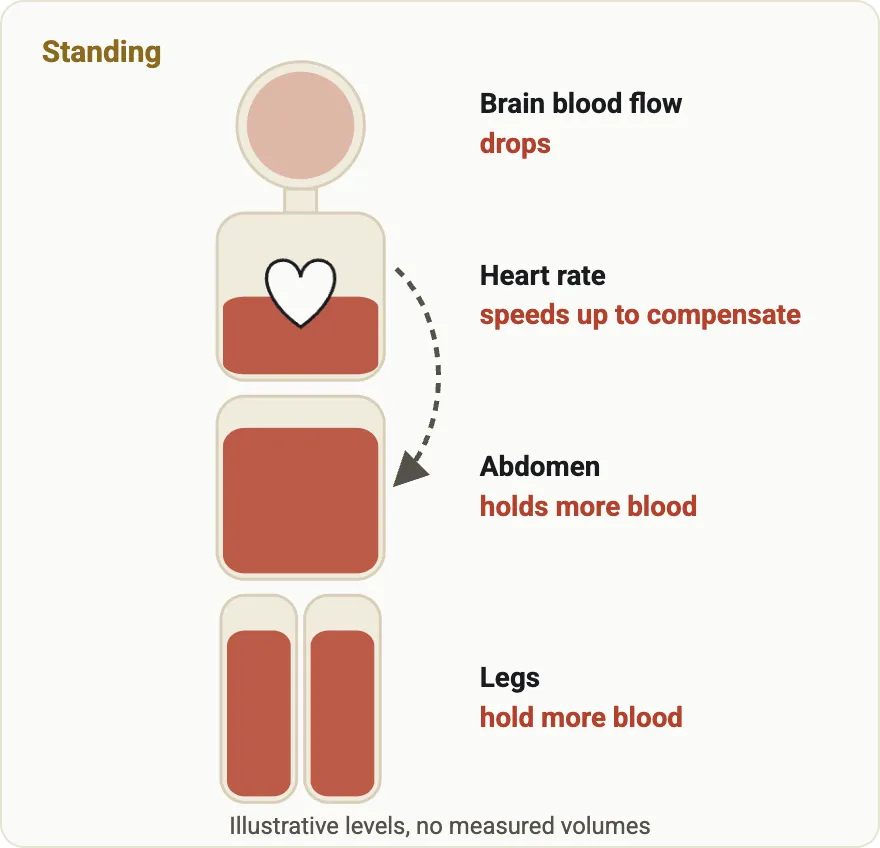
Does salt help POTS? See the consensus doses for salt and water, what studies show about how much and how fast, and what salt and water can miss.

What causes the high heart rate in POTS? The heart speeds up to rescue blood flow to your brain. Why it happens, what beta blockers reveal and what to measure.

The bedside neurological exam our team pairs with autonomic testing: pulses, reflexes, eye movements, and what each reveals about POTS and dysautonomia.

For most people with POTS, low blood volume is not the core problem. Here is why salt and water hit a ceiling, and what fluid dumping really means.

Can POTS be cured? Many recover significantly or fully. 'Cure' means recalibrating a nervous system that lost its precision, and research shows it can.

Why POTS and dysautonomia cause nausea, bloating, and gastroparesis. The gut isn't broken; the brain's control of it is. The autonomic-GI connection.
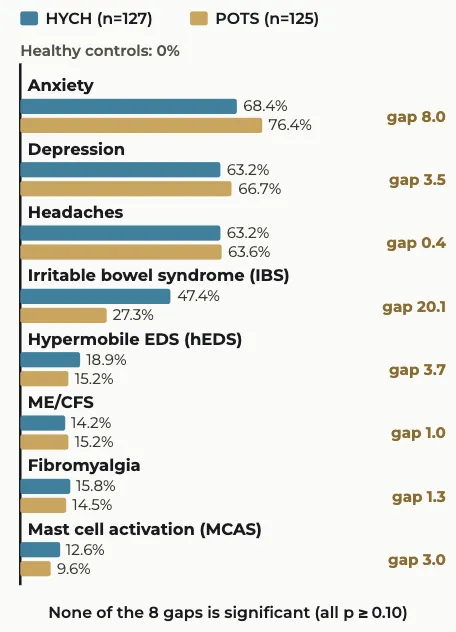
Hypocapnia (low CO2) narrows brain arteries. On standing, that's HYCH: POTS symptoms without the heart rate jump. Here's how the clinic tests and treats it.
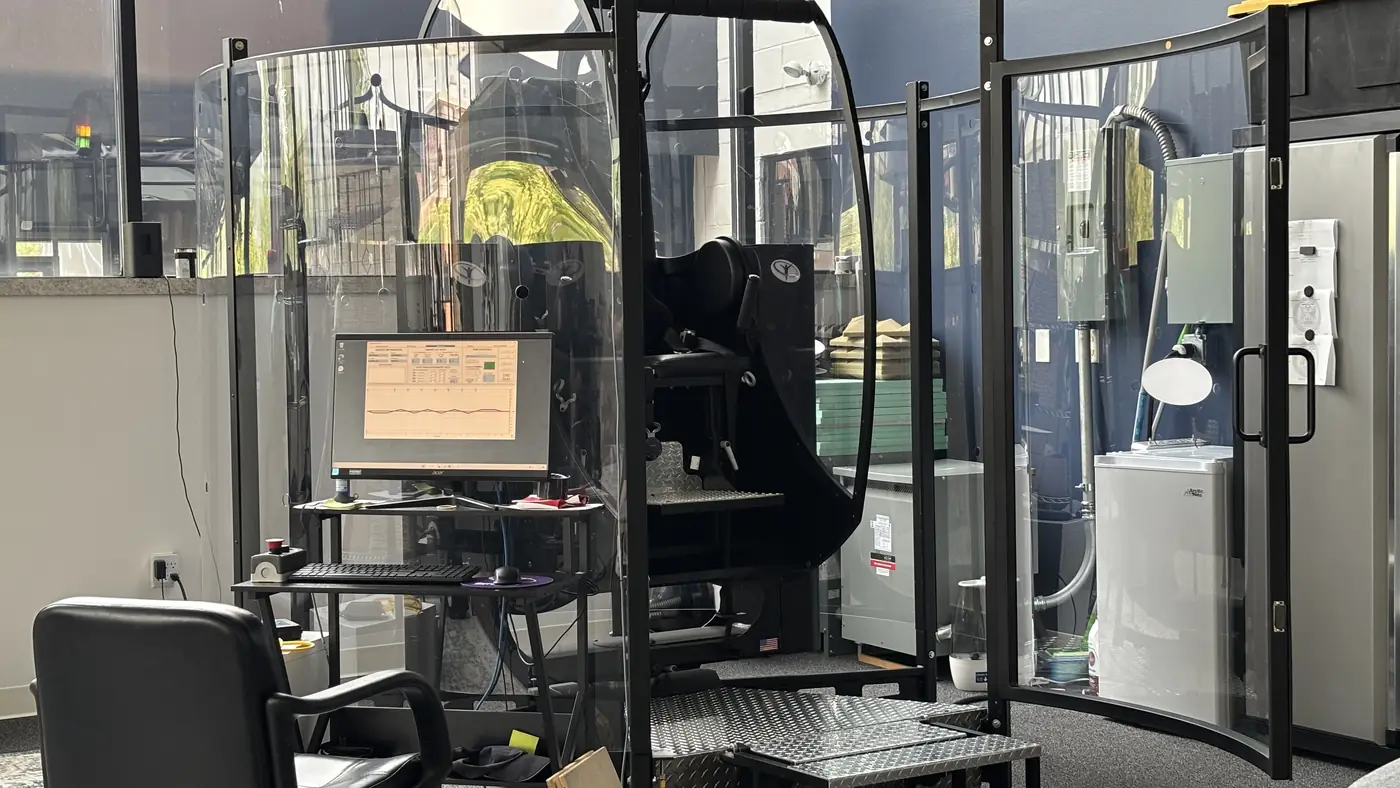
Orthostatic cerebral hypoperfusion syndrome (OCHOS) is a measurable drop in brain blood flow on standing. Learn how it differs from standard POTS.
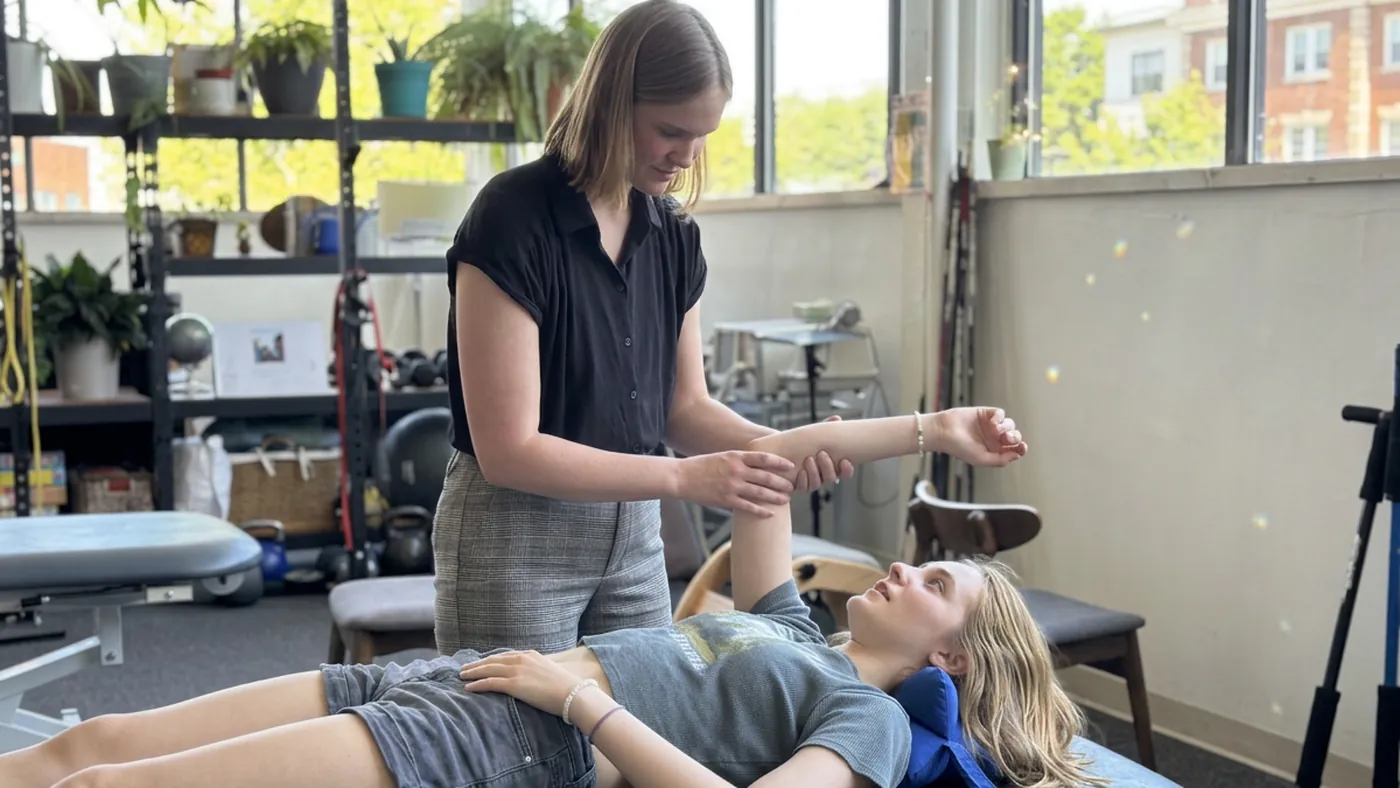
POTS is a brain regulation problem, not a heart rate problem. Mechanism-based neurological evaluation identifies what's actually driving symptoms.
What intensive POTS treatment involves: cerebral blood flow testing, vestibular rehab, and neurological rehabilitation. What to expect in 4 to 7 days.

Free guide: the 4 mechanisms your doctors aren't testing for, and how to find which one is keeping you sick. From The Keiser Clinic.

Ear fullness, popping, or a heartbeat in your ear with POTS? It often traces to how blood drains from your head, not just your eustachian tubes.

Feeling dizzy in an elevator isn't random. It's a small test of how your brain blends vision, inner ear, and body sense to keep you balanced.

Feeling detached from reality with POTS or dysautonomia? Derealization is often a blood-flow and vestibular signal, not just anxiety. What it means.

A 2024 study of 2,627 patients found POTS and dysautonomia symptom surveys don't match objective autonomic testing. Here's what that gap really means.

POTS and OCHOS share one core problem: reduced cerebral blood flow. The 30 BPM threshold dividing them is a 40-year-old artifact, not a biological boundary.

A 3-degree error in gravity perception made everything feel overwhelming. How the vestibular system shapes anxiety, brain fog, and sensory overload.

Vestibular dysfunction doesn't just cause dizziness. When the brain's spatial reference breaks down, it drives anxiety, brain fog, depression, and fatigue.

Peripheral nerve stimulation lets dysautonomia patients train the brain without crashing. How PNS restores proprioception and cerebral blood flow.

POTS isn't one thing. Understanding the three subtypes, neuropathic, hyperadrenergic, and hypovolemic, is the first step toward treatment that works.
If your blood pressure looks normal and your heart rate doesn't quite qualify, you've been told nothing is wrong. Here's what the standard test misses.

A POTS diagnosis can be a relief, but for many the treatments still don't work. Here's why, and what understanding your specific mechanism changes.
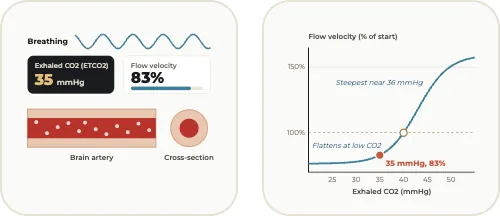
Low CO2 on a blood test is mostly bicarbonate; over-breathing is one cause, and it narrows brain arteries. Symptoms, causes, tilt measurement and treatment.
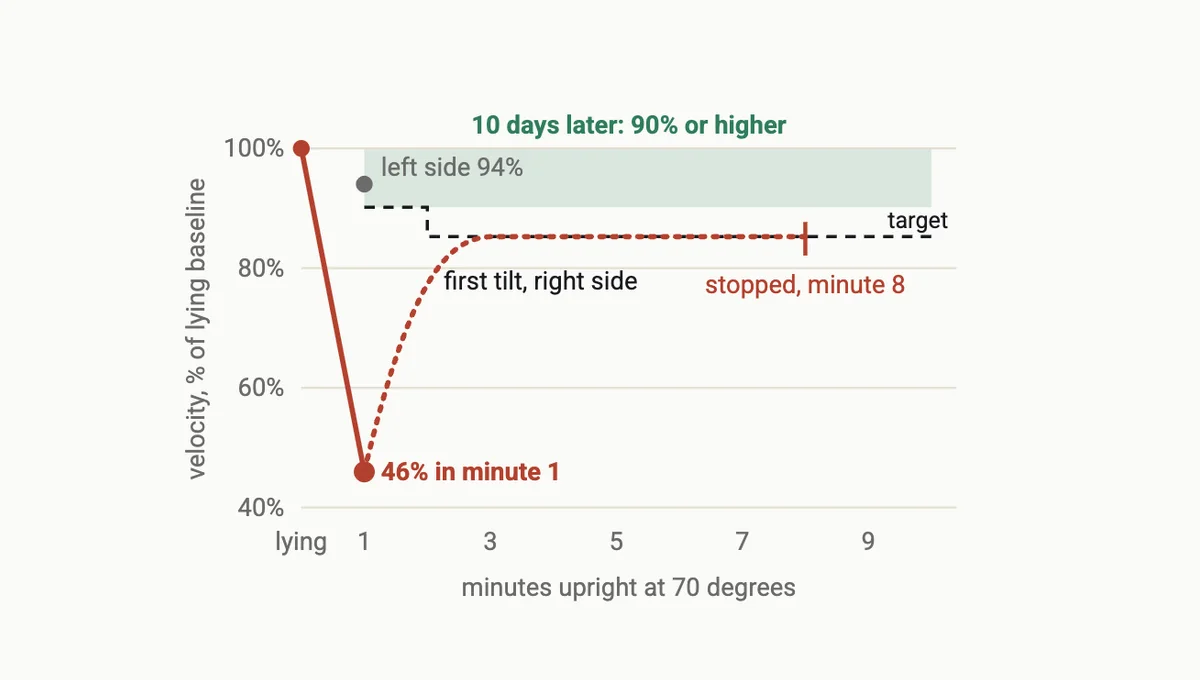
A transcranial Doppler tracks how fast blood moves to your brain as you're tilted upright, and shows whether it drops in POTS and by how much.
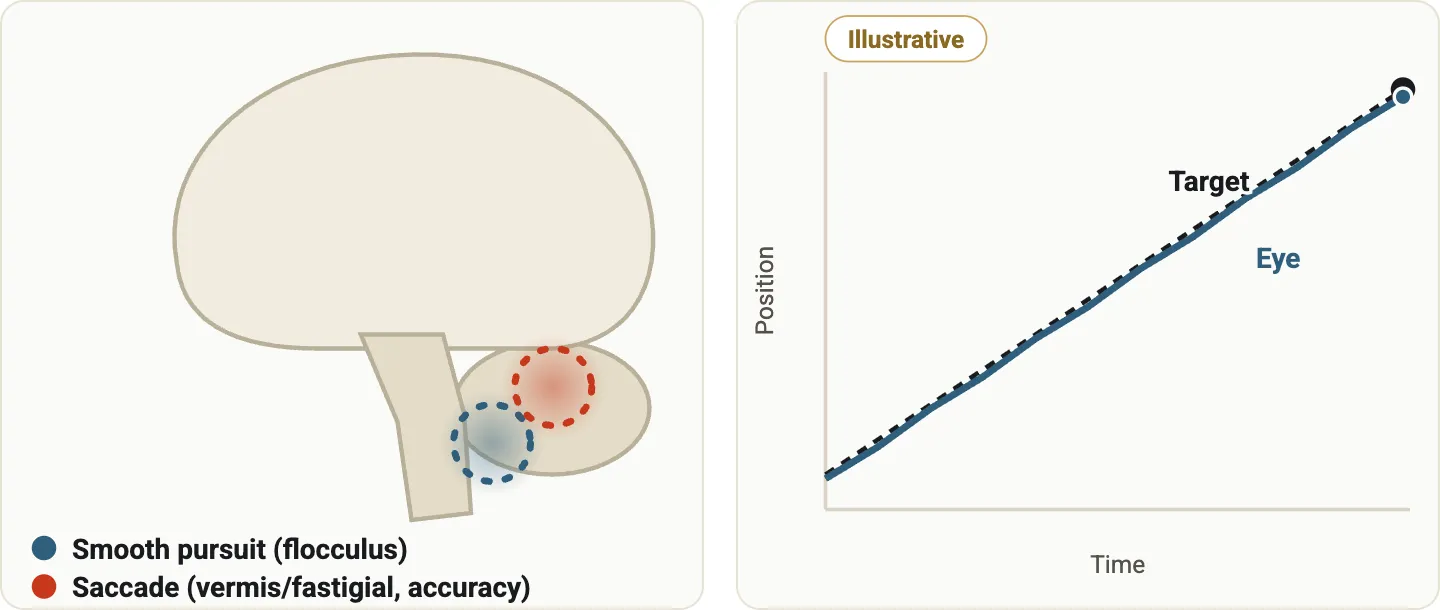
Eye movement testing shows which brain circuits may be underperforming. See what jumpy tracking can mean, one patient's story, and how our team uses it.
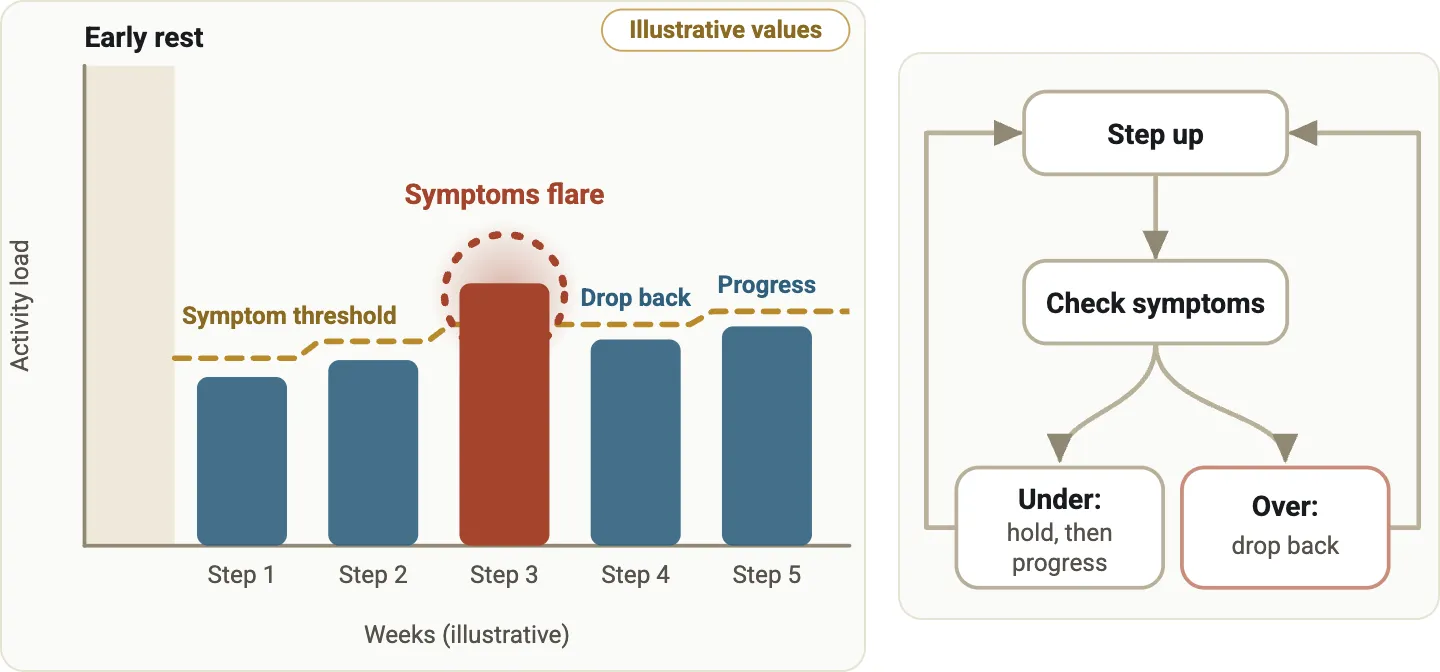
Post-concussion syndrome treatment starts with testing which systems aren't working. See which rehab options have trial support and how long they ran.
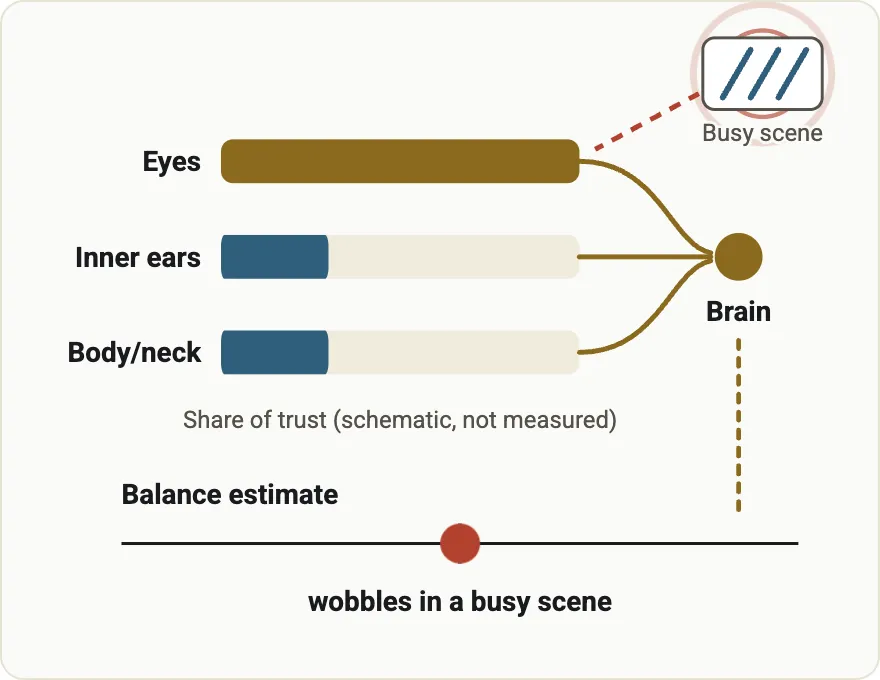
Vestibular dysfunction means your balance system isn't working right. Our team's 5 working types, how each is tested, and why symptoms can outlast normal tests.
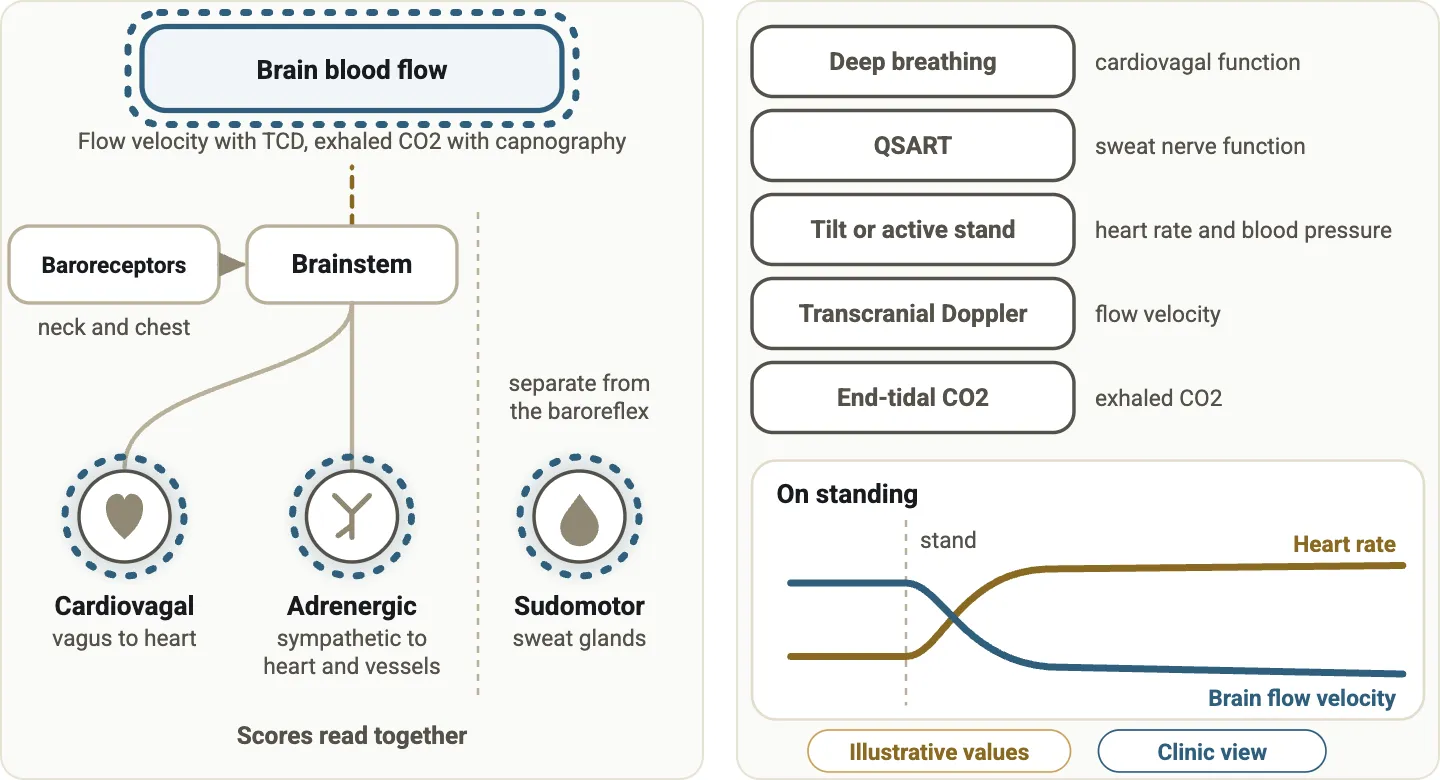
Autonomic testing for POTS checks heart rate, blood pressure and sweat nerve reflexes. Learn what each test measures, what results mean and what they miss.

Migraine is a neurological event, and the headache is only one part of it. Treating migraine as a brain problem instead of a pain problem opens new treatment pathways.
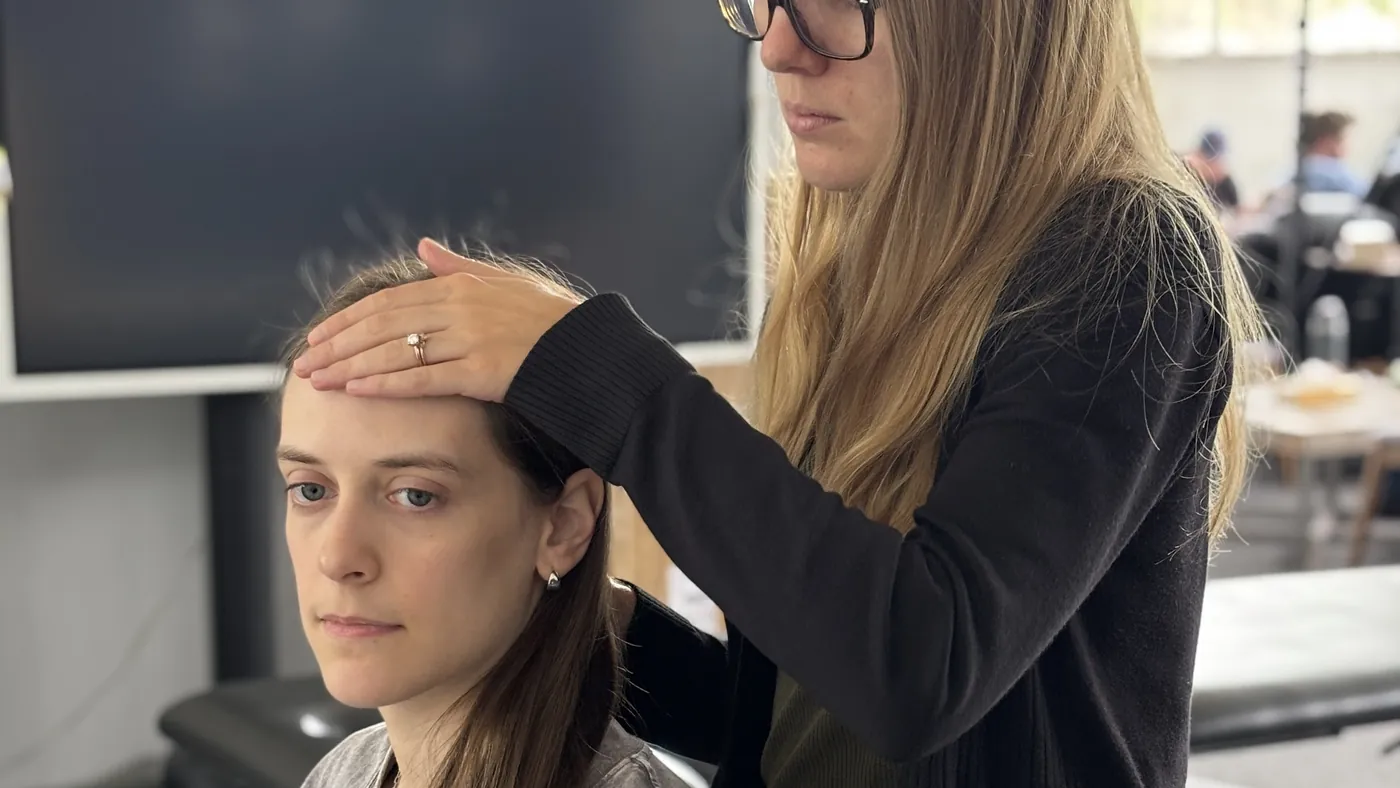
Neck problems can cause brain fog, memory trouble, dizziness and POTS symptoms. See the 7 ways cervical joint errors reach the brain and how they're tested.
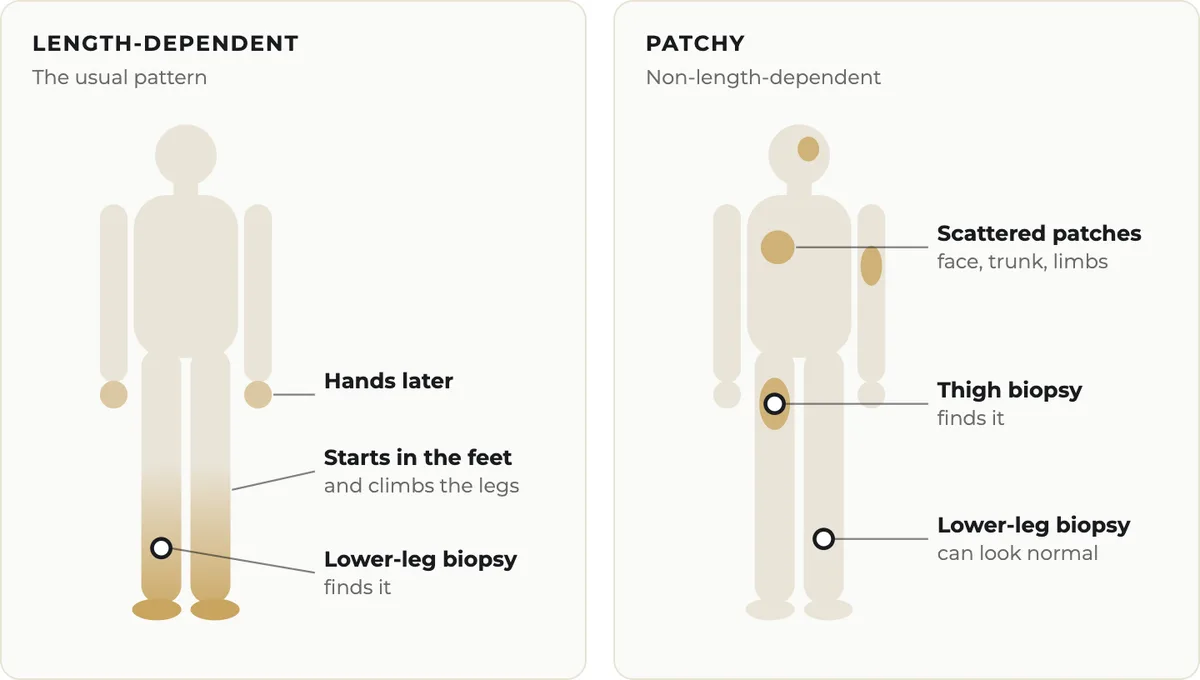
Small fiber neuropathy shows up in a quarter to half of POTS patients tested. How SFN drives dysautonomia, why a skin biopsy can miss it, and what improves it.
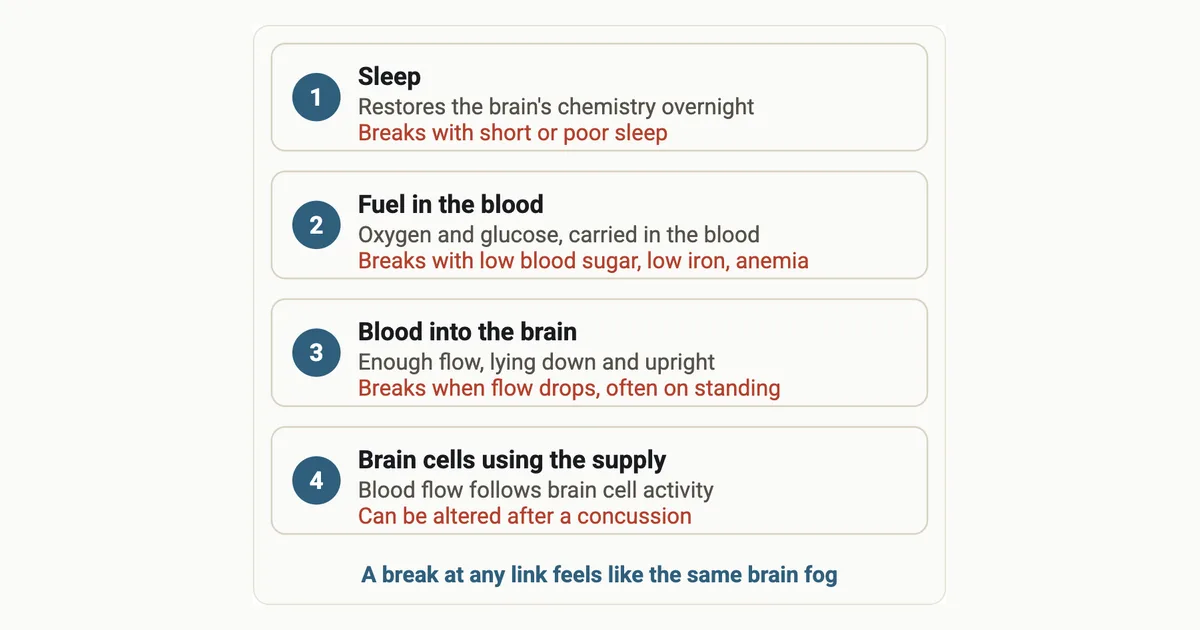
What causes brain fog, why it can get worse when you stand or drive, and how to find which link in your brain's supply chain is weak.
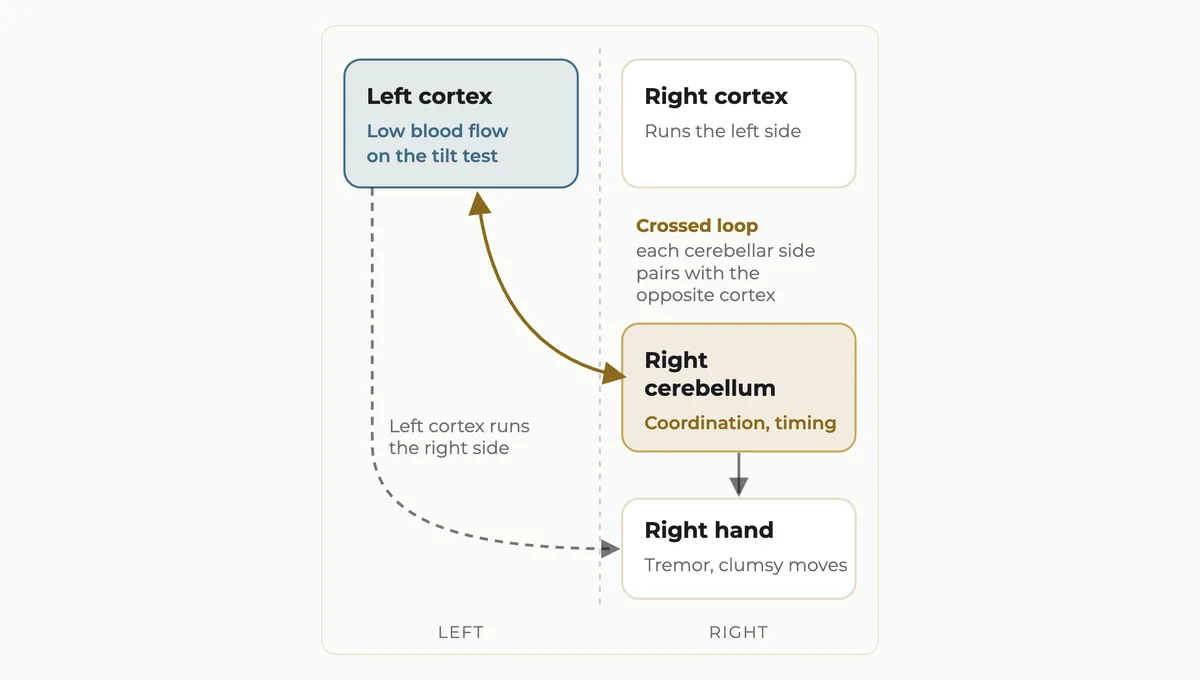
Why exercise feels so hard with POTS: the symptoms, what research shows about the heart and fitness, what our team finds in the brain, and what helps.
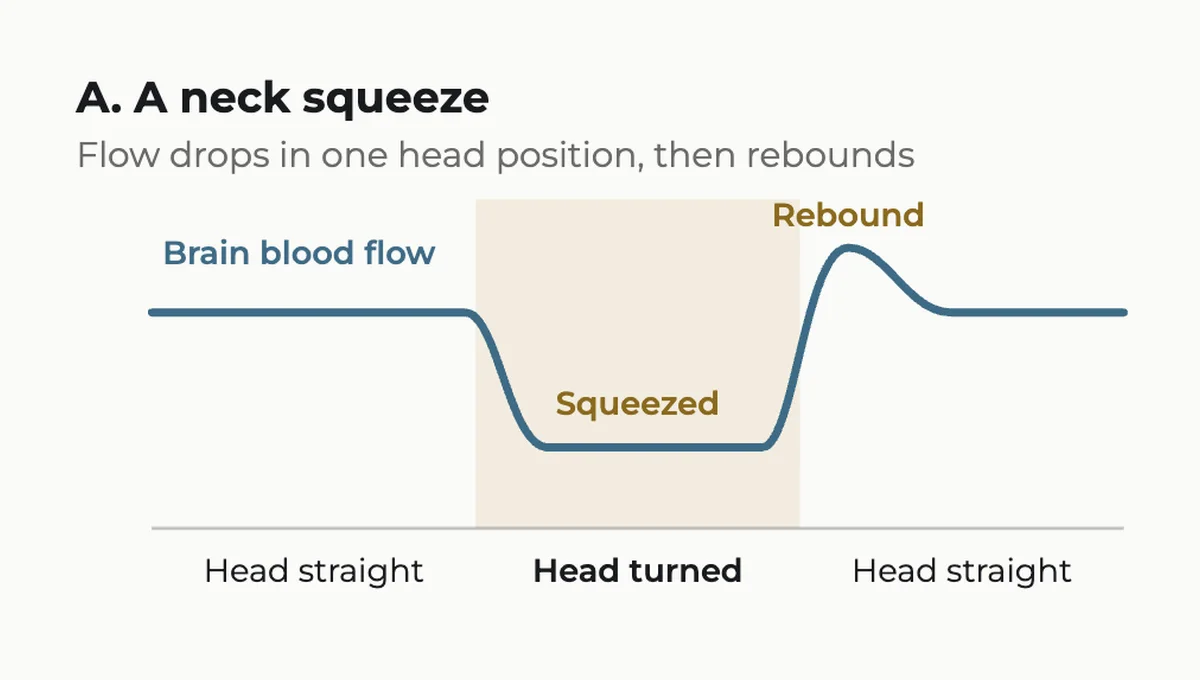
Tight muscles, posture and the bones of your neck can squeeze the arteries to your brain. What research shows, who gets symptoms, and how our team tests it.
IV saline helps ME/CFS and dysautonomia patients feel better temporarily. But if the problem is blood flow distribution, saline is a patch, not a fix.
ME/CFS isn't just fatigue. How chronic fatigue syndrome is properly diagnosed, what testing reveals about the brain, and why finding the mechanism matters.
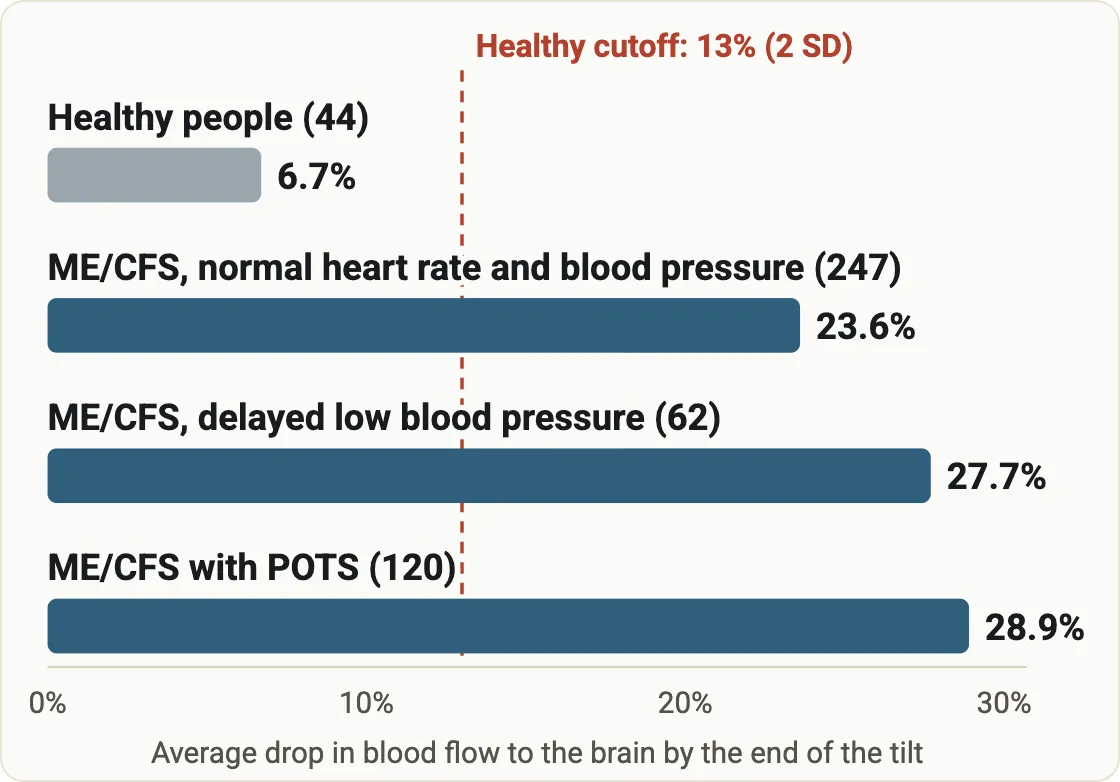
PEM recovery explained: what a PEM crash is, how long it lasts, why it often hits a day or more later, and how our team works to widen what you can do.
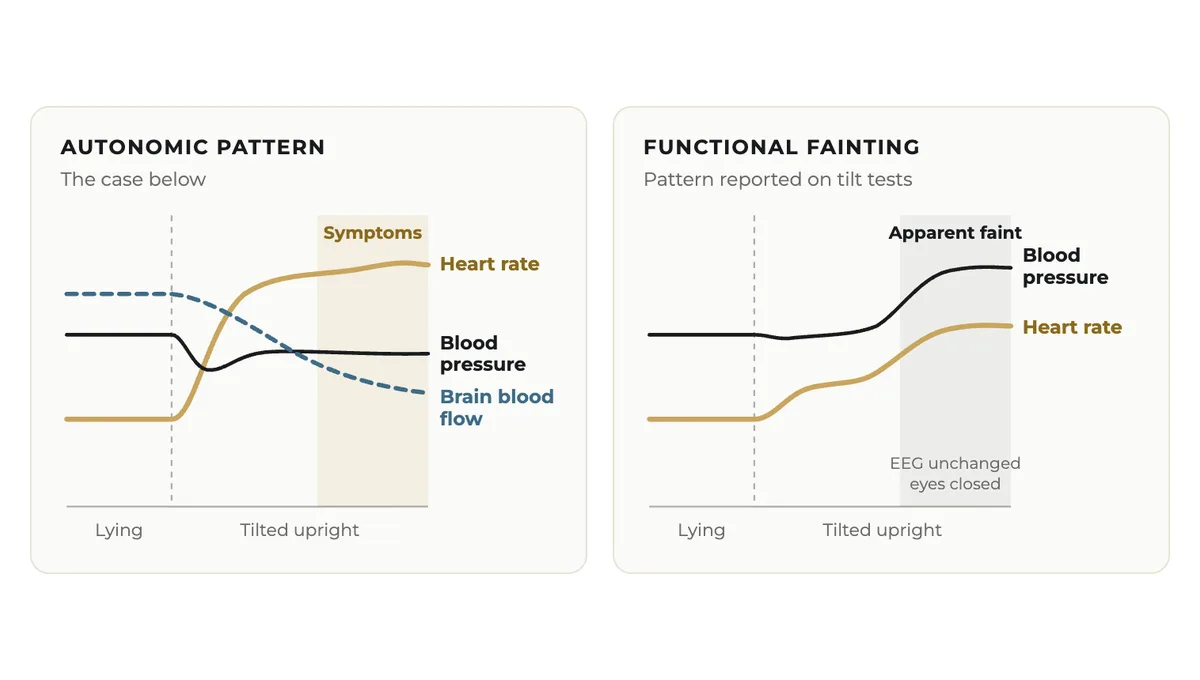
FND and POTS can show up together. What FND is, how it differs from POTS, why standing can make FND symptoms worse, and what a tilt test can show.
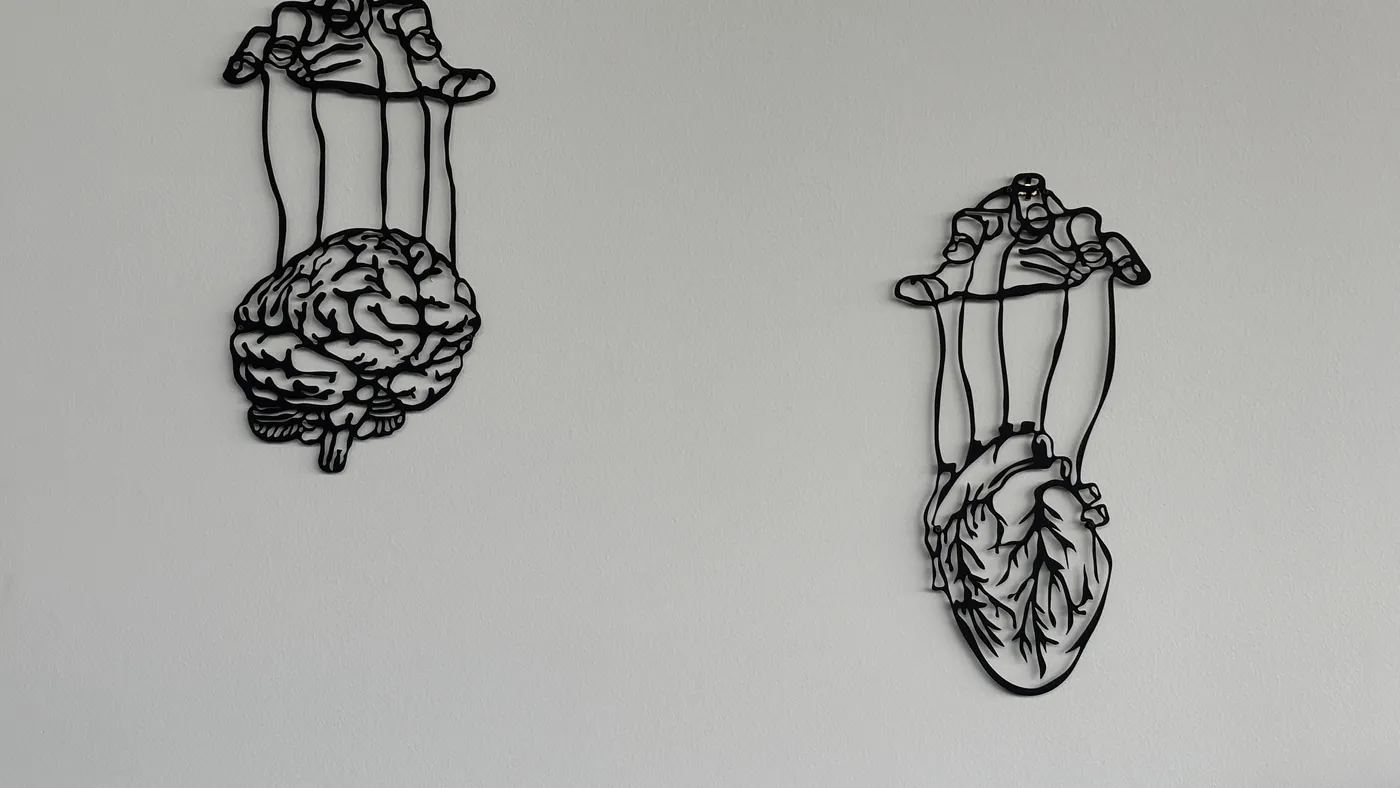
Cerebral hypoperfusion means too little blood reaching the brain. What hypoperfusion is, symptoms, causes, why normal blood pressure misses it, and tests.
Why do so many dysautonomia treatments fail? Both conventional and functional medicine miss the one core problem: the brain is the common thread.
Can B6 toxicity cause POTS? Learn about vitamin B6 and autonomic nerves, how to start moving again with POTS, and hypoplastic vertebral arteries.
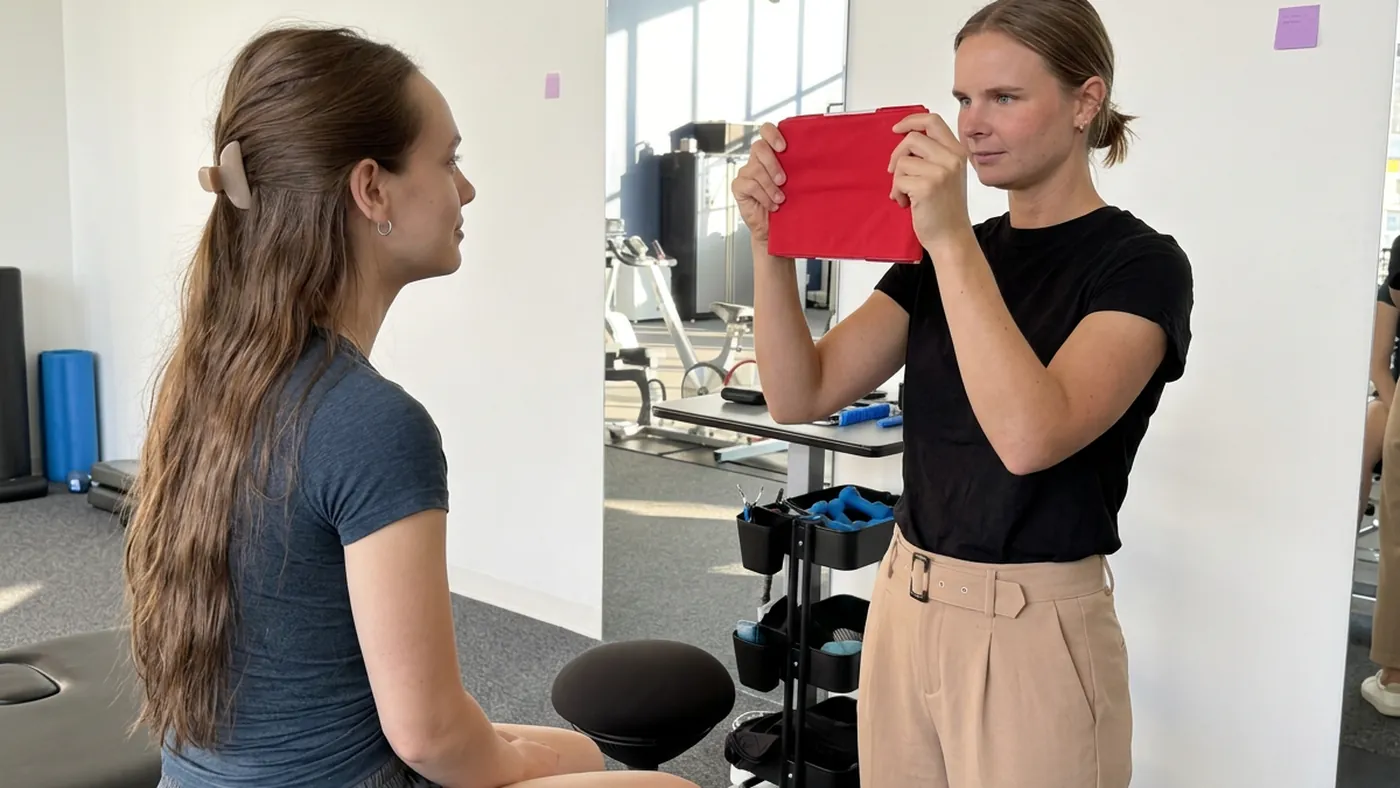
POTS isn't just about heart rate. Learn why it's really a brain coordination problem, and why treating it as a heart condition misses the mechanism.
Blood pooling is blood collecting in your legs, feet or hands when you stand. What it looks like, why ankles swell, when it's normal, and its POTS causes.

A rise of 30 bpm or more within 10 minutes of standing, every time you stand, is the POTS range. Your heart is compensating for falling brain blood flow.
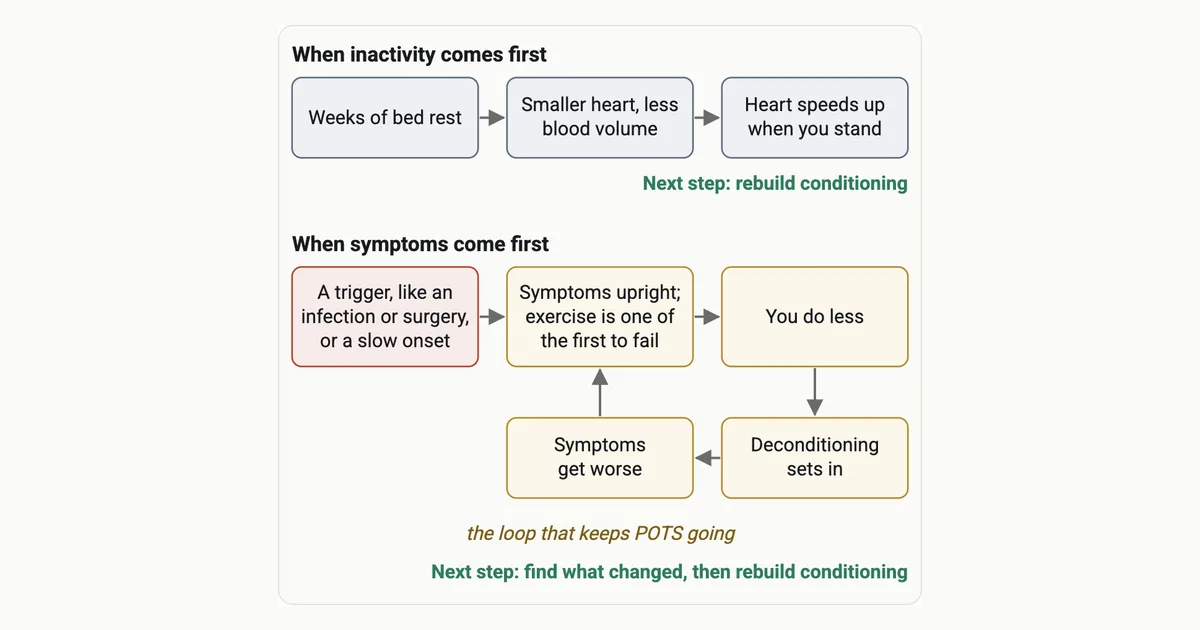
Does deconditioning cause POTS, or POTS cause deconditioning? What bed rest does to the heart, POTS vs being out of shape, and what exercise can and can't do.
Sleep is actively restorative. Learn why sleep is the engine of neuroplasticity and recovery in dysautonomia and POTS.
Proof that the brain controls the autonomic system, using eye movements, cerebral blood flow data, and real patient outcomes from targeted brain rehab.
A 21-year-old with POTS and gastroparesis improved digestion, heart rate, and sensation through neural rehab, without any GI-specific treatment.
A patient with two years of POTS recovered in one month through targeted neural rehab: cerebral blood flow testing, tilt progression, and retinal slip.
Case study: A college-aged EDS and POTS patient went from missing school and extreme fatigue to getting back to life in under a month.

POTS case study: A 21-year-old athlete went from housebound to coaching baseball and taking classes again. Neuropathy findings and CO2-guided rehab.

Hyperadrenergic POTS (hyperPOTS) is POTS with a norepinephrine surge on standing. See the symptoms, how it's tested, what beta blockers miss and what to check.

A 15-year-old diagnosed with POTS wasn't actually a POTS case. See the real diagnosis, brain-based treatment, and full recovery including return to school.
Post-concussion case study: dizziness, heart rate spikes, nausea, and broken sleep. See the eye findings, treatment steps, and outcome.
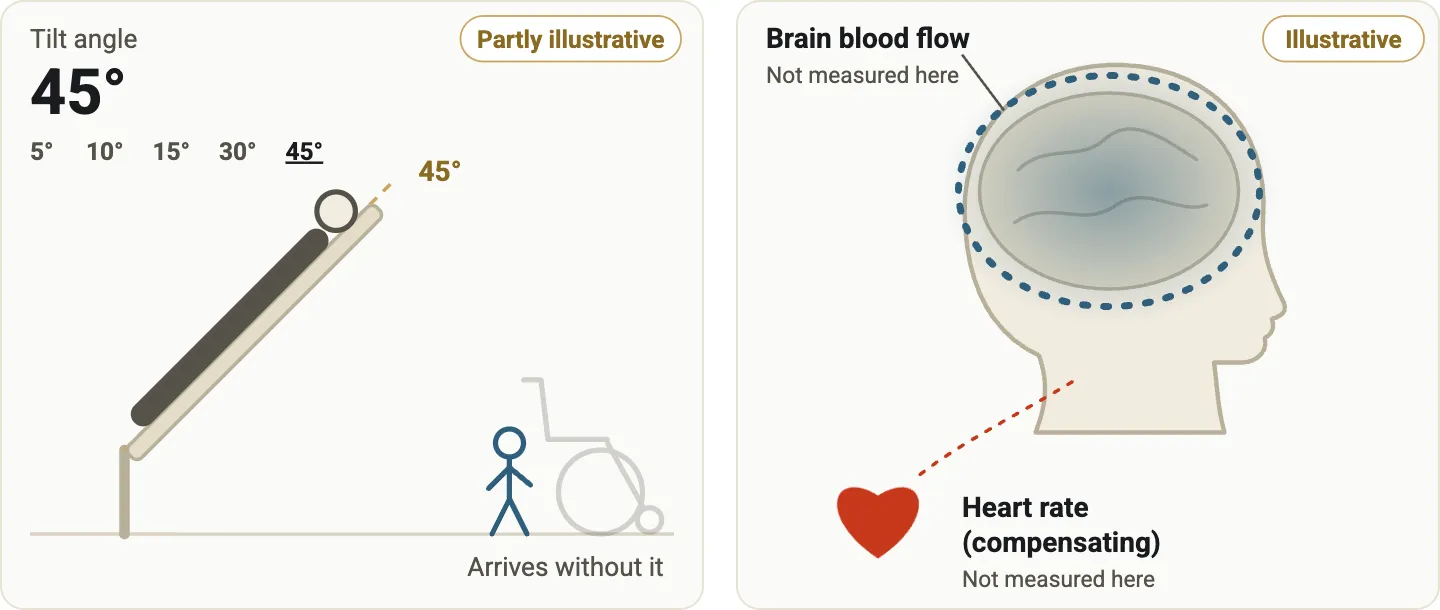
She had POTS for 8 years and used a wheelchair daily. See what our team found on exam, how we treated her and what changed within a couple weeks.
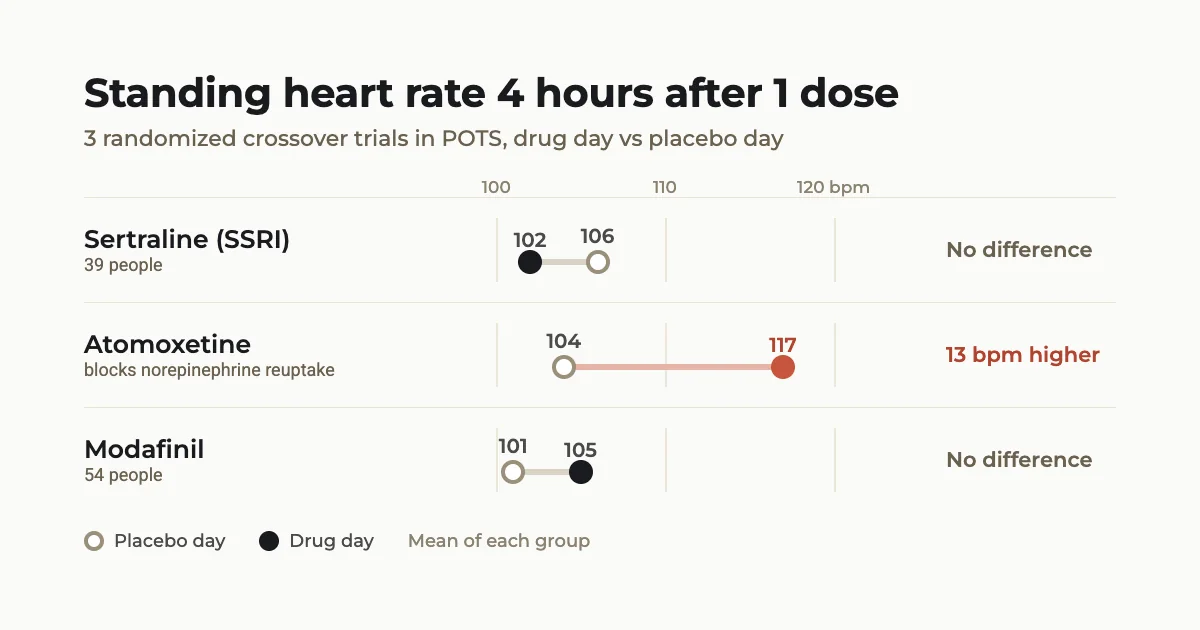
Do SSRIs help POTS? What the one randomized SSRI trial found, why SNRIs and ADHD drugs can raise standing heart rate, and how to talk with your prescriber.
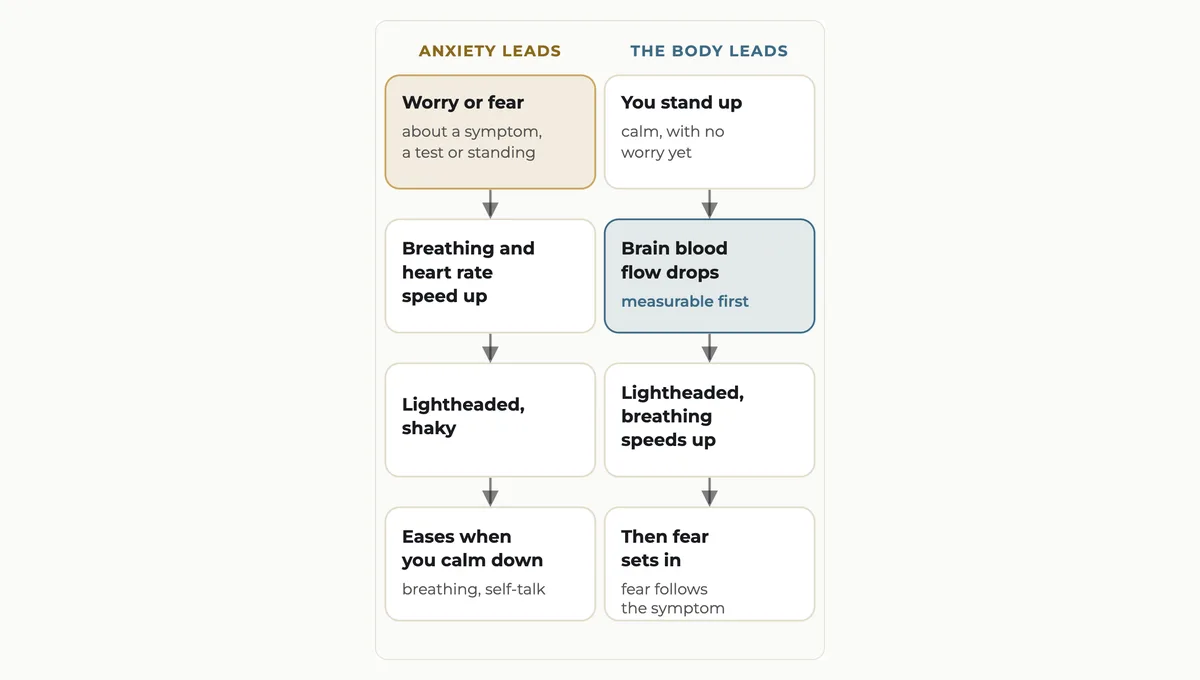
Is it POTS or anxiety? Compare the signs side by side, see which comes first, why POTS gets misdiagnosed as anxiety, and what a tilt test shows.
Why so many POTS cases get dismissed, why clean labs don't mean you're fine, and how a brain-first approach finds what standard workups miss.
How to know if your POTS is actually improving using cerebral blood flow data, not just symptoms. A case study shows why BP meds may worsen perfusion.
Orthostatic intolerance means symptoms when you stand that ease when you lie down. Symptoms, causes, and the types: orthostatic hypotension, POTS and OCHOS.
A 27-year-old with brain fog and POTS after a concussion recovered cerebral blood flow and resolved heart rate instability in two weeks.
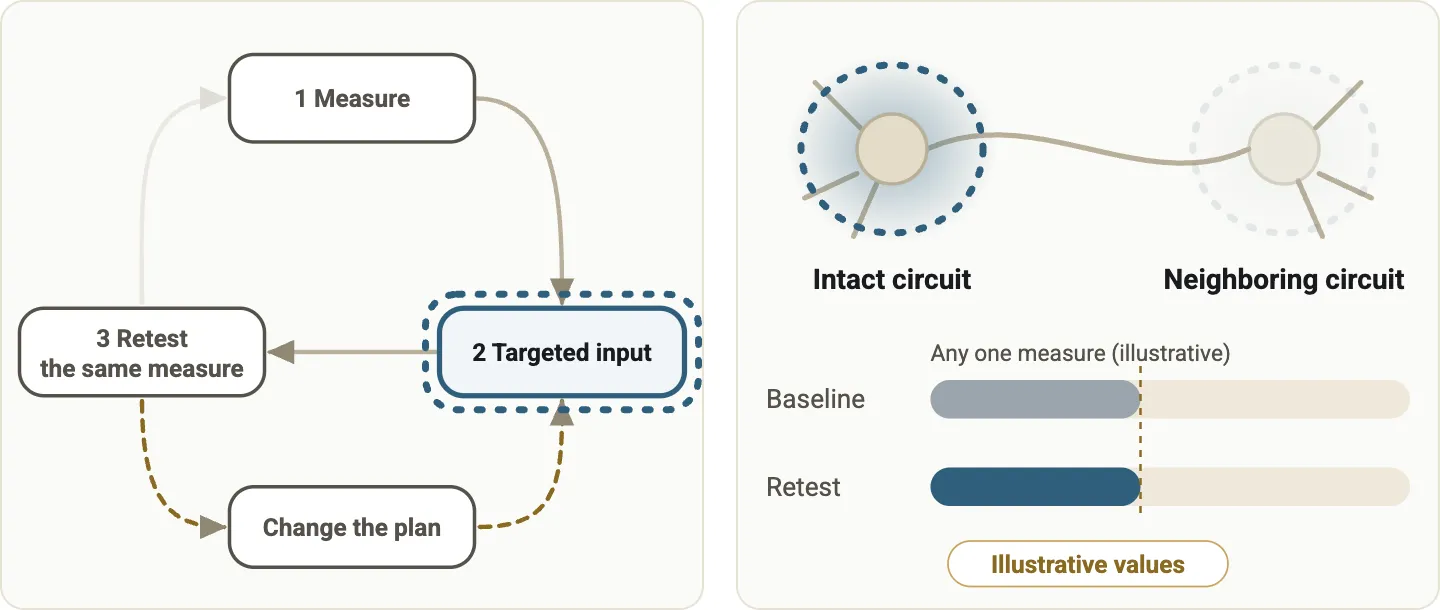
Functional neurology measures a function, gives an input and retests. See its credential, how it differs from a neurologist and what reviews found.
Your brain has its own blood flow control system. Learn why that matters for POTS and why normal blood pressure doesn't guarantee normal brain blood flow.
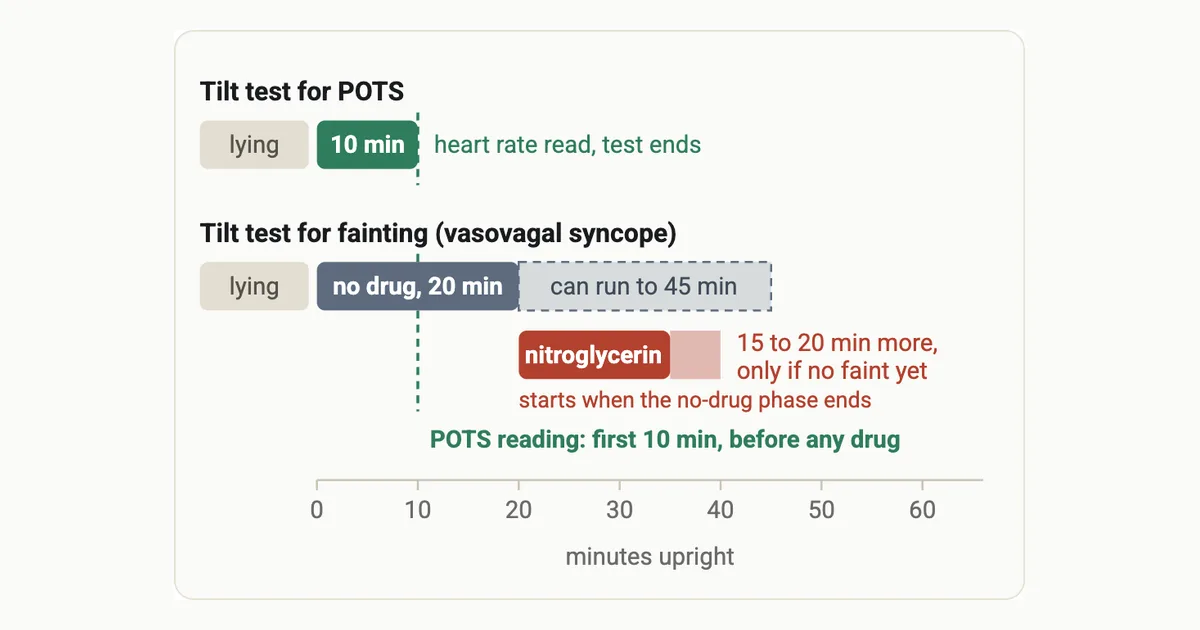
What happens on a tilt table test for POTS, how long it takes, why some labs give nitroglycerin, what the results mean and whether you need one at all.
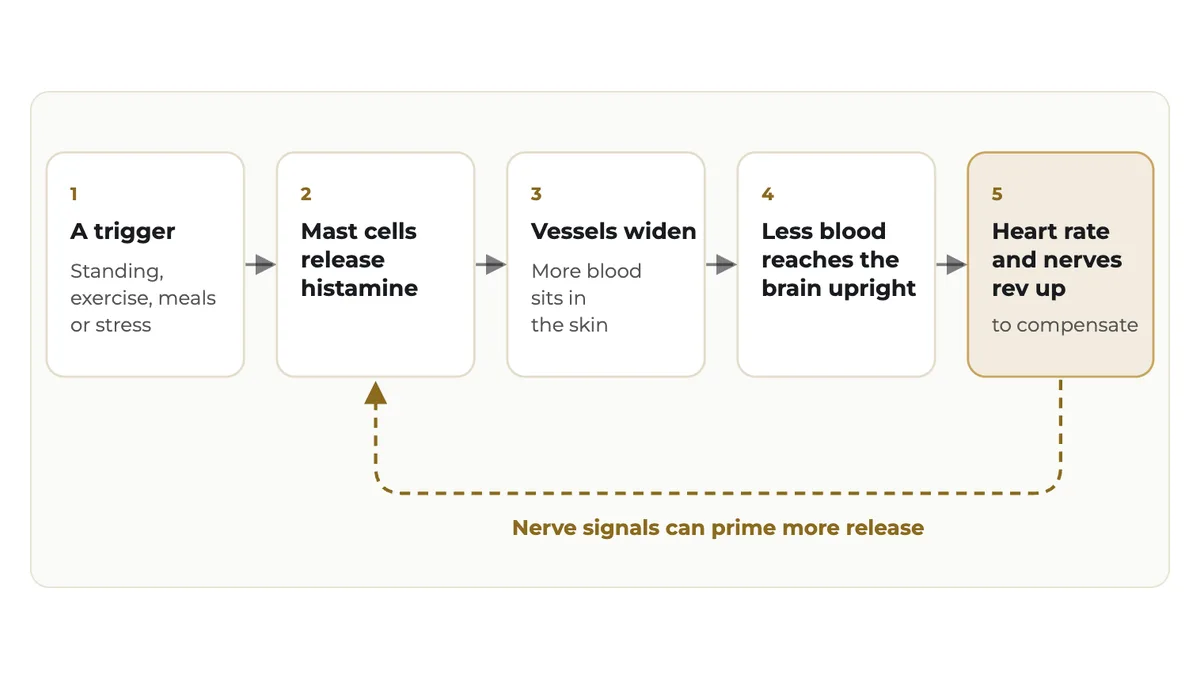
How MCAS and dysautonomia connect: what histamine does to blood flow and heart rate in POTS, how to tell the 2 apart, and what helps when both flare.

POTS and dysautonomia treatment should recalibrate your nervous system, not just manage symptoms. Targeting the lynchpin unlocks recovery.
CFS, POTS, and ME/CFS syndrome labels describe symptoms, not causes. Moving from syndrome to mechanism is the key to effective treatment.
The autonomic nervous system isn't an on/off switch. Learn why 'sympathetic dominance' is misleading and how specific pathways drive POTS symptoms.
Cerebellar dysfunction causes dysautonomia and POTS. Learn how the cerebellum regulates autonomic reflexes and how eye movement testing reveals it.
Vagus nerve stimulation for POTS misses the point. The vagus is mostly sensory, paired antagonism is a myth, and the real driver of dysautonomia differs.
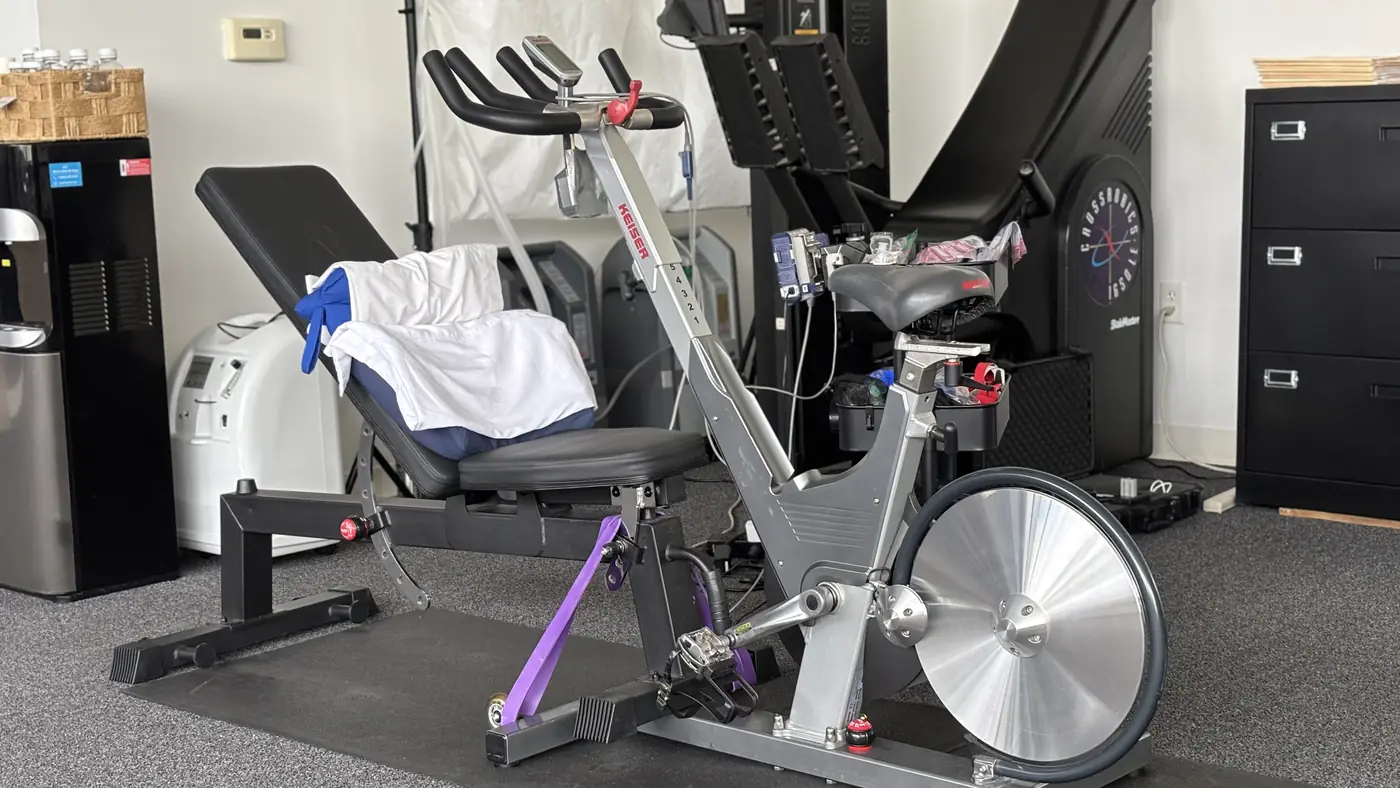
Exercise advice fails POTS patients because it ignores orthostatic blood flow. Deconditioning isn't the cause. Fix cerebral perfusion first.
Mal de Debarquement Syndrome (MdDS) explains why you feel better in a moving car and worse when it stops. Learn about the sensory mismatch driving it.
Neck stiffness with dysautonomia isn't random. Learn the neurological connection between your neck, vestibular system, and autonomic symptoms.
POTS fatigue and brain fog aren't laziness. Dr. Keiser explains why reduced cerebral blood flow starves your brain of fuel and what testing can reveal.
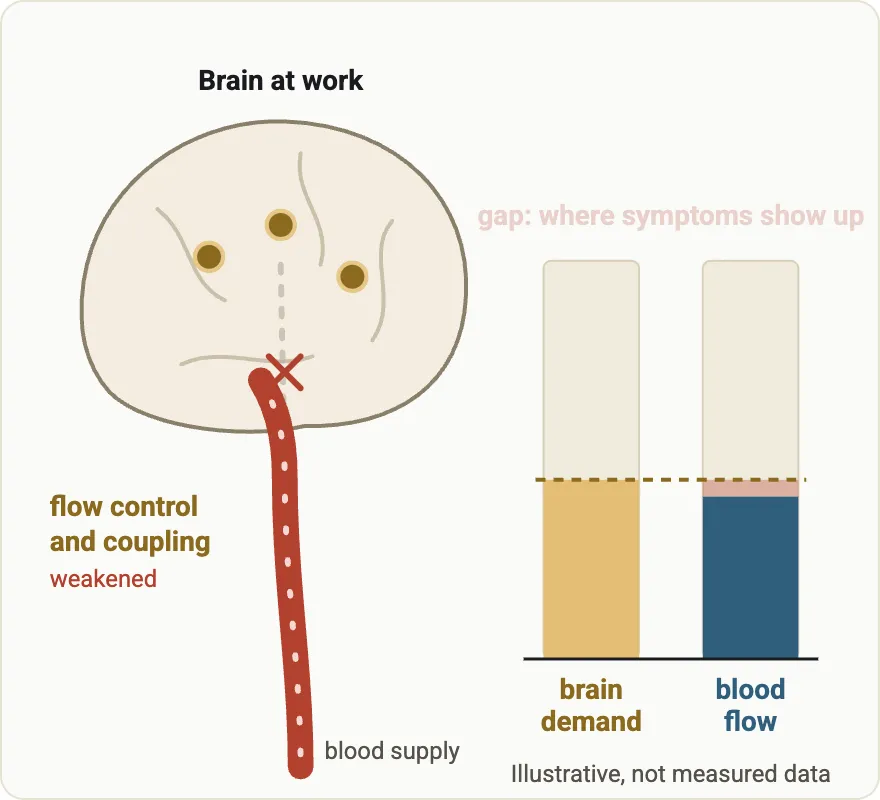
Many concussions heal on their own, but a real share of adults still have symptoms a year later. See why: brain blood flow, the brainstem, vision and anxiety.
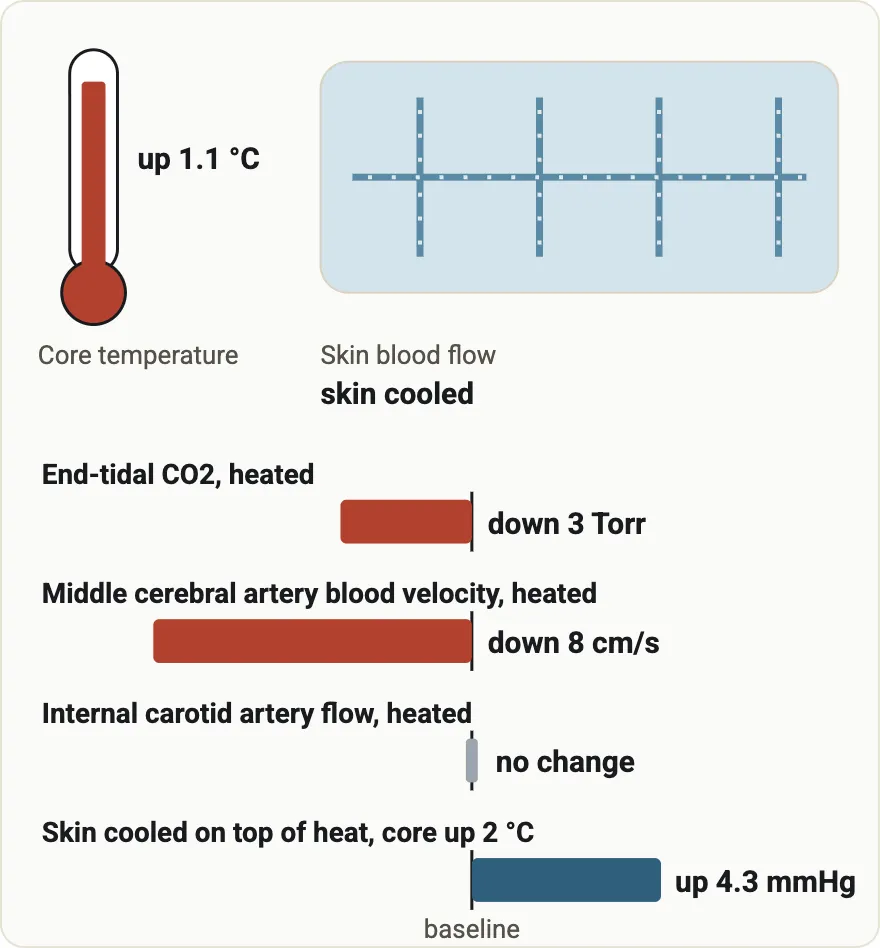
Why heat makes POTS worse: what heat does to brain blood flow and CO2, what the research shows, and how our team builds heat and sun tolerance.
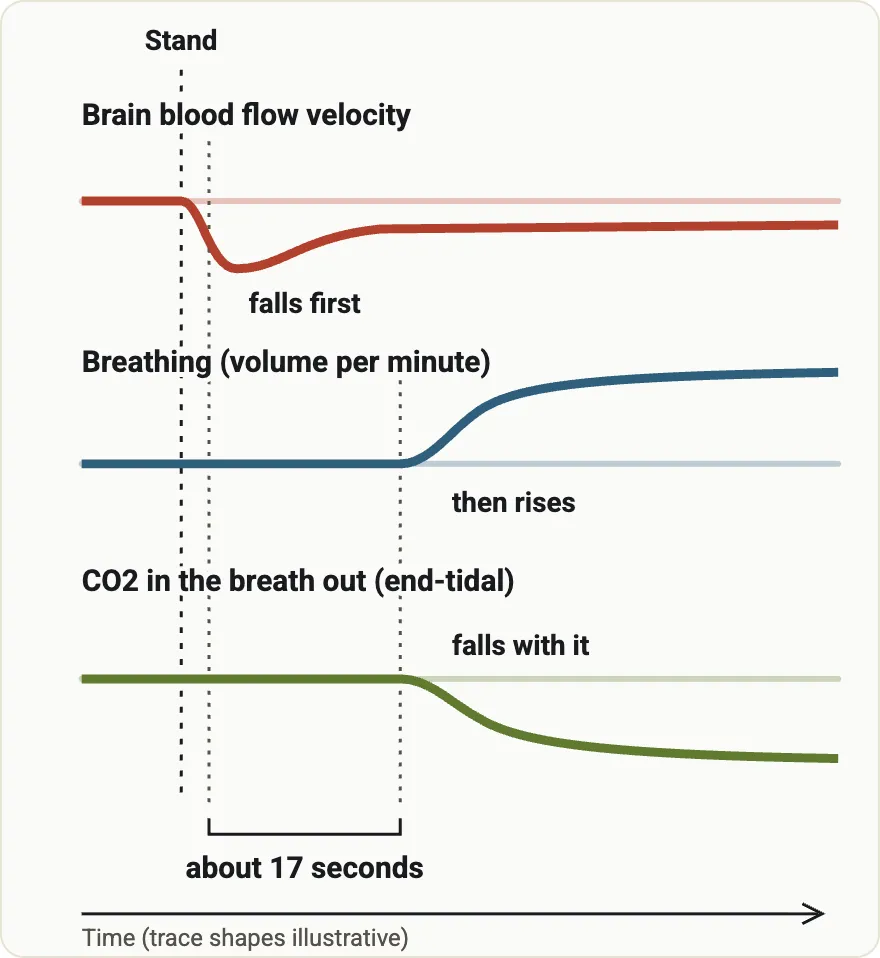
Air hunger in POTS feels like a breath that never fills. See what research shows about breathing on standing and how strong the evidence for breathing exercises is.
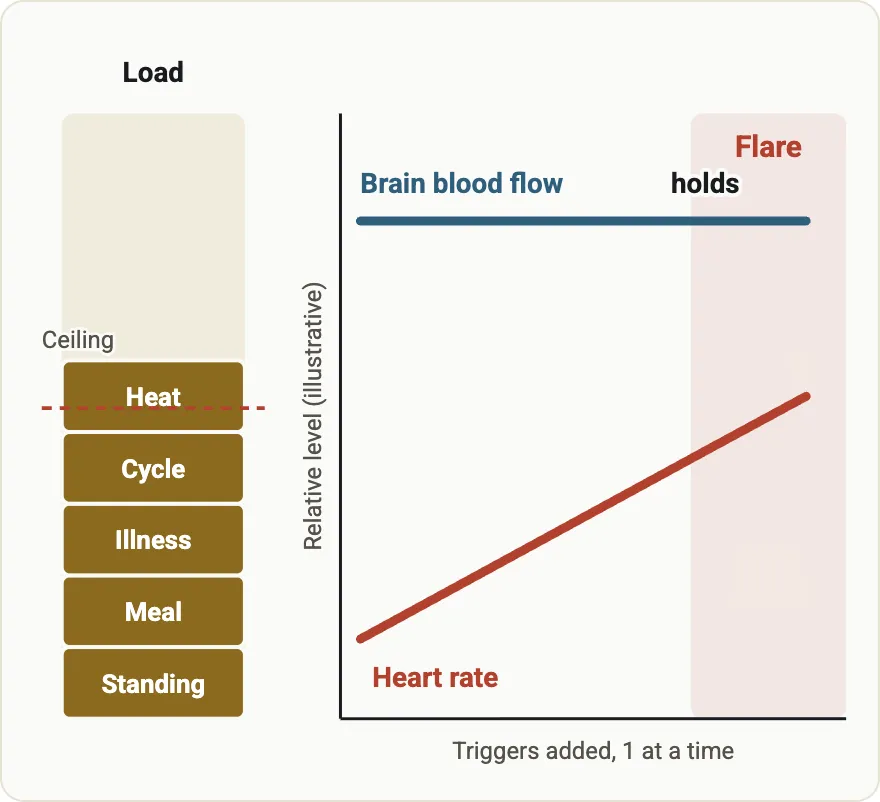
Heat, heavy meals, illness, standing still and the menstrual cycle can all set off a POTS flare. See what studies show, what to do and when to get help.
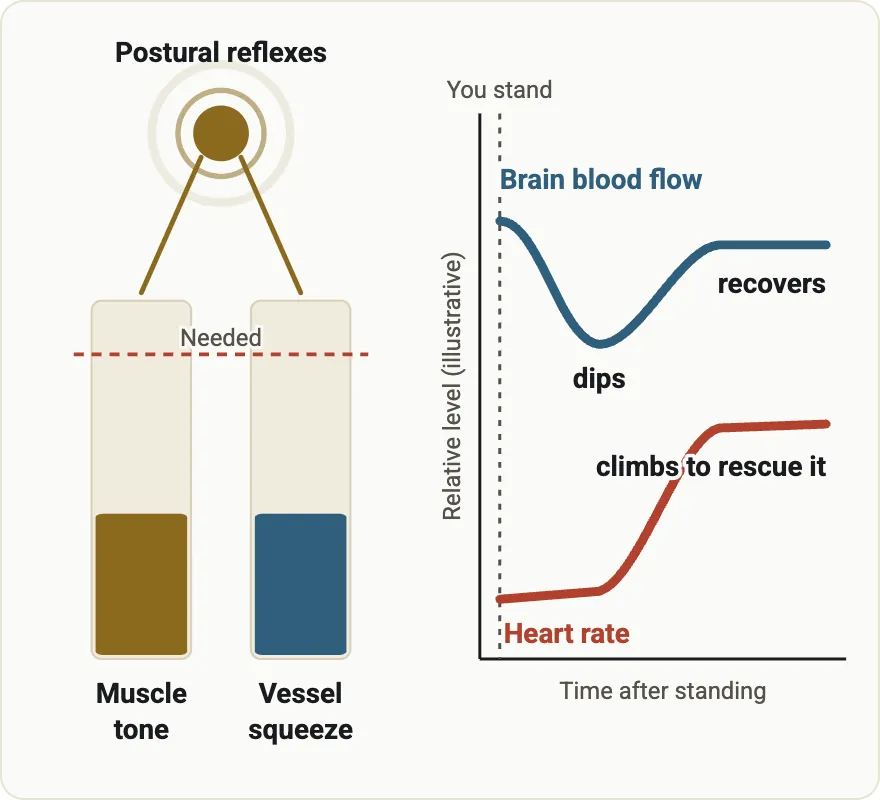
POTS and EDS often show up together. See what studies show about the overlap, why the numbers vary, whether EDS causes POTS and how our team evaluates it.
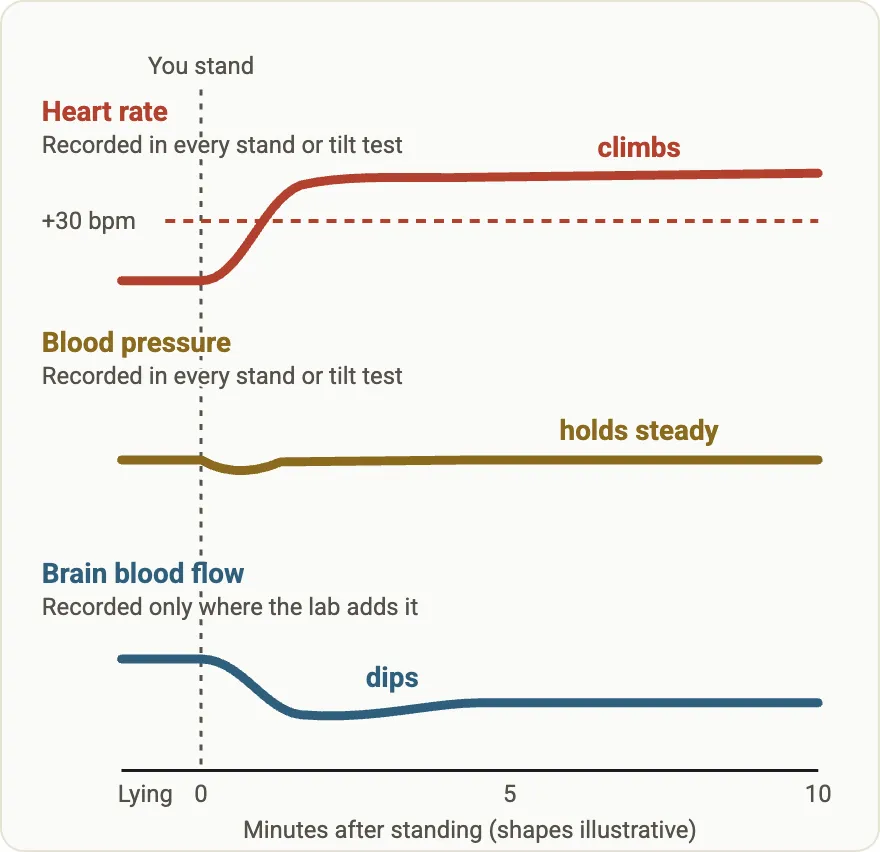
Is POTS neurological or cardiac? What each kind of POTS specialist tests and treats, the questions to ask, and what testing to expect.
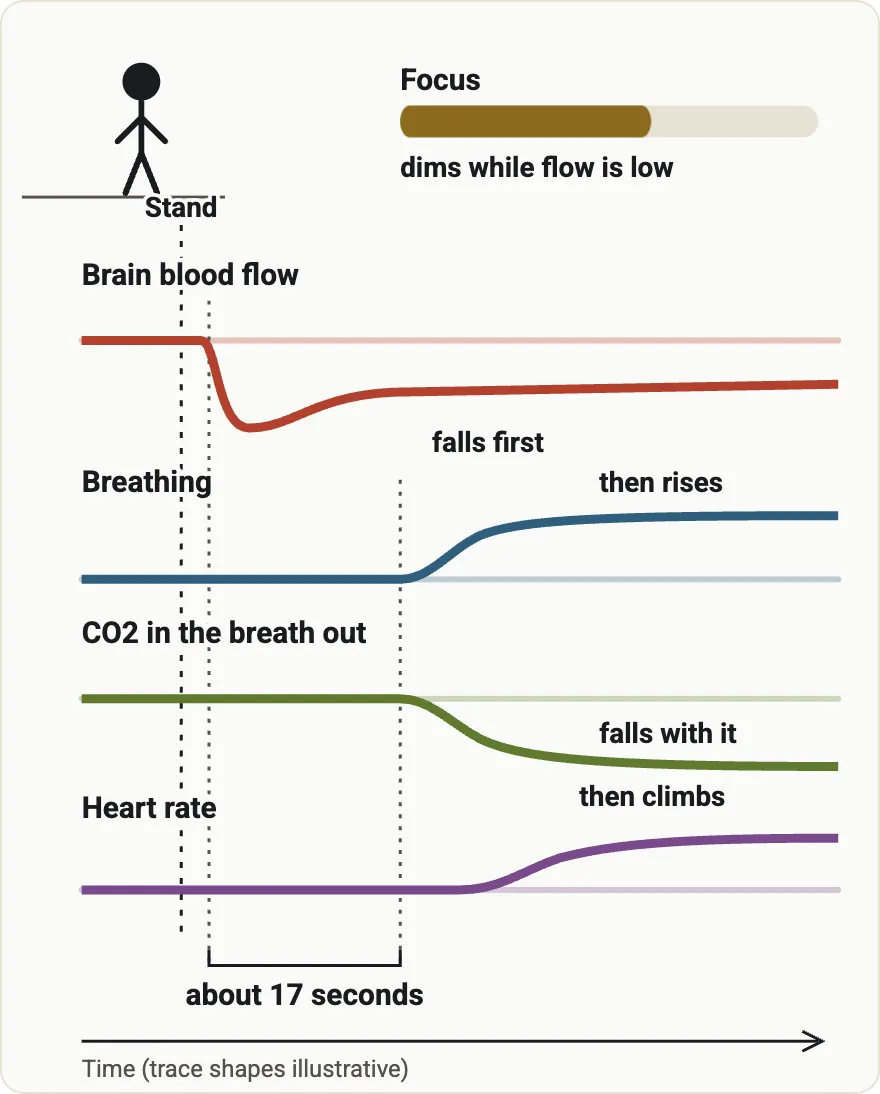
POTS brain fog is slowed thinking and poor focus that often worsens on standing. See what studies show about brain blood flow and what our team tests.
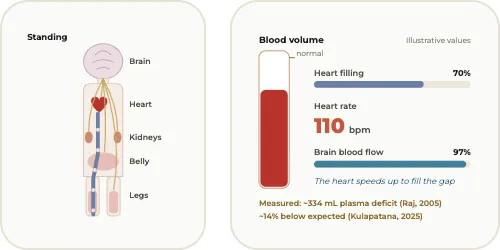
Hypovolemic POTS is tied to low blood volume, yet salt and fluids often stall. Our team explains the symptoms, the tests and why volume isn't the whole story.
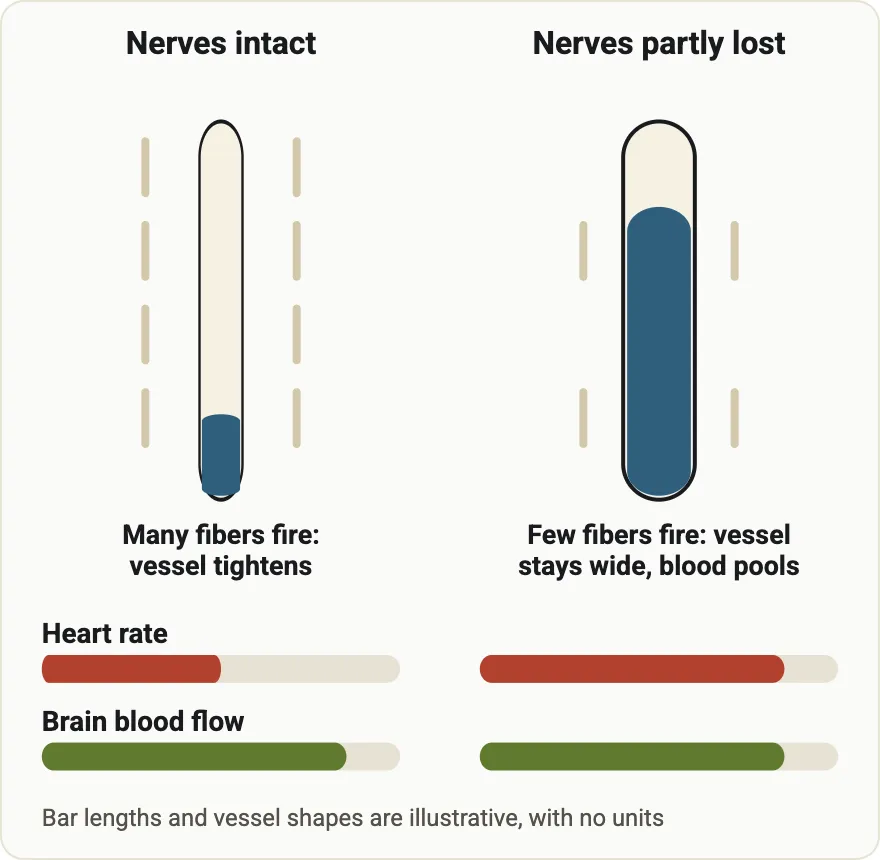
In neuropathic POTS, nerves to the leg vessels are partly lost and blood pools when you stand. See what causes it, how it's tested and how our team treats it.
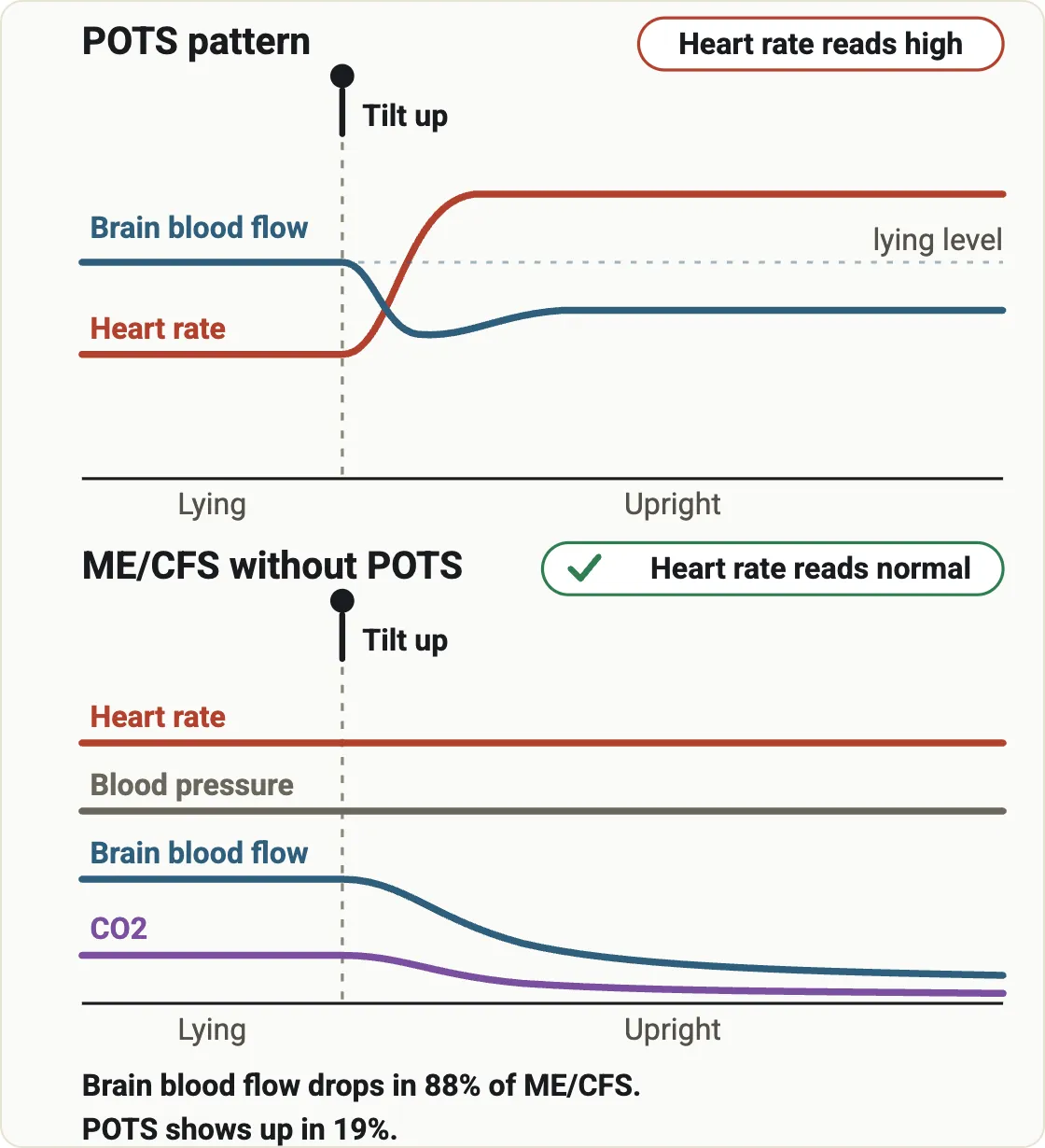
POTS and ME/CFS can overlap, and a normal heart rate on a tilt can hide falling brain blood flow. Here's how our team separates them by mechanism.
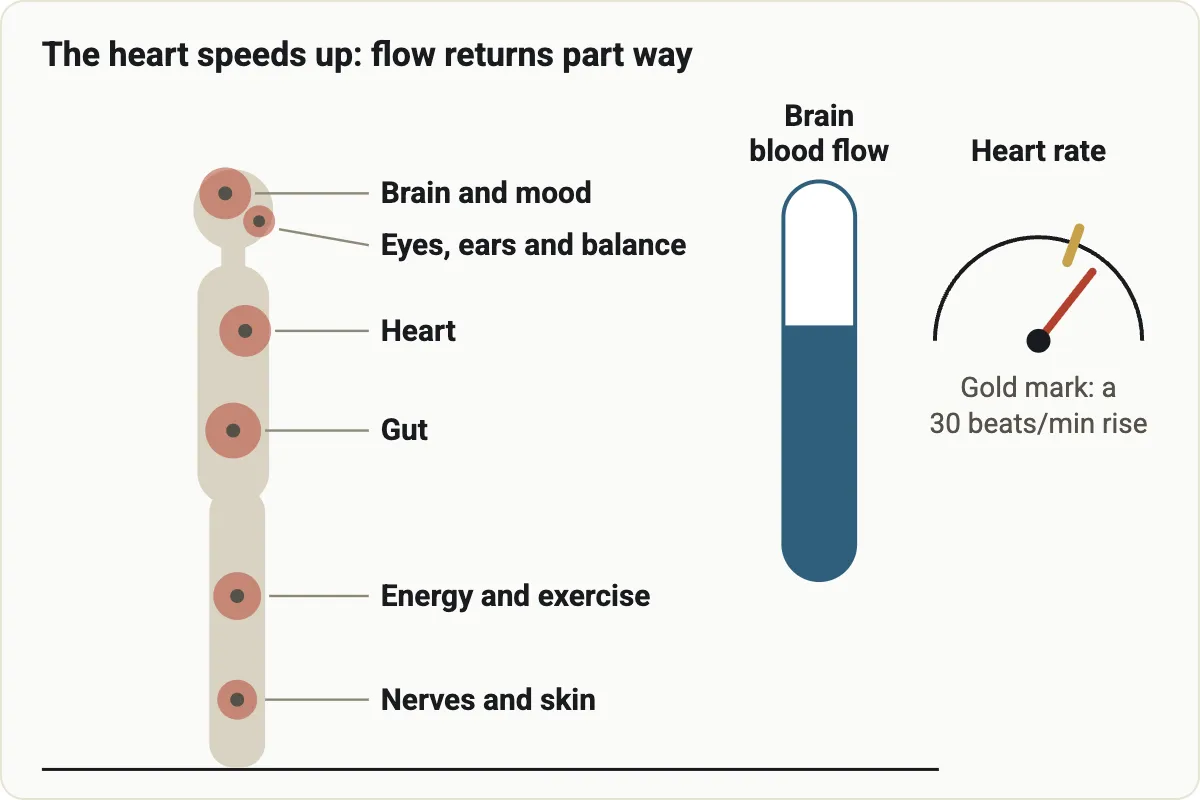
POTS symptoms by body system, from a racing heart to brain fog and nausea, with a printable checklist and how our team tests brain blood flow.
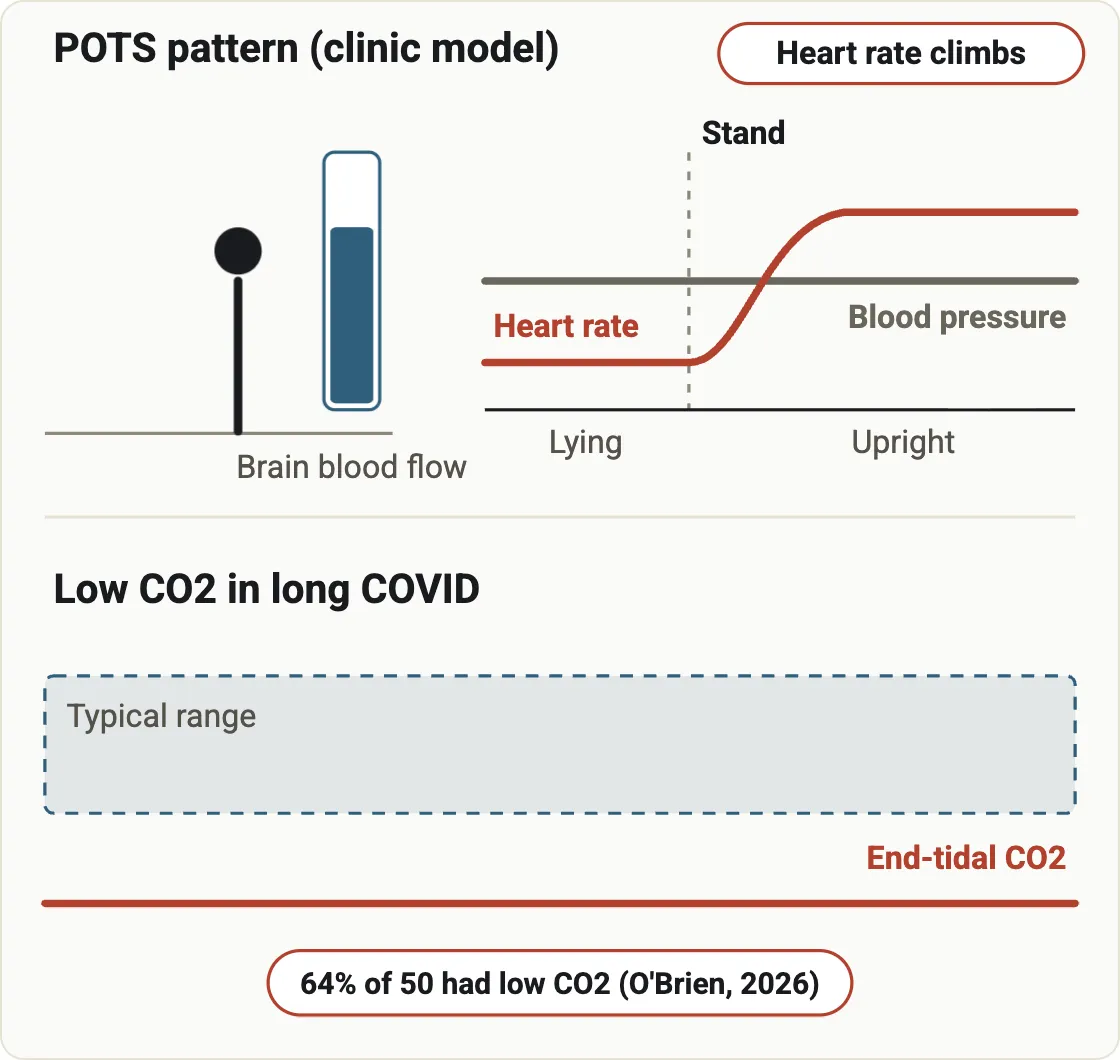
How often POTS shows up in long COVID across 3 studies, why heart rate and dizziness change when you stand, and what our team measures first.
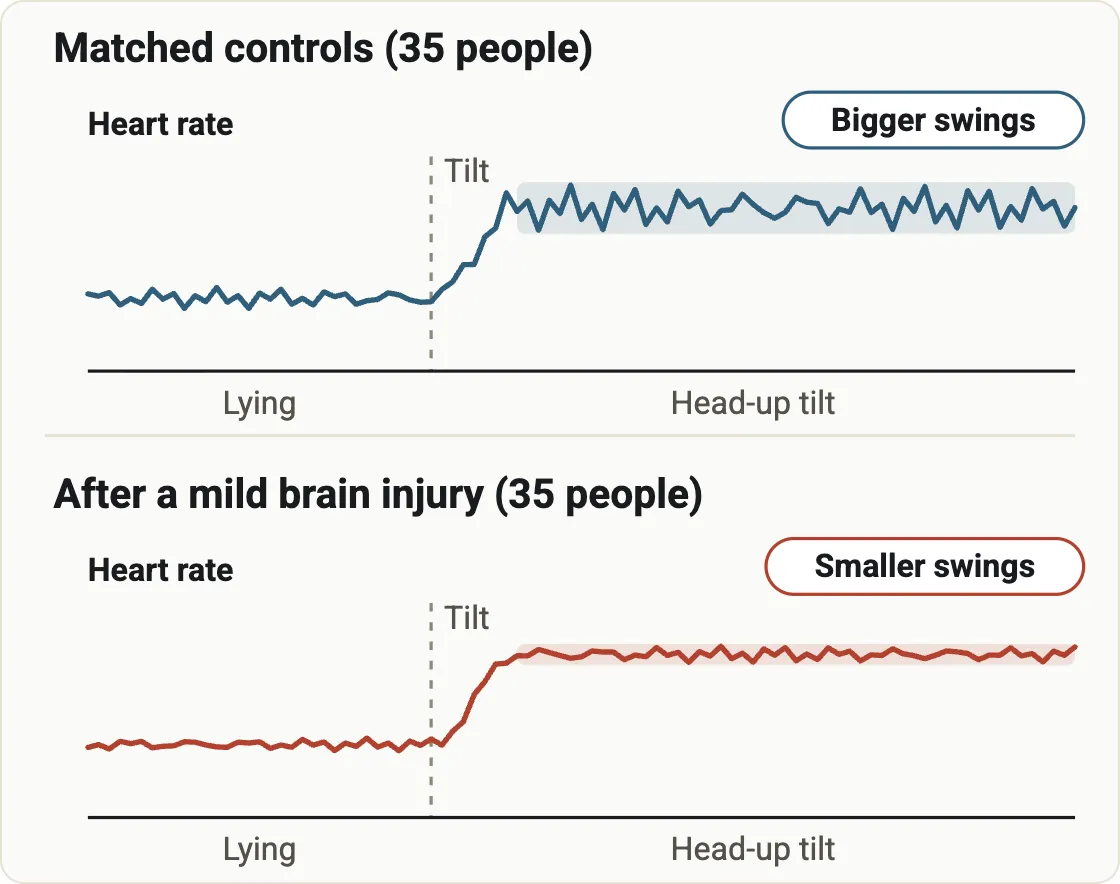
Dysautonomia is increasingly recognized after concussion. See what studies show about POTS after a head injury and what a racing heart can tell you.
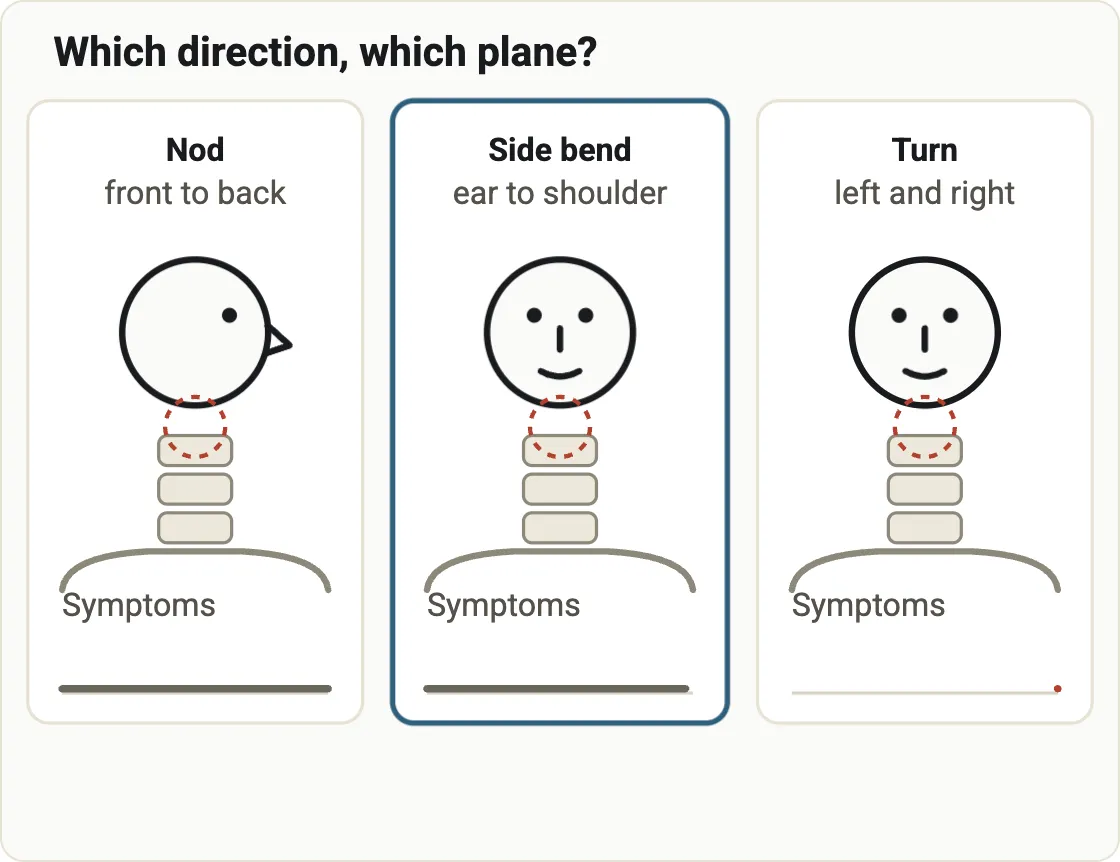
No controlled study has tested craniocervical instability as a cause of POTS. See what the imaging and surgery research shows and how our team reads the neck.
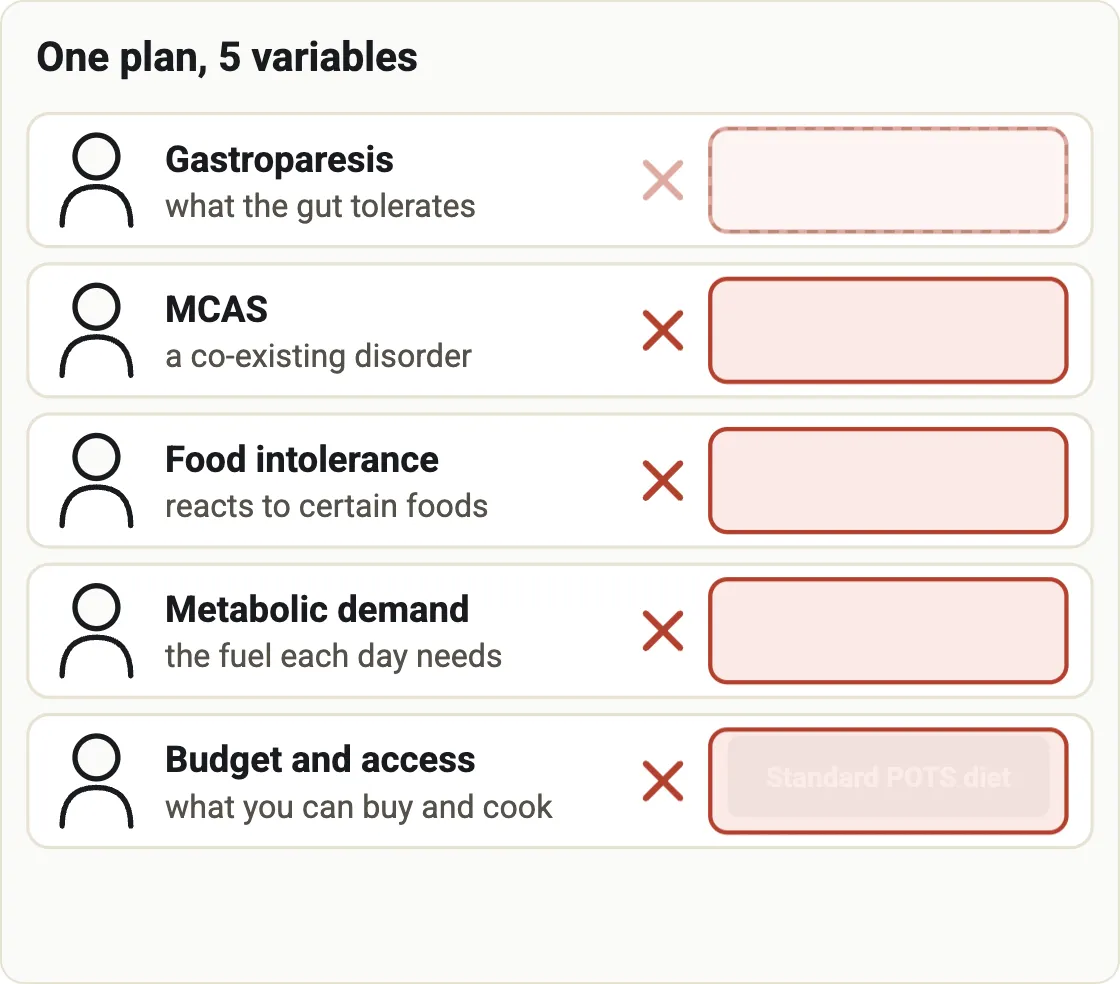
A 2026 review concluded one standard POTS diet is unlikely to work. See the salt trial, what's unknown on caffeine, alcohol and supplements, and our approach.
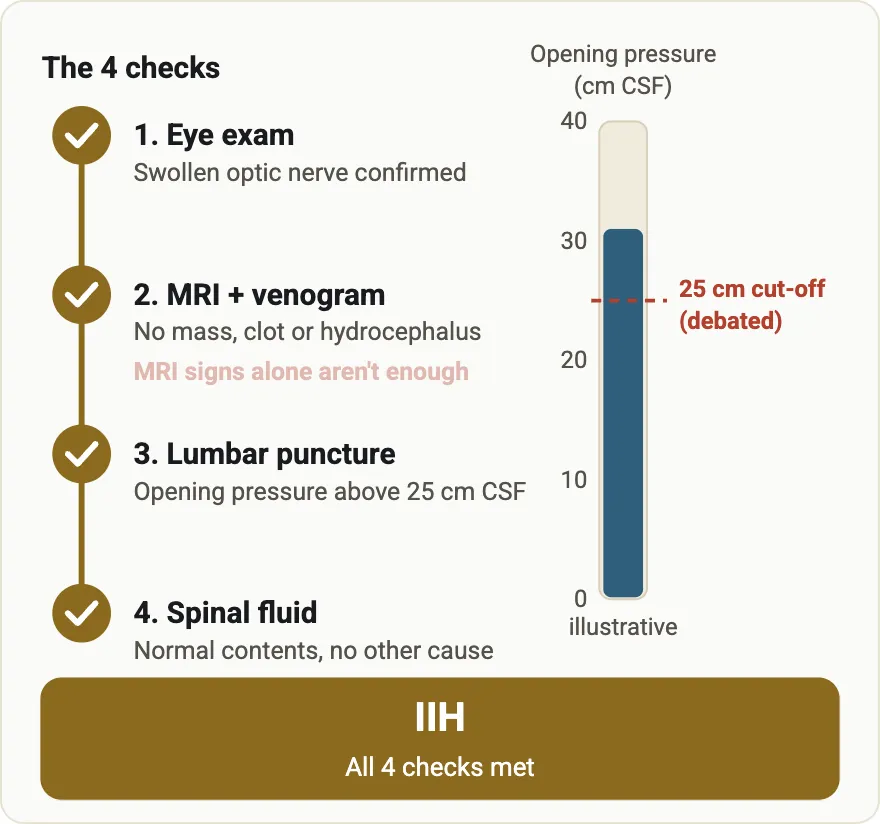
IIH and POTS can occur together. Learn what IIH is, how it's confirmed, which symptoms overlap with POTS, and why vision changes need prompt care.
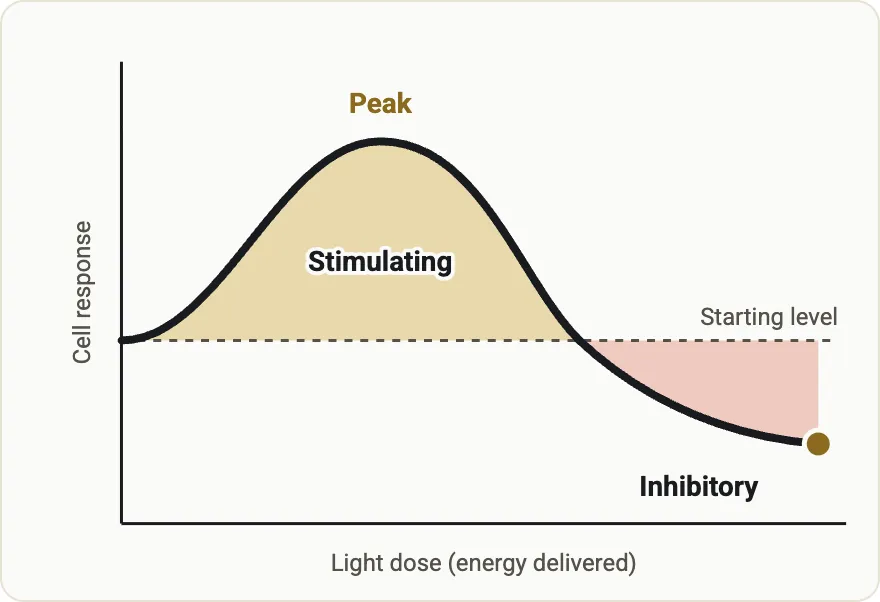
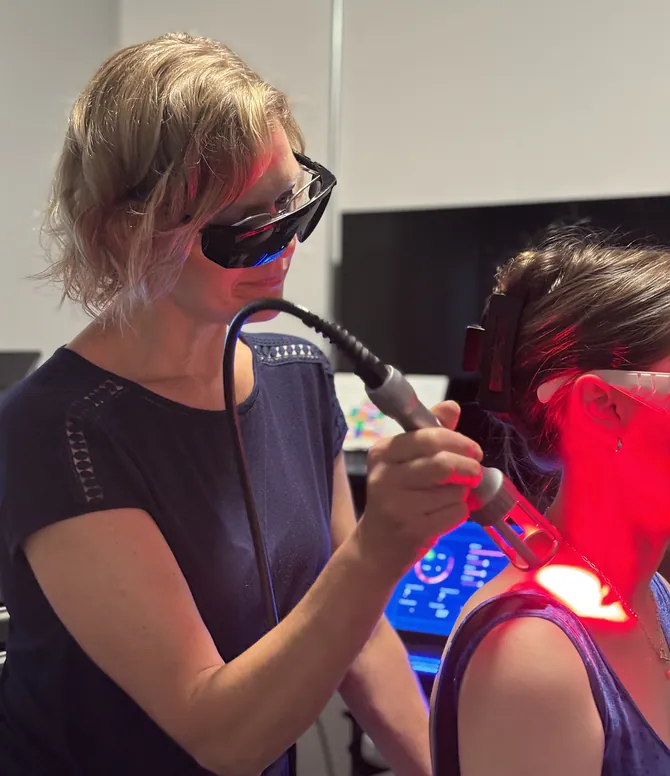
Does red light therapy help POTS? What red light acts on, what the research shows so far, who it may help or hurt, and where it fits in our team's care.
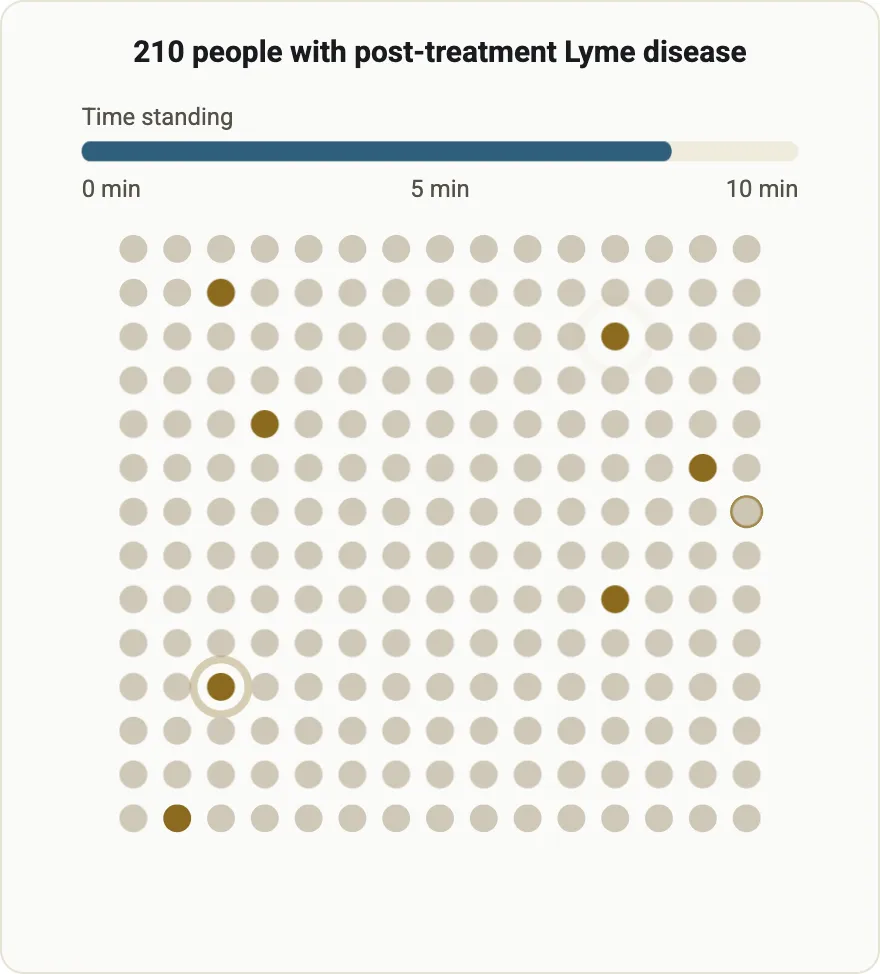
Can mold, Lyme or CIRS cause POTS? What studies show on mold, CIRS testing and post-treatment Lyme, and what our team checks first.
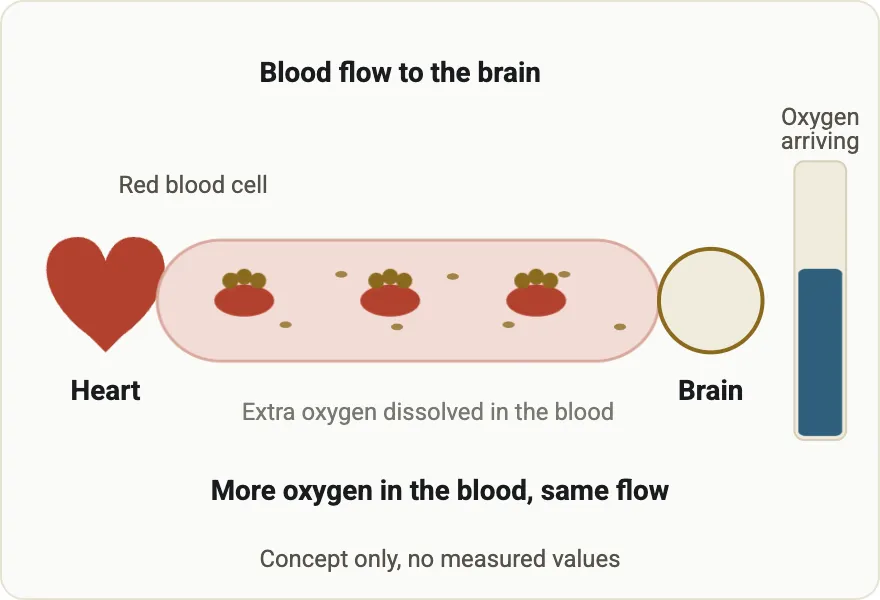
Our team found no trial of hyperbaric oxygen (HBOT) in POTS. See what HBOT changes in the blood, why blood flow matters, what trials show and the risks.
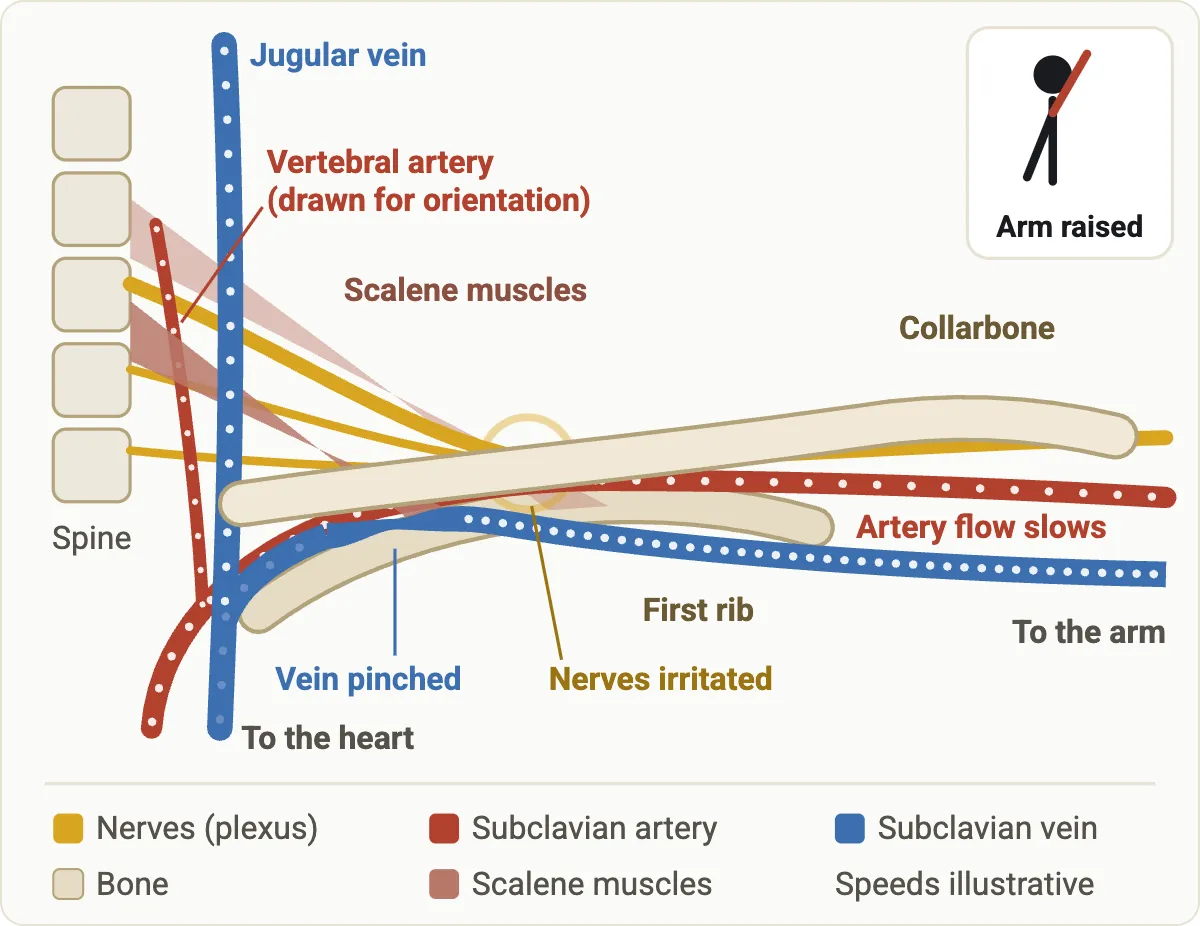
What the research shows about thoracic outlet syndrome and dizziness, why no study links TOS to POTS yet, and how our team checks for compression.
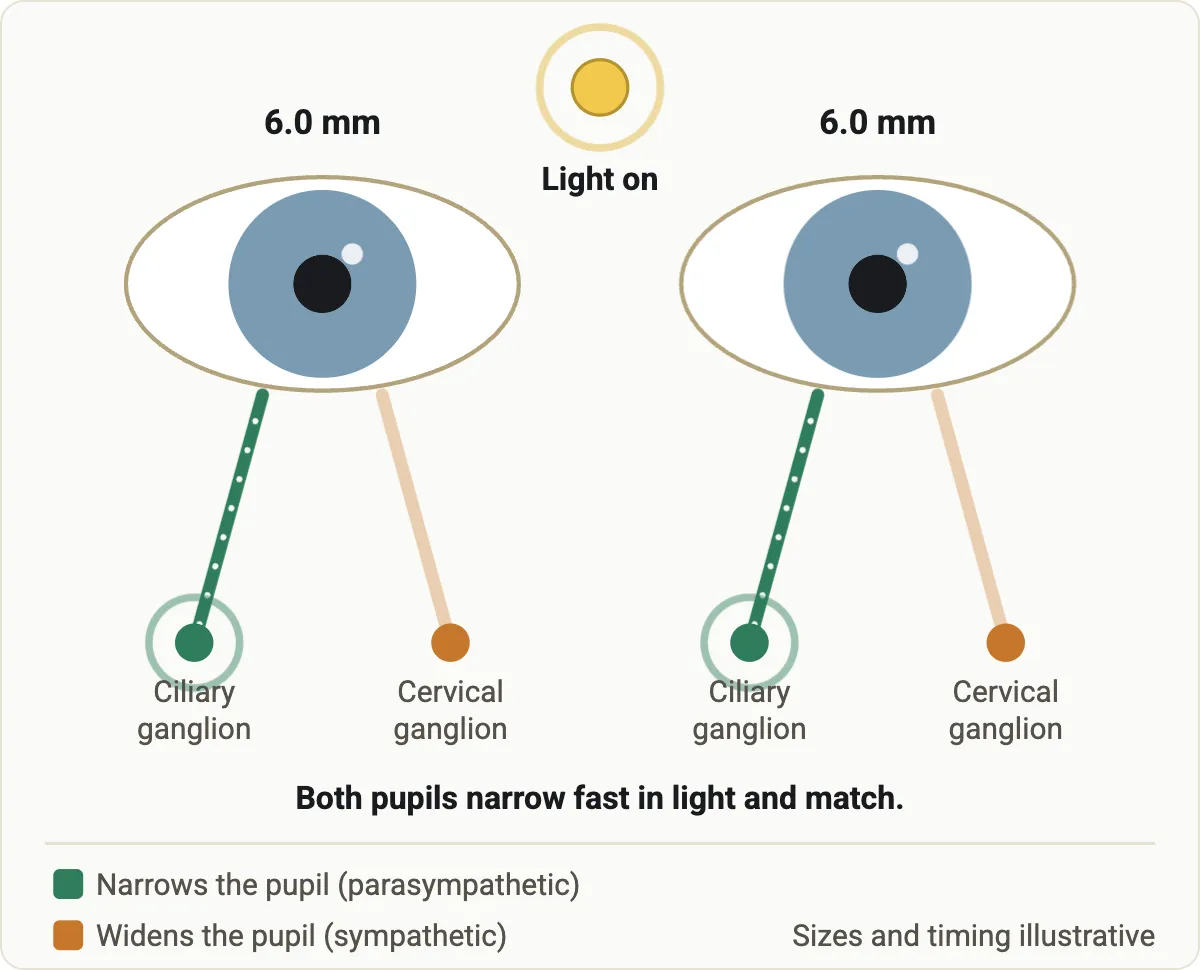
When unequal pupils after a head injury mean calling 9-1-1 or going to the ER, how common a harmless difference is, and what concussion does to both pupils.
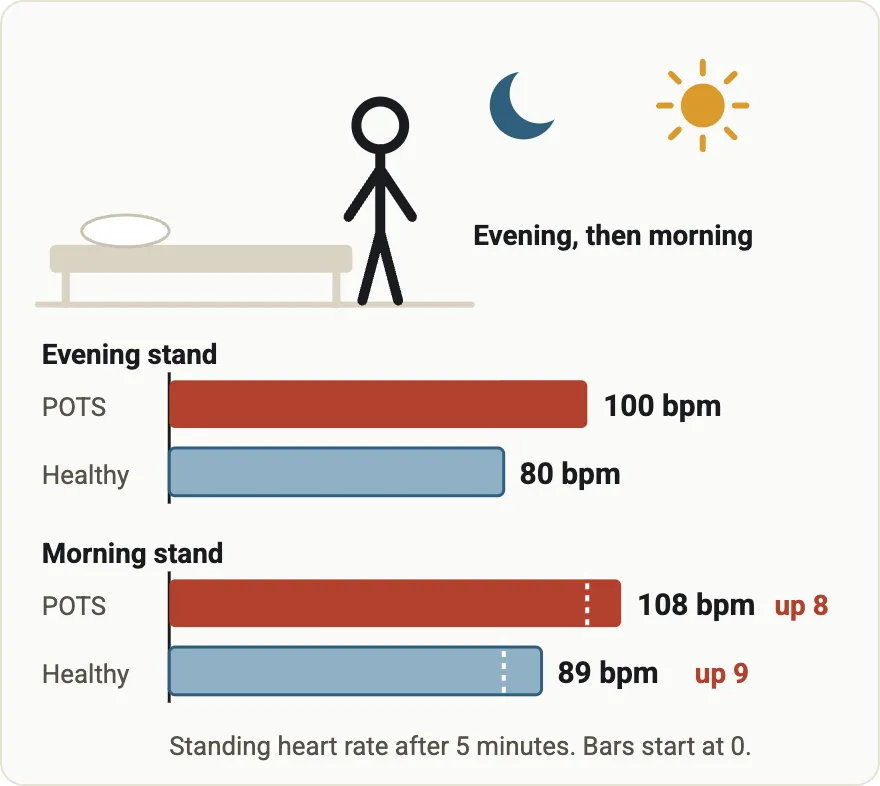
POTS is often worse in the morning. See what studies show about standing heart rate and test timing, plus our team's view on the neck and sleep posture.
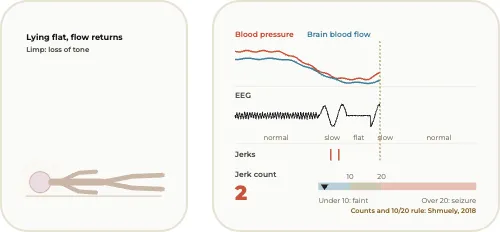
Seizure-like spells in POTS are often convulsive syncope: a faint with brief jerks. How to tell it from a seizure, what testing shows, and when to get help.
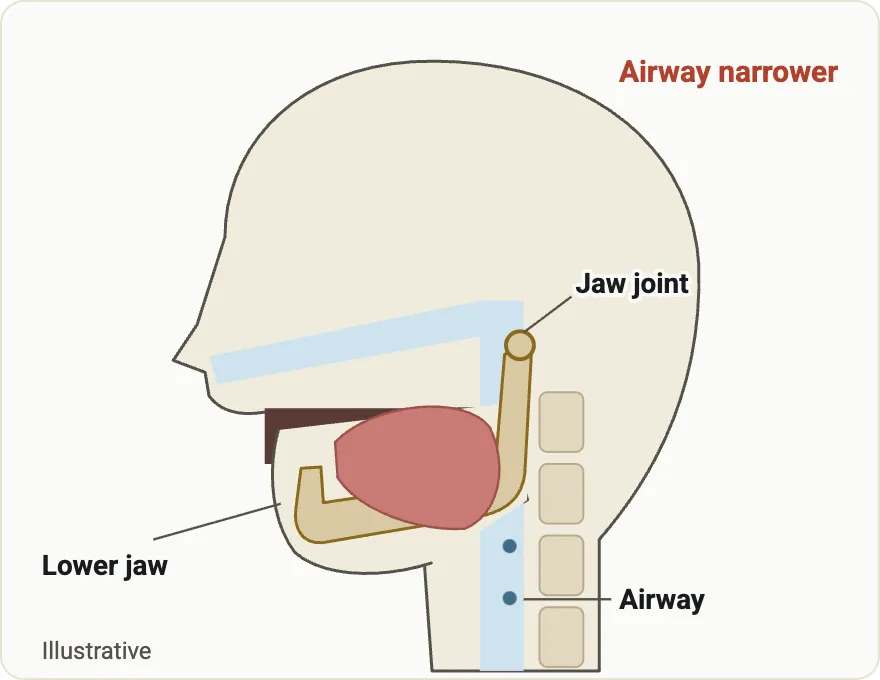
No study we found shows TMJ causes POTS. Jaw structure and jaw joint strain can still affect breathing, dizziness, headaches and ringing in the ears.
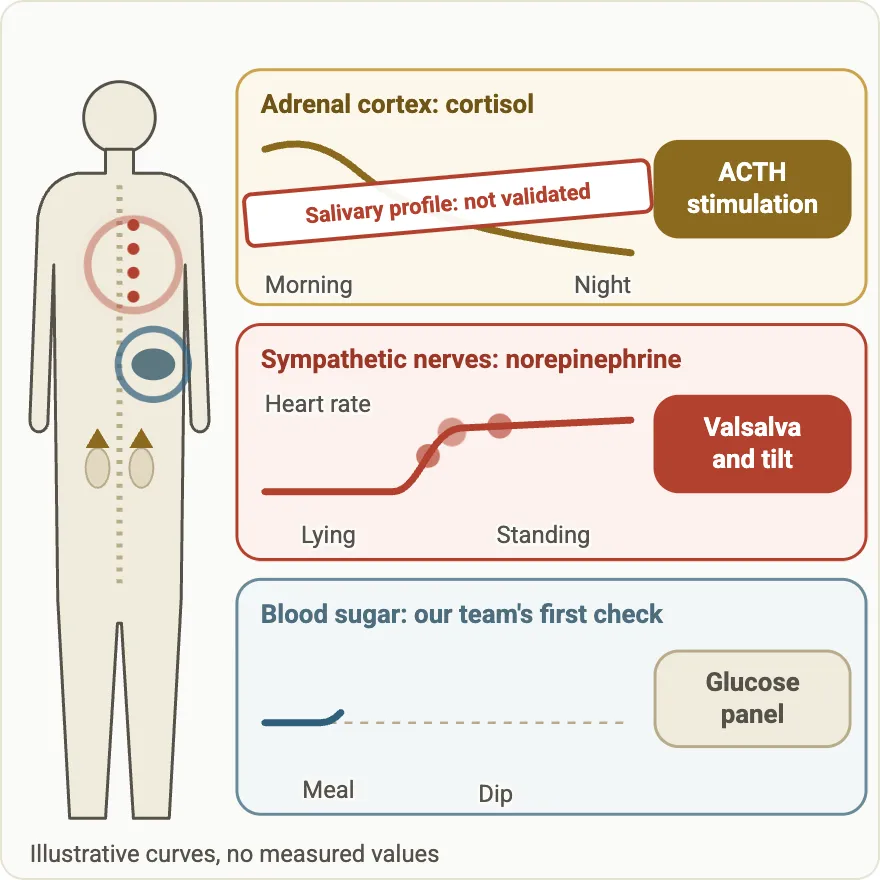
Adrenal fatigue isn't a recognized diagnosis. See what the research shows, how adrenal insufficiency is really tested, and what our team checks first in POTS.
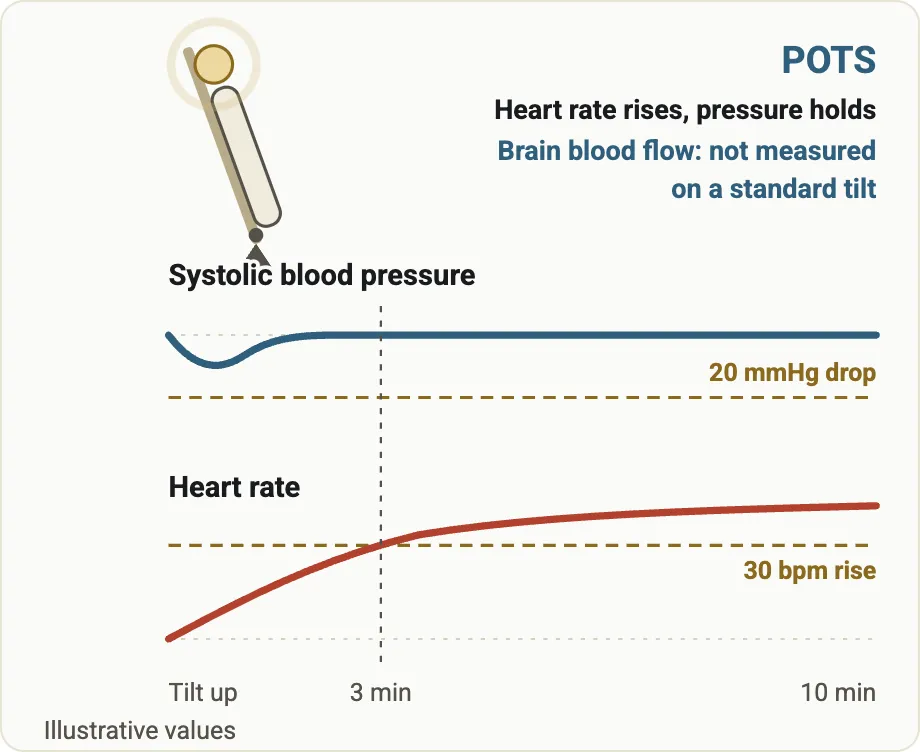
POTS is a heart rate rise of more than 30 bpm with blood pressure holding; orthostatic hypotension is a fall of 20/10 mmHg within 3 minutes. How each is read, and why our team says you can't carry both.
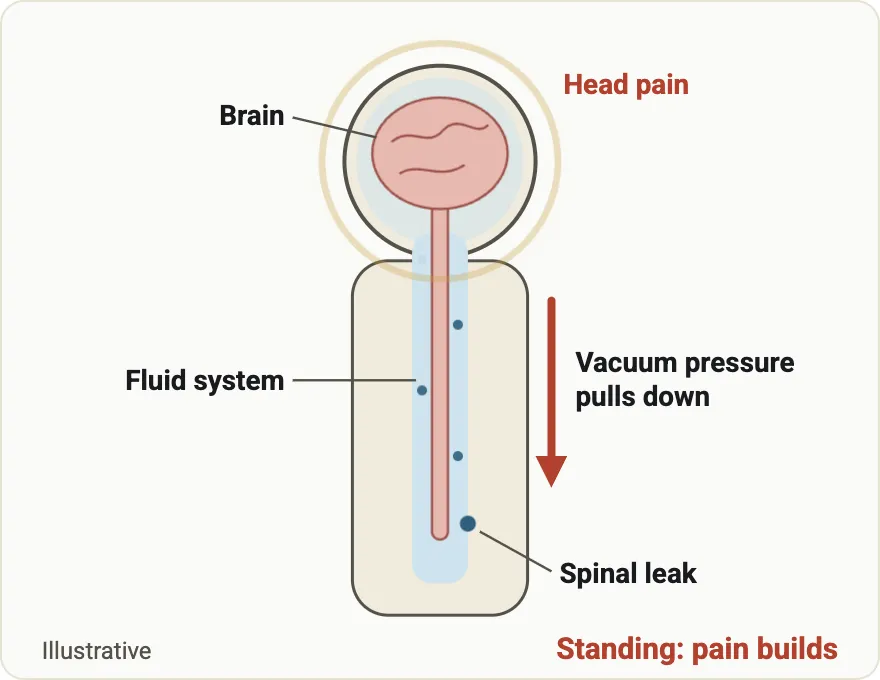
An orthostatic headache gets worse when you stand and eases when you lie flat. Learn how spinal fluid leaks and POTS can each cause it, and when to get checked.
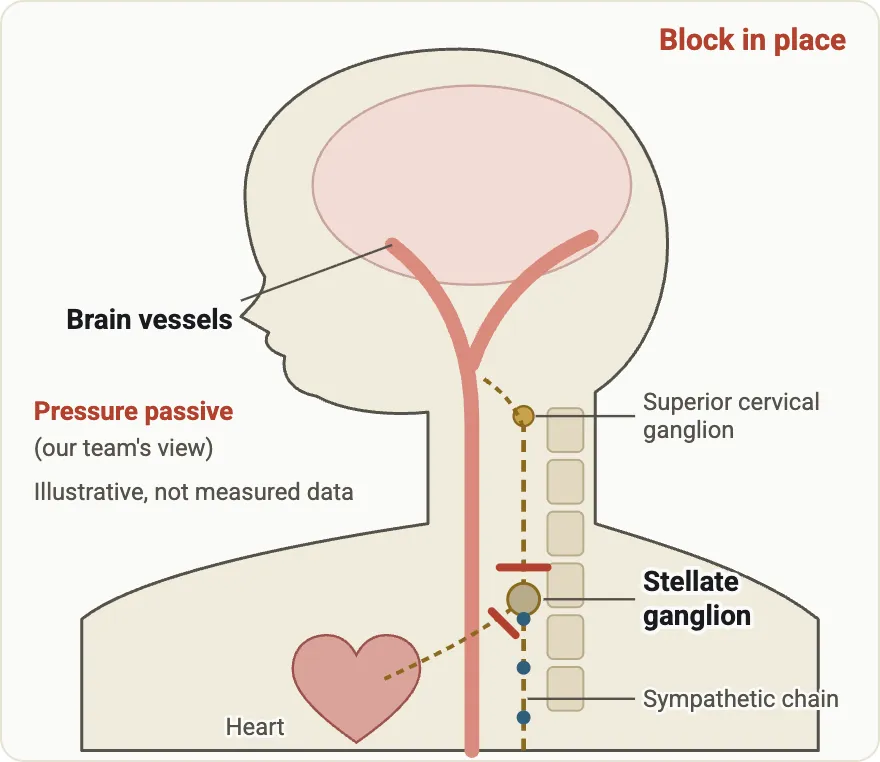
The only published POTS study of stellate ganglion block is 1 case report. Here's what SGB does, what the PTSD and long COVID research shows and our team's view.
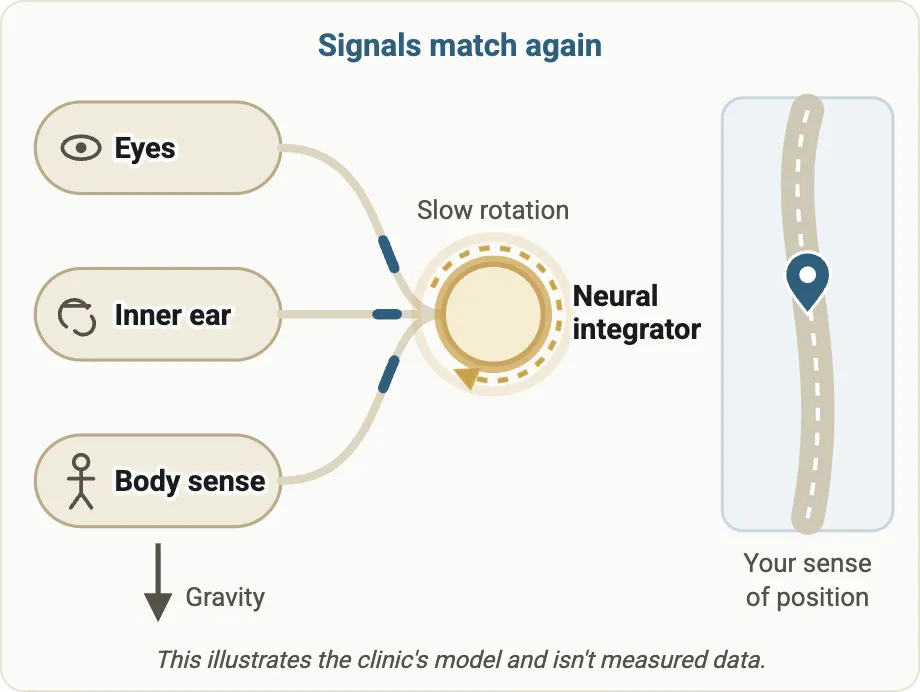
GyroStim is a whole-body rotation device our team uses to retrain the brain's sense of position. How it's used, and what the research shows so far.
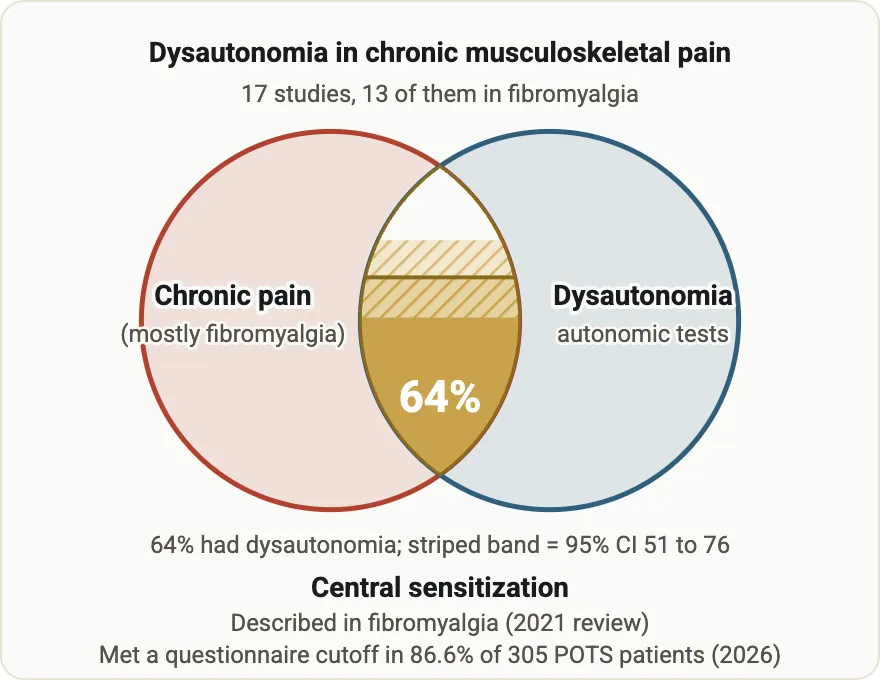
A 2026 meta-analysis, mostly of fibromyalgia studies, found signs of dysautonomia in a pooled 64% of people with chronic musculoskeletal pain. Central sensitization is reported in both conditions.
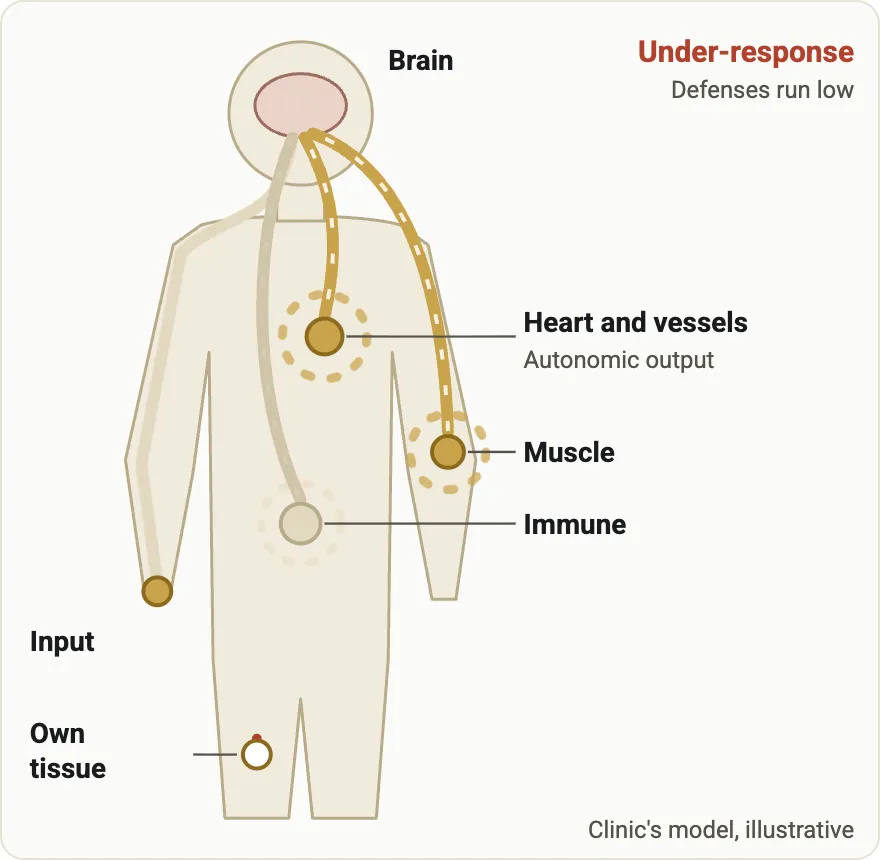
Research hasn't shown that POTS as a whole is autoimmune. What the receptor antibody, Hashimoto's and IVIG studies found, where they conflict, and how our team sees the overlap.
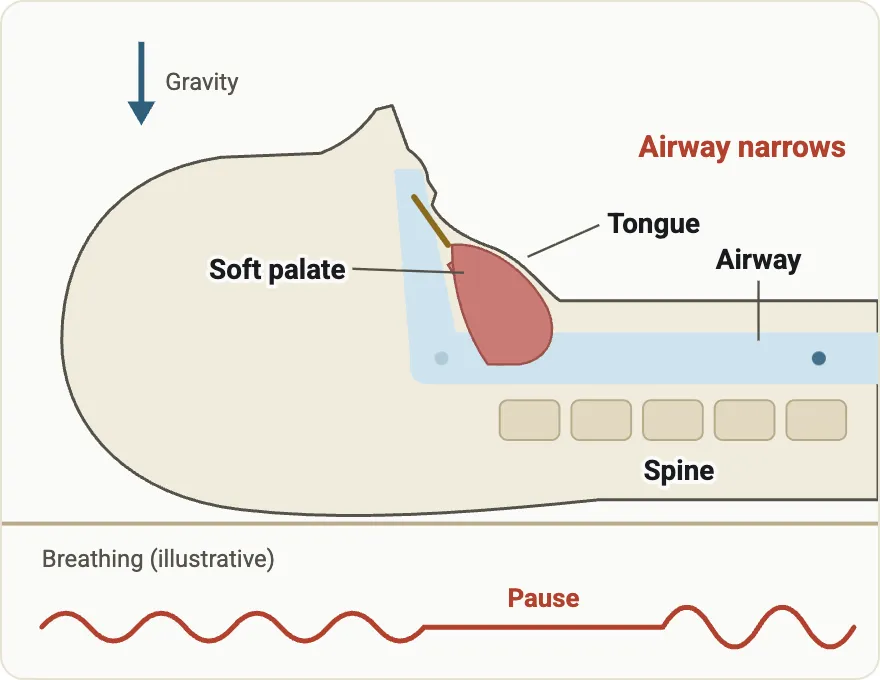
Most people with POTS report poor sleep. What research shows about POTS insomnia and sleep apnea, and how to choose a sleeping position.
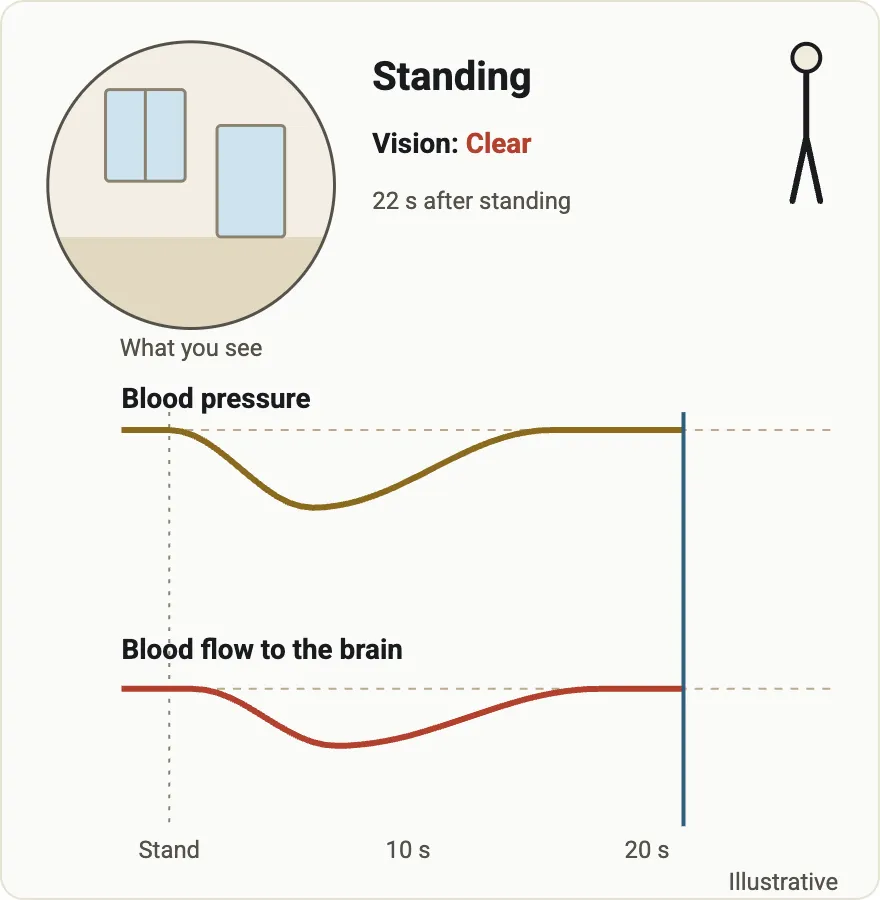
Vision can go dark or blur on standing when brain blood flow drops faster than it can adjust. What's normal, what points to POTS or OH, and when to get help.
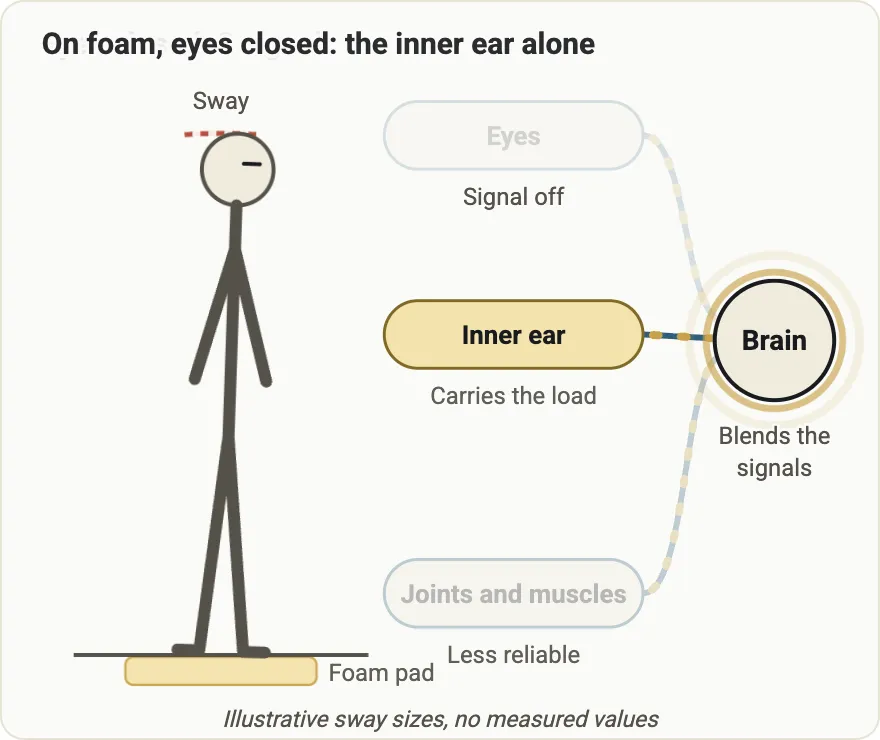
Feeling off balance with no spinning is called unsteadiness. It happens when the inner ear, eyes, or joint and muscle signals your brain balances on are weak.
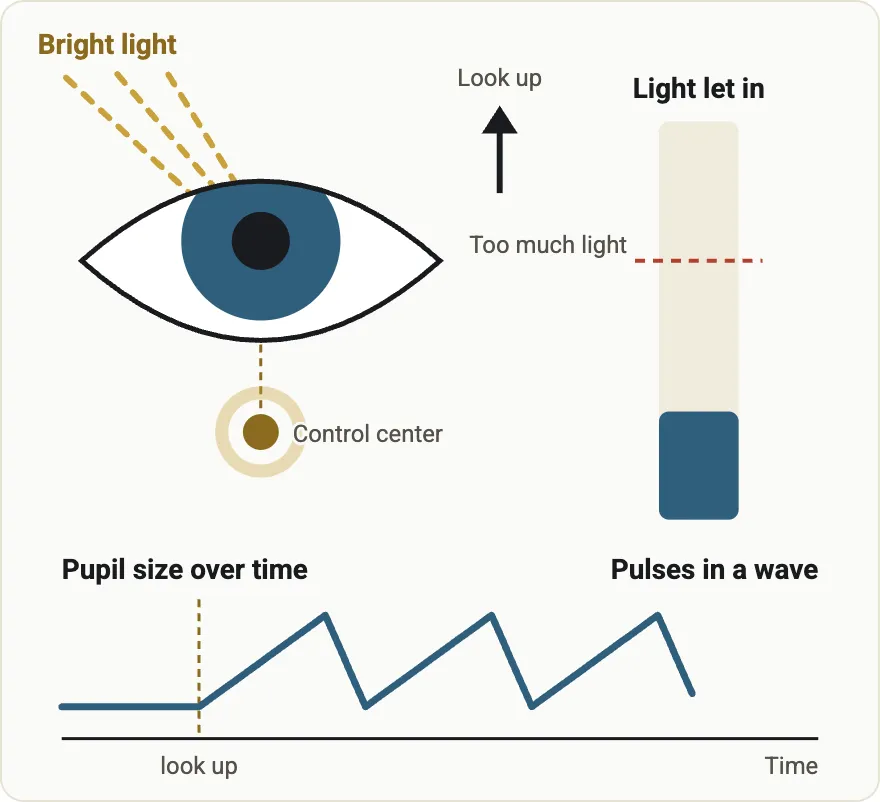
In 1 study, people with POTS felt light discomfort at lower levels than healthy people. An oversensitive visual system and weak pupil control may drive it.
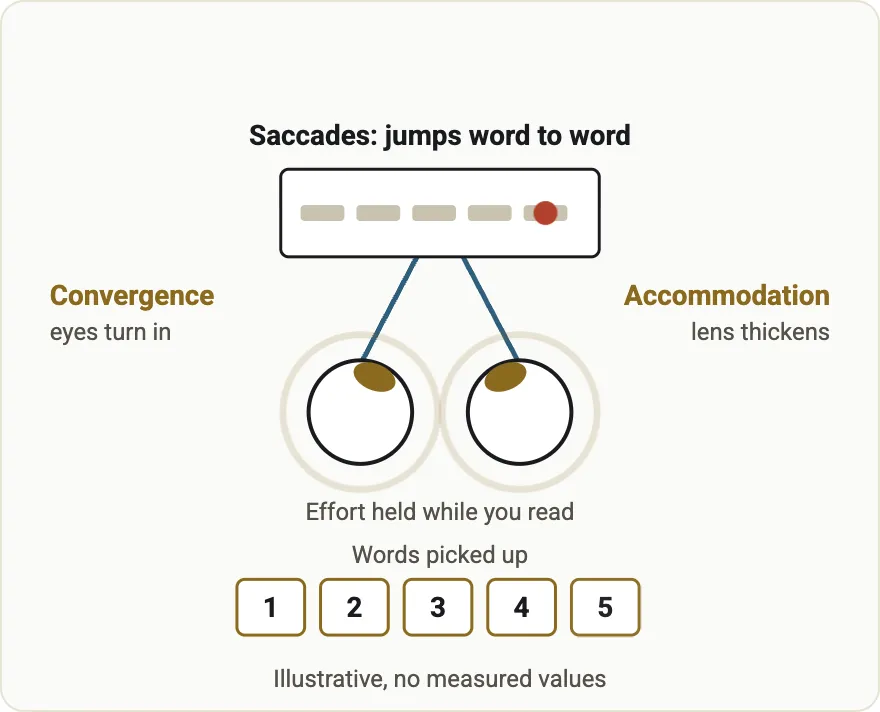
Reading and phones load 4 systems at once: near focus, eyes turning in, eye jumps and neck posture. See which can bring dizziness or eye strain.
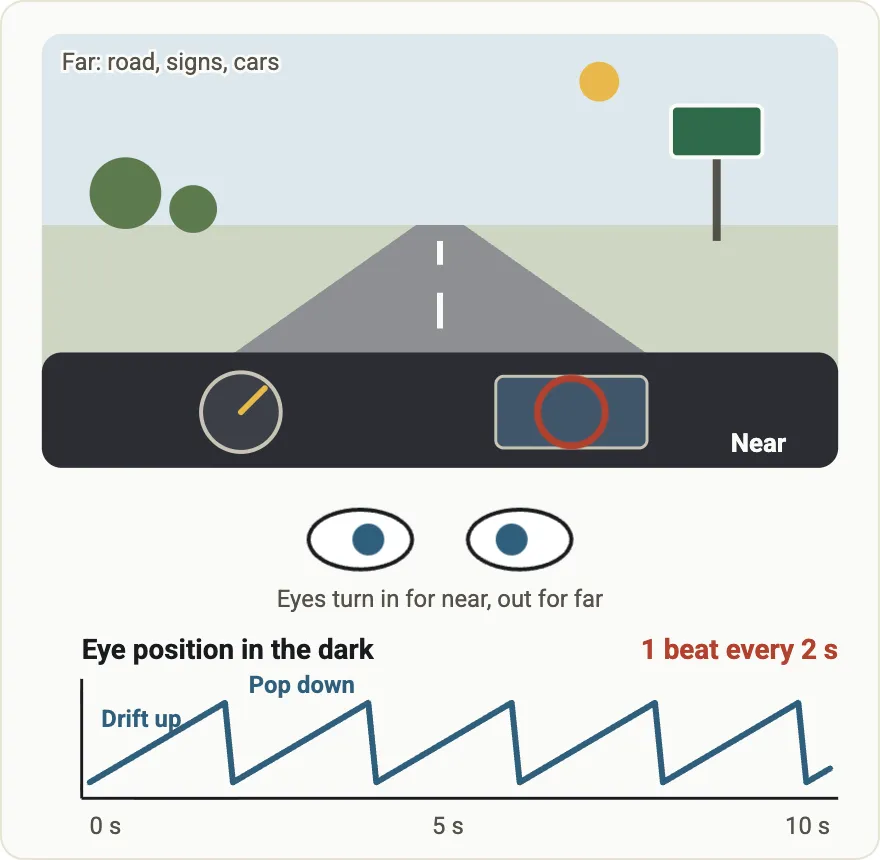
We found no study linking POTS and car sickness, but motion sickness is tied to the autonomic system. See what our team found in one car-sick patient.
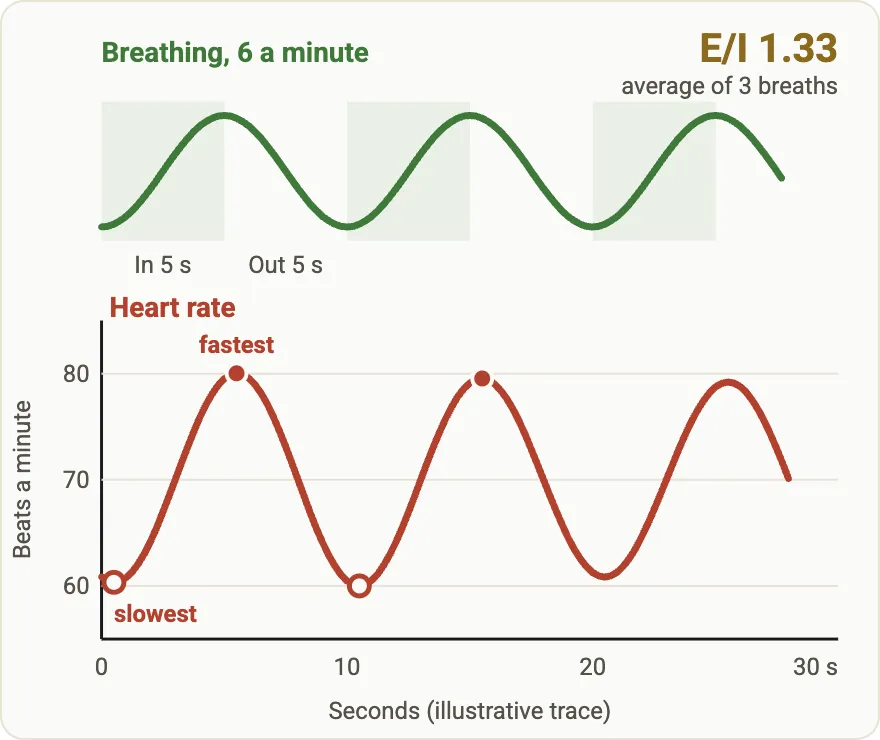
How the deep breathing test is run, what the E/I ratio measures, normal values by age, and what a low or normal result means, with our team's 1.25 target.
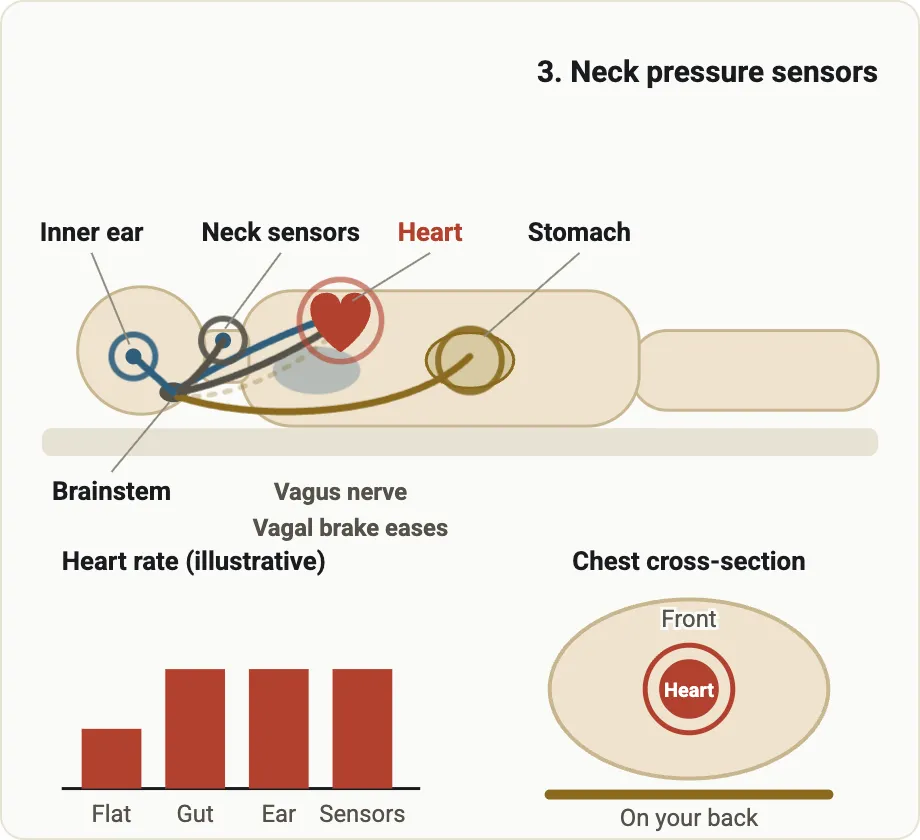
A racing heart or palpitations lying down can come from the heart's rhythm, the gut, the balance system or neck pressure sensors. Here's what to check first.
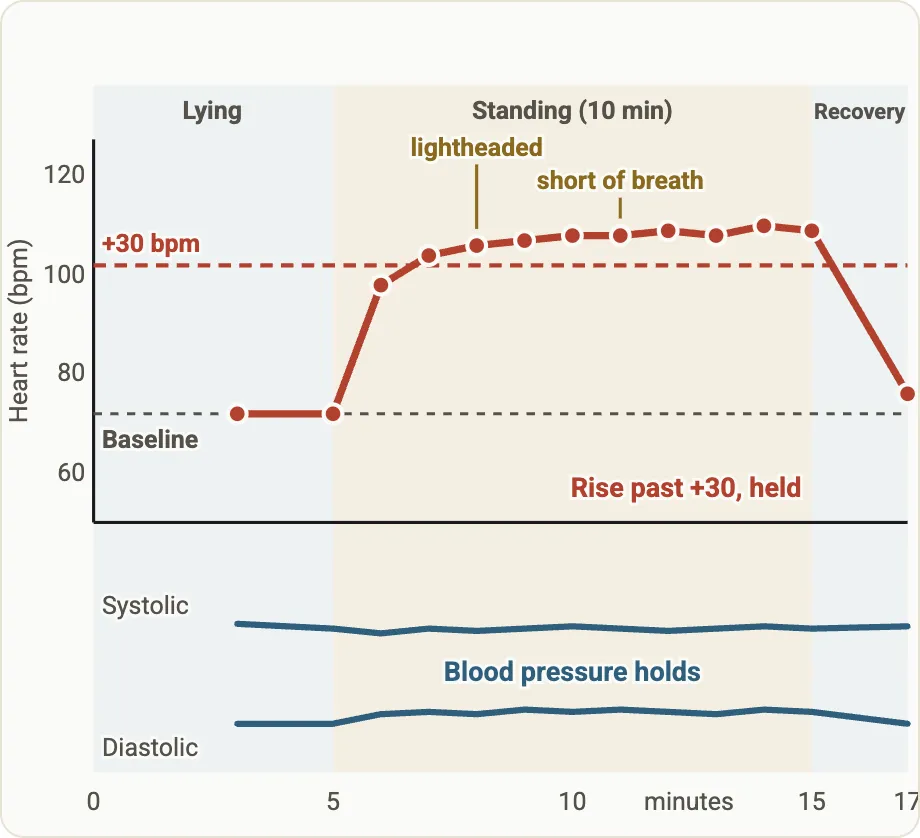
How to do a 10-minute stand test or modified NASA lean at home with a blood pressure cuff, what to log each minute and how to read the numbers.
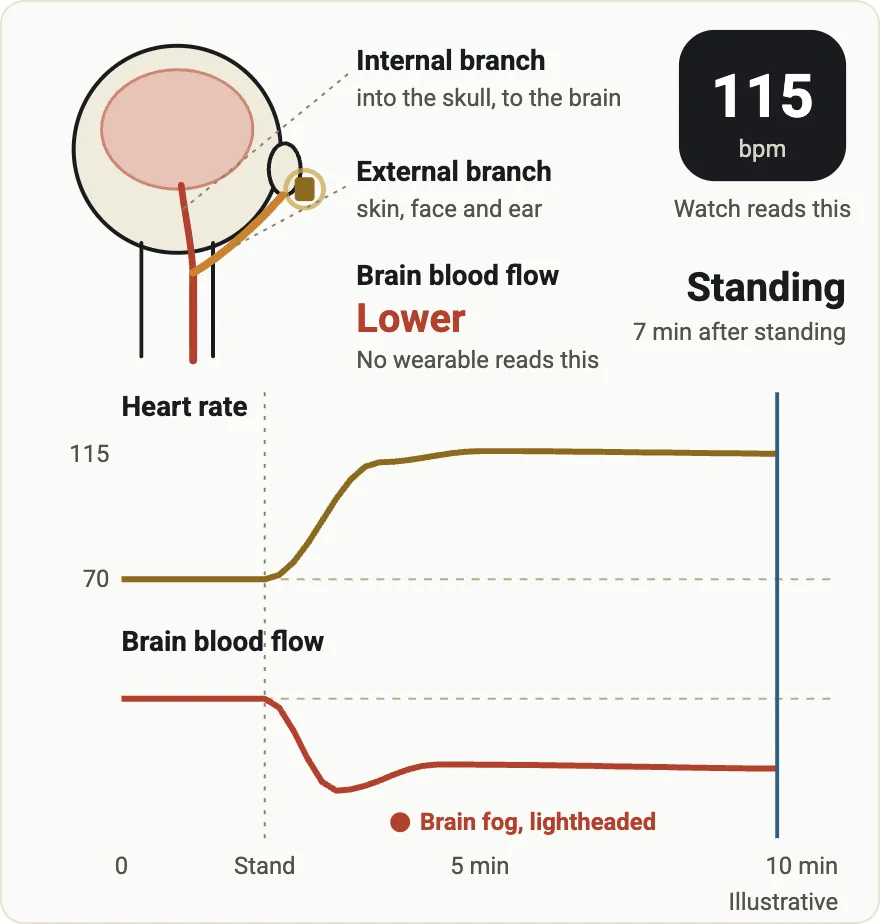
Watches, rings and chest straps track heart rate and HRV. Here's how accurate they are when you stand and why none of them reads brain blood flow in POTS.
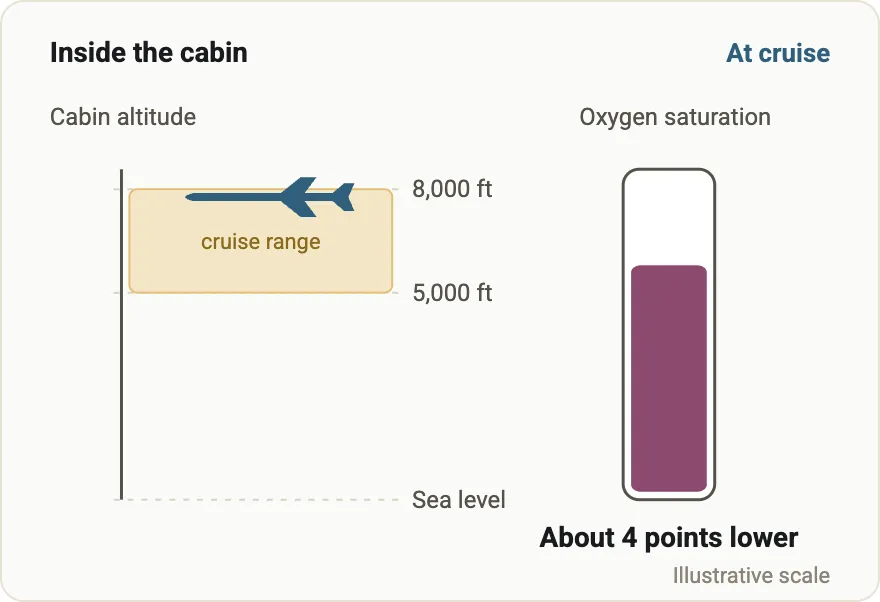
Can you fly with POTS? What cabin pressure, hours of sitting and dry air do to your body, what helps on the day, and what our team sees when patients travel.
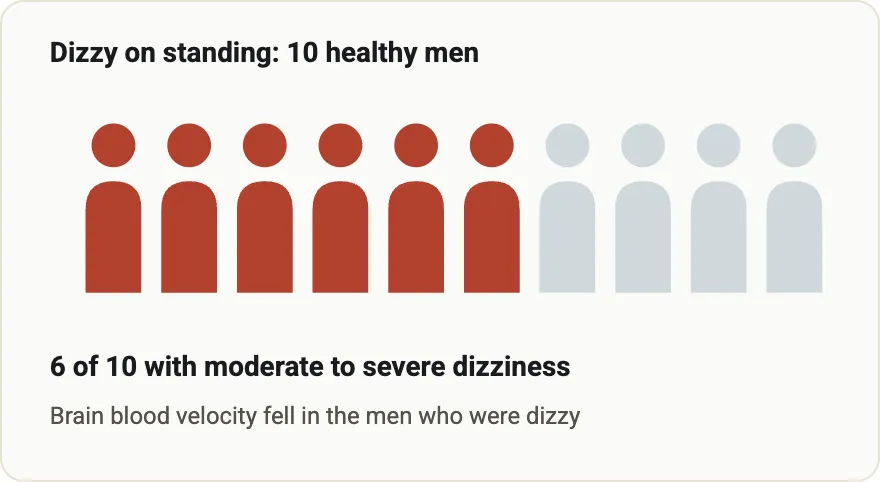
No trial has tested cannabis or CBD in POTS. What THC does to heart rate, standing blood pressure and brain blood flow, and where it helps with pain and sleep.
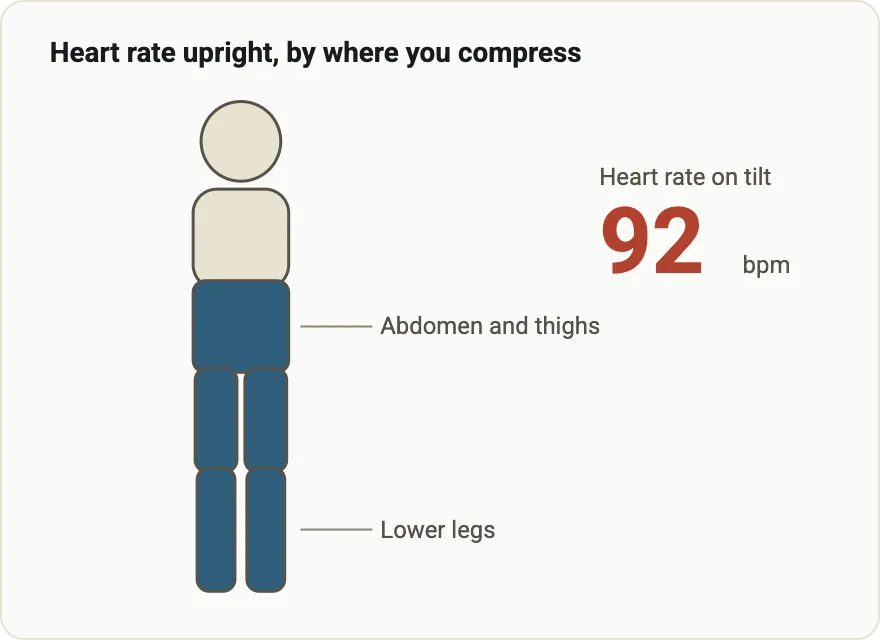
Compression lowers the standing heart rate in POTS, and the abdomen matters more than the calves. What socks, leggings and binders did in trials.
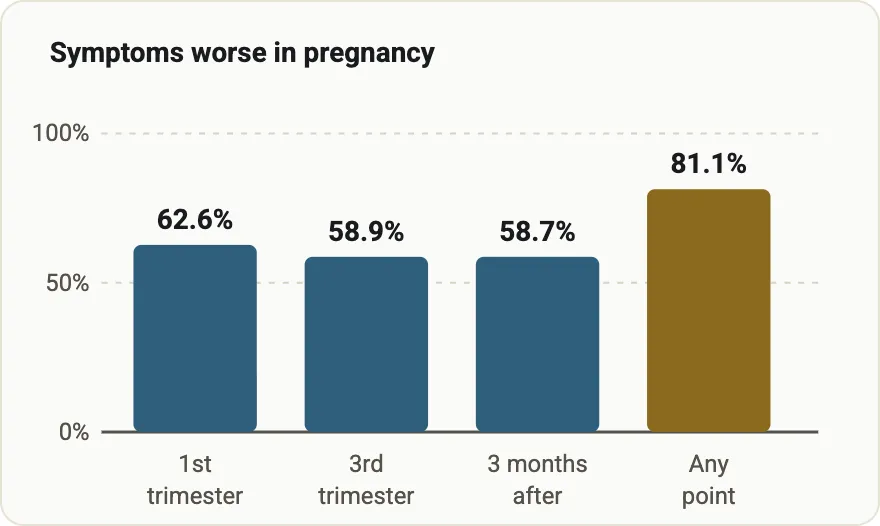
About 90% of people with POTS are female. What's known about why, why symptoms flare around your period, and what the research says about pregnancy with POTS.
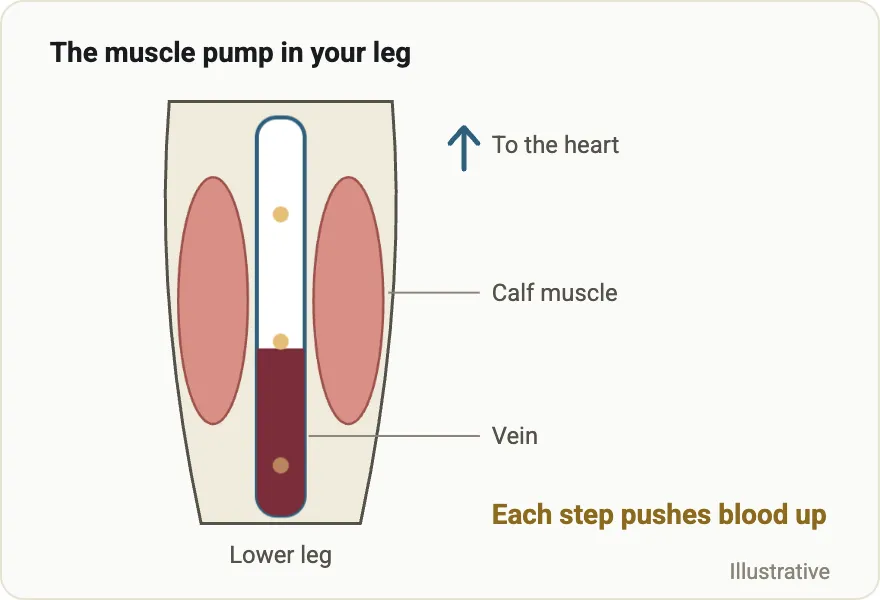
Walking squeezes blood back to the heart with every step, and standing still stops that pump. Why lines and showers are harder than walking, and what helps.
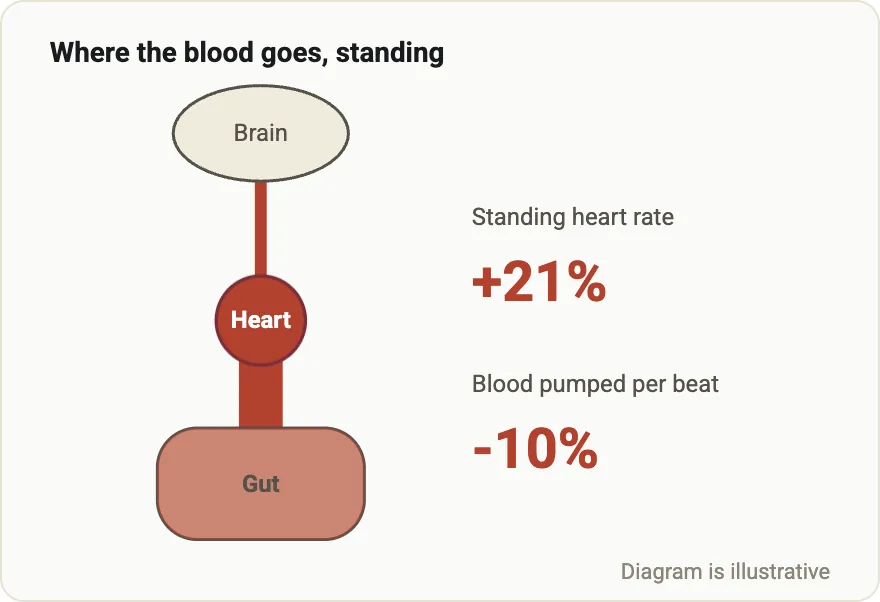
A meal pulls blood to the gut, and in POTS the standing heart rate rises 21% after a sugar load. Why you crash after eating and what to change about meals.
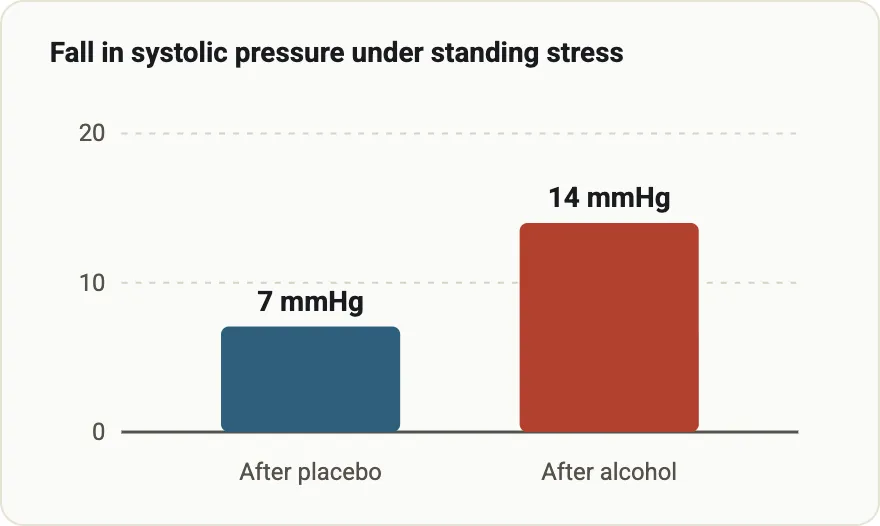
Alcohol blocks the vessel tightening that holds blood pressure up when you stand. Why most people with POTS feel worse after drinking.
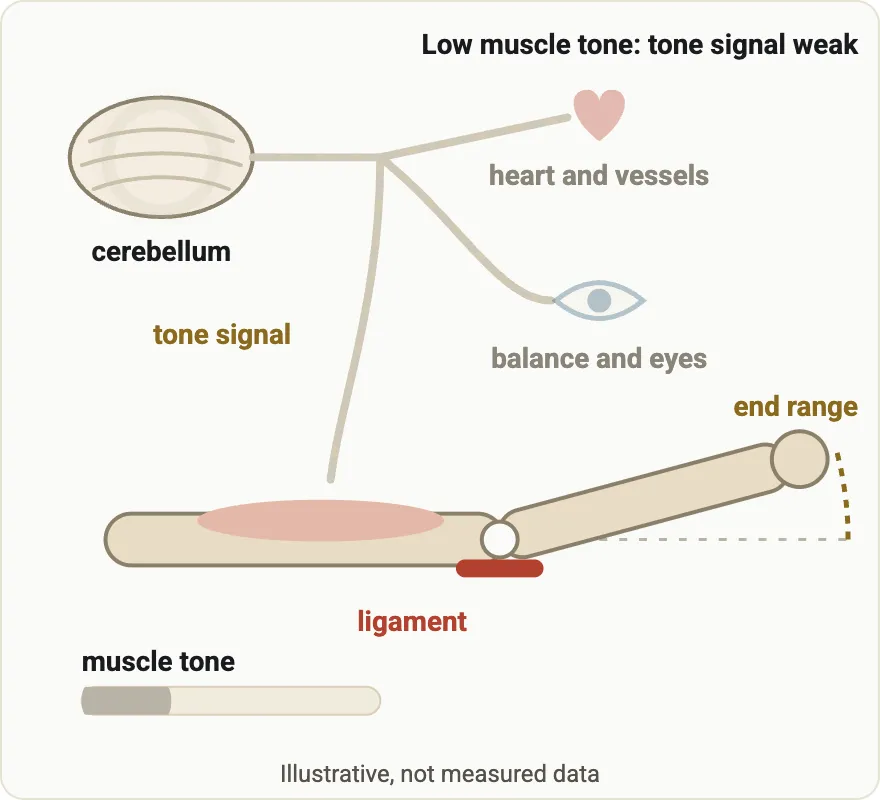
hEDS treatment runs from rehab to PRP, prolotherapy and surgery. See why our team checks for low muscle tone first, and what the evidence shows.
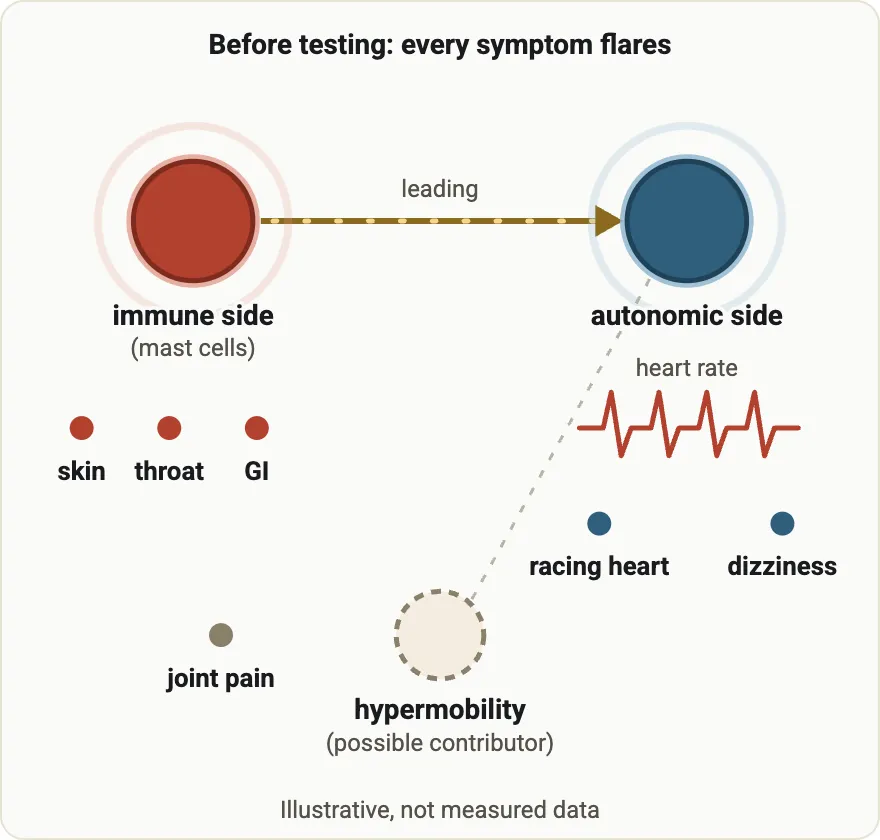
POTS, EDS and MCAS (the triad or trifecta) can show up together, but cause isn't settled. See how our team sorts which one to address first.
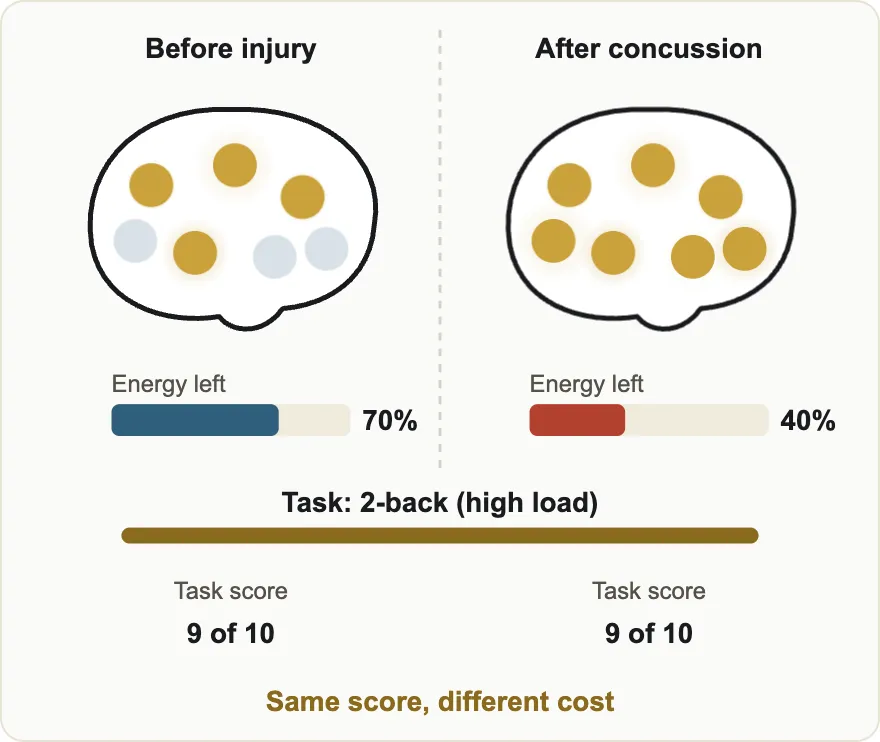
Concussion fatigue fades most in the first 3 months. Of people with sleep and fatigue problems at 2 weeks, about a third still have problems at a year.
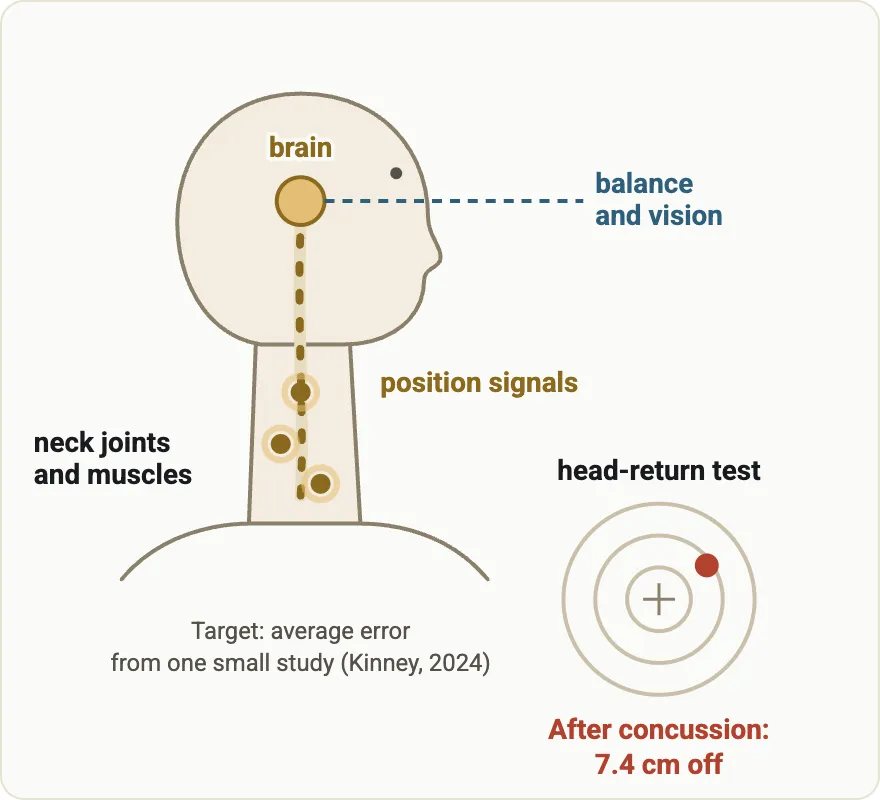
Why your neck can hurt after a concussion or whiplash, what the research on neck position sense shows, and what a neck exam checks.
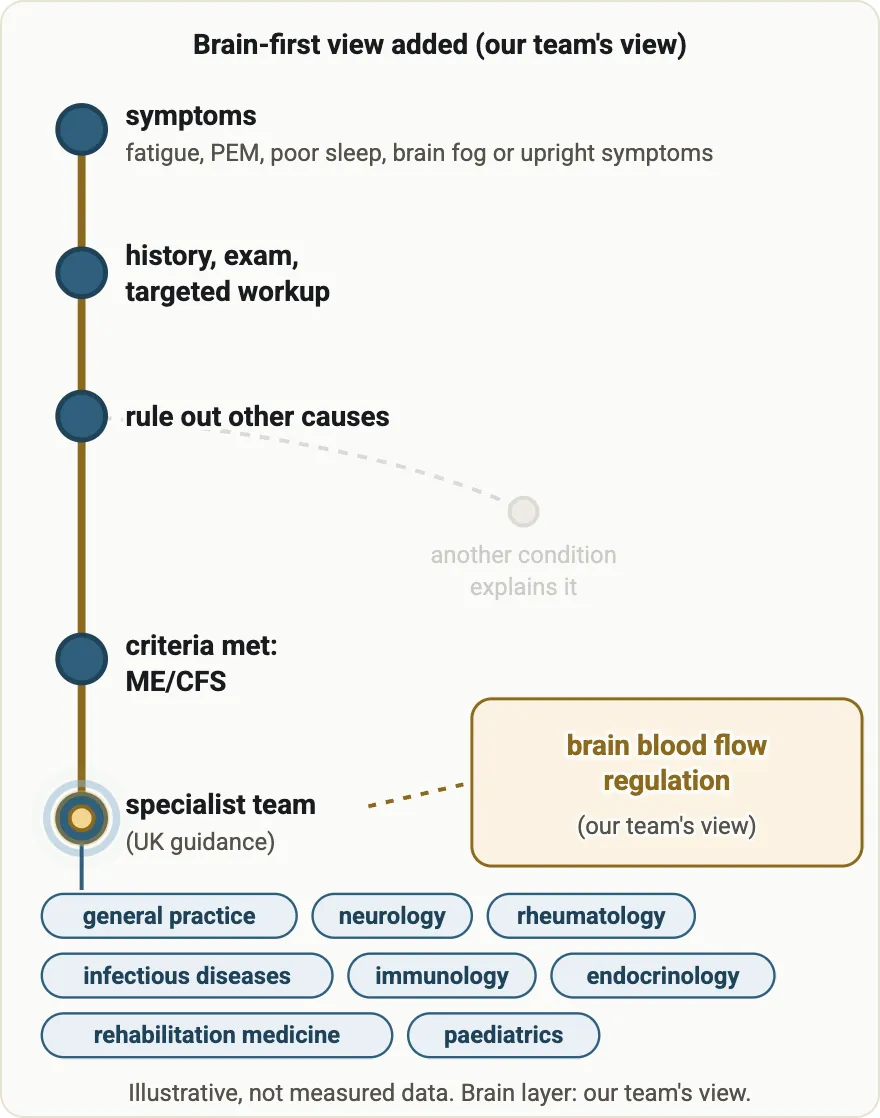
Who diagnoses ME/CFS, when guidelines say to see a specialist team, which specialties those teams draw from, and the questions to ask any doctor.
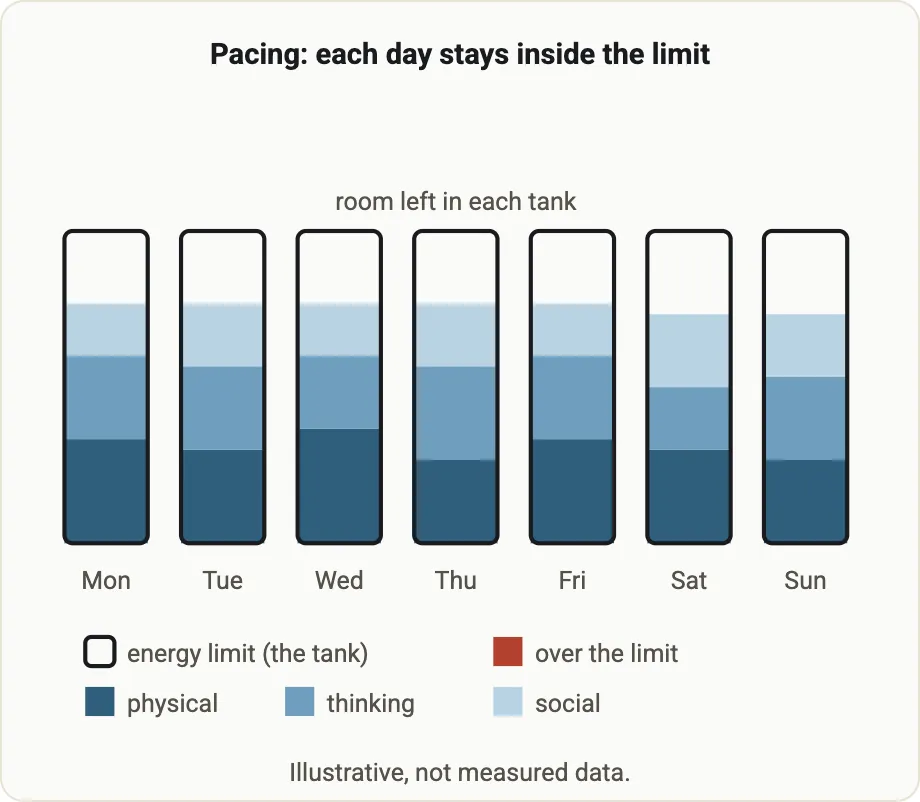
Pacing for ME/CFS: what NICE calls energy management, what your energy limit is, what goes into a plan, and what the research shows.
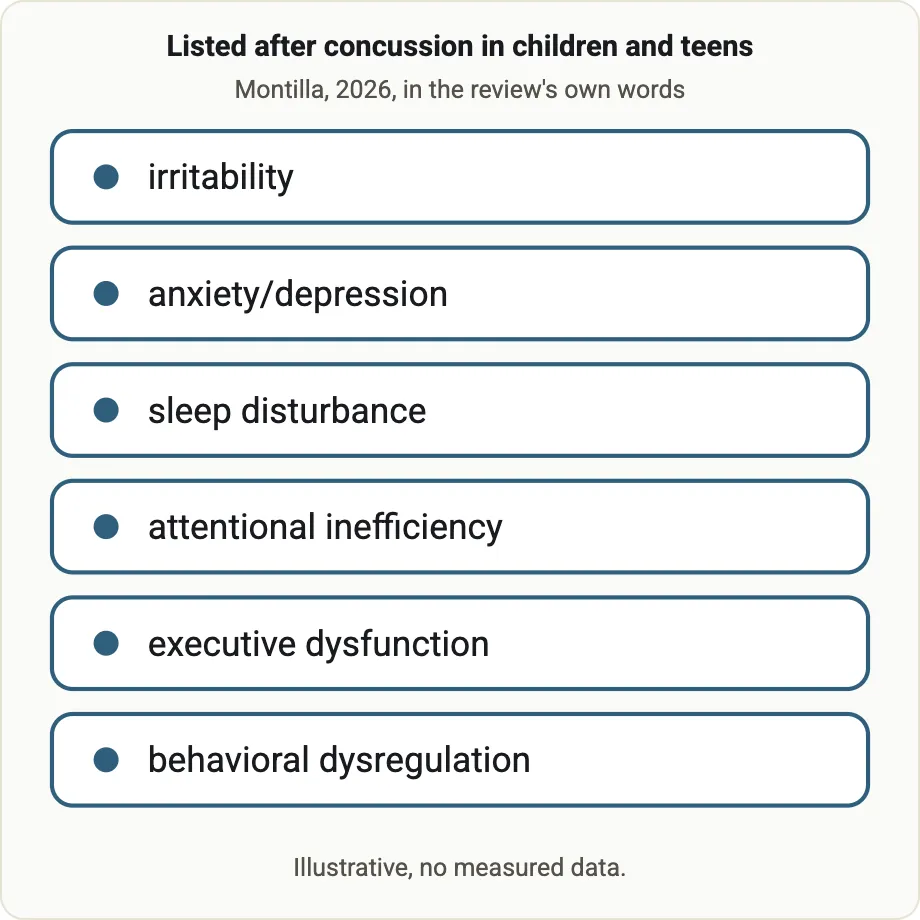
What research shows on irritability, anxiety and low mood after a concussion, how past history matters, and when to get help for a mood change.
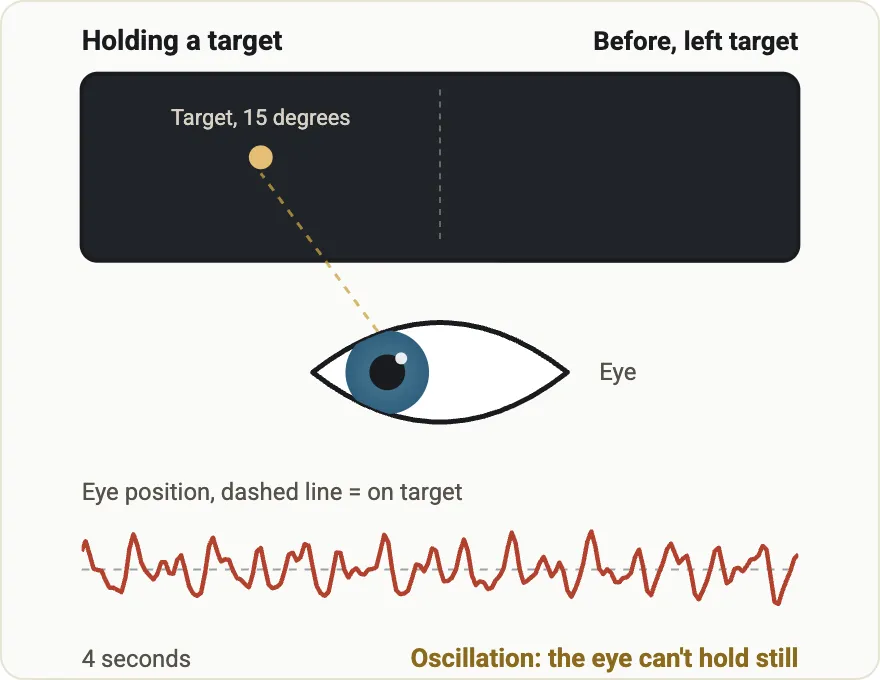
CT and MRI often look normal after a concussion. A functional exam measures what changed: eyes, pupils, balance, autonomic reflexes and blood flow.
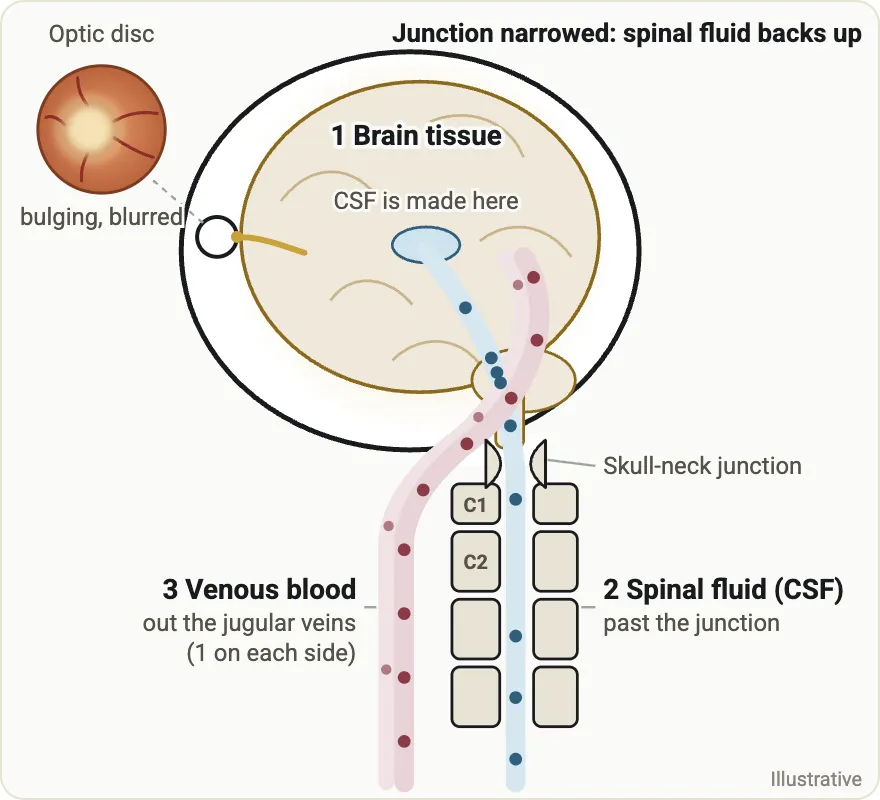
What causes head pressure after a concussion: the 3 routes our team checks, the signs that need an eye exam this week, and how raised pressure is checked.
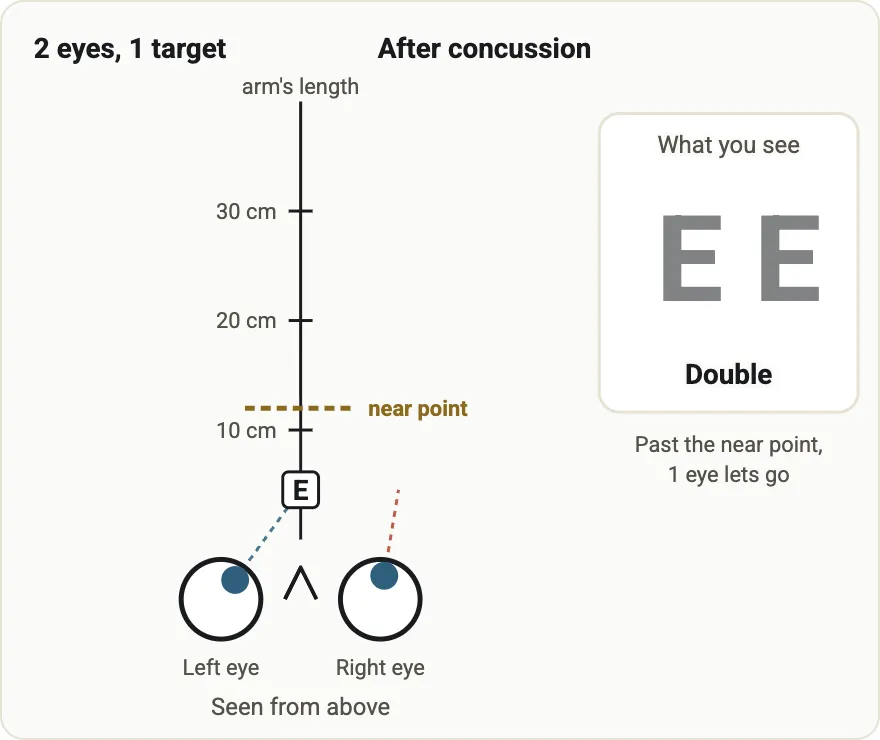
Blurry, foggy or double vision after a concussion comes from how the brain aims, focuses and moves the eyes. Why the exam is normal and how long it lasts.
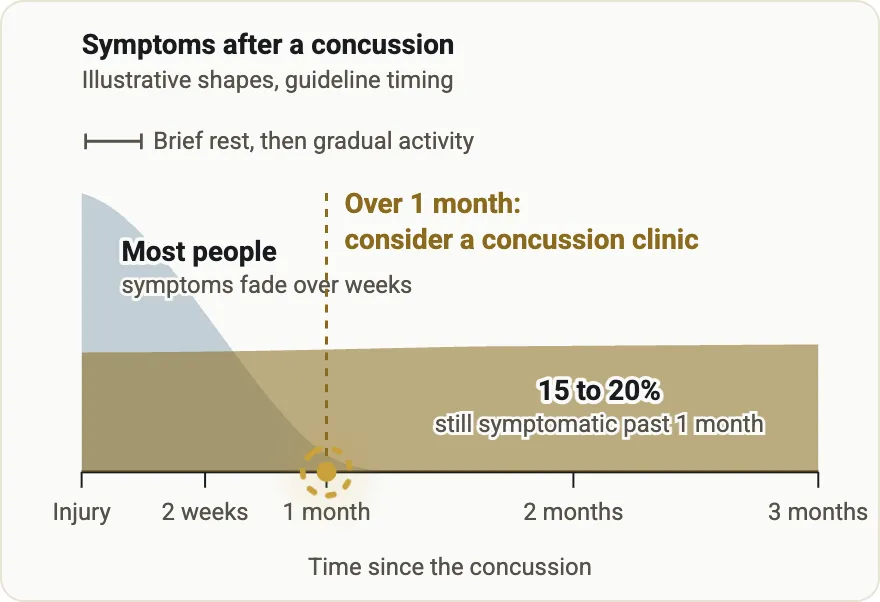
Neurologists, sports medicine, physiatry, vision and vestibular therapists and chiropractic neurologists all see PCS. What each one measures and treats.
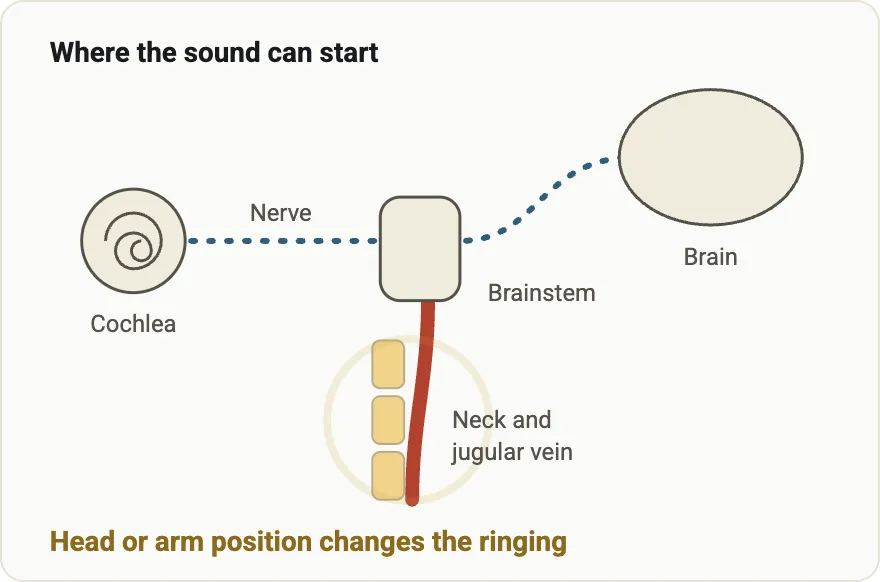
A concussion can cause ringing in the ears even with a normal hearing test. Where the sound starts, why it changes with head position, and what helps.
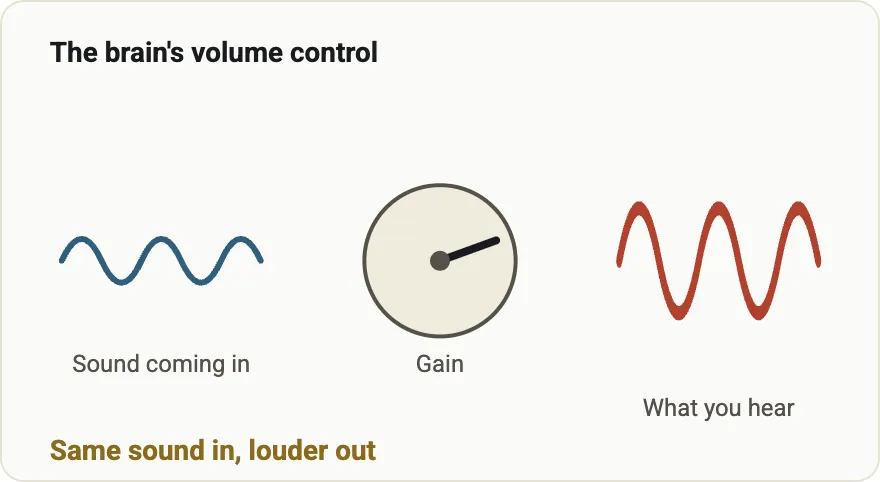
Noise sensitivity affects 45% of adults early after a concussion and 28% at 12 months. Why sound feels too loud and why earplugs can backfire.
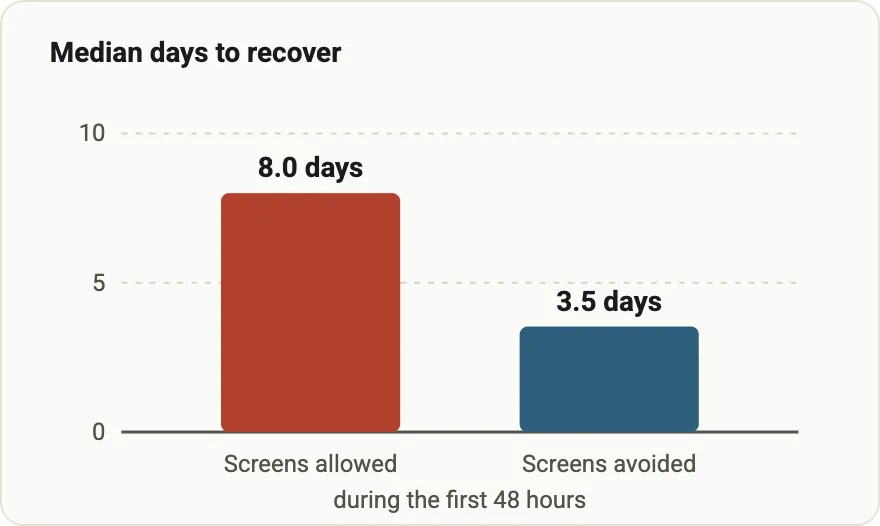
Avoiding screens for 48 hours shortened concussion recovery from 8 days to 3.5 in a trial. What to do after that, and why screens still bother you months later.
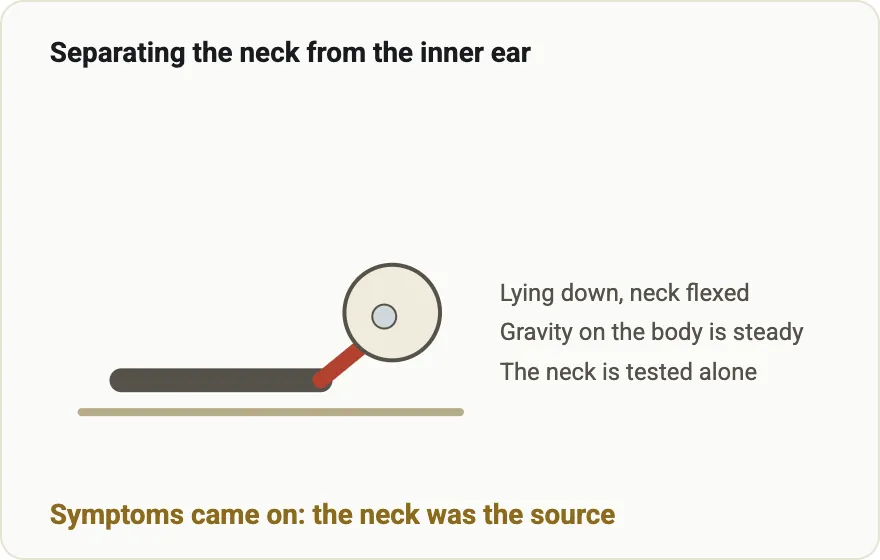
Cervicogenic dizziness comes from the neck and is common after whiplash. Why it's missed, how our team tells it from inner ear dizziness, and what helps.
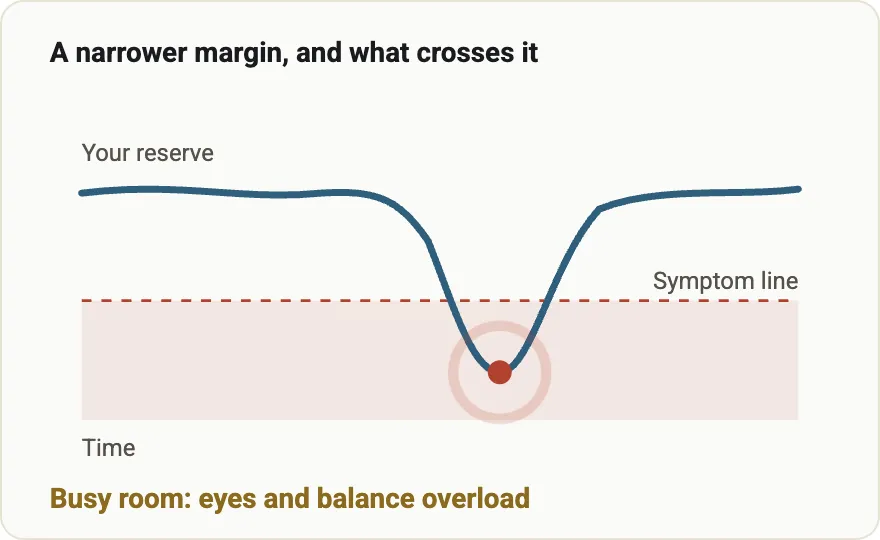
Concussion symptoms that seem random usually have a trigger: a head position, a big meal, heat or a busy room. How our team finds which one is yours.
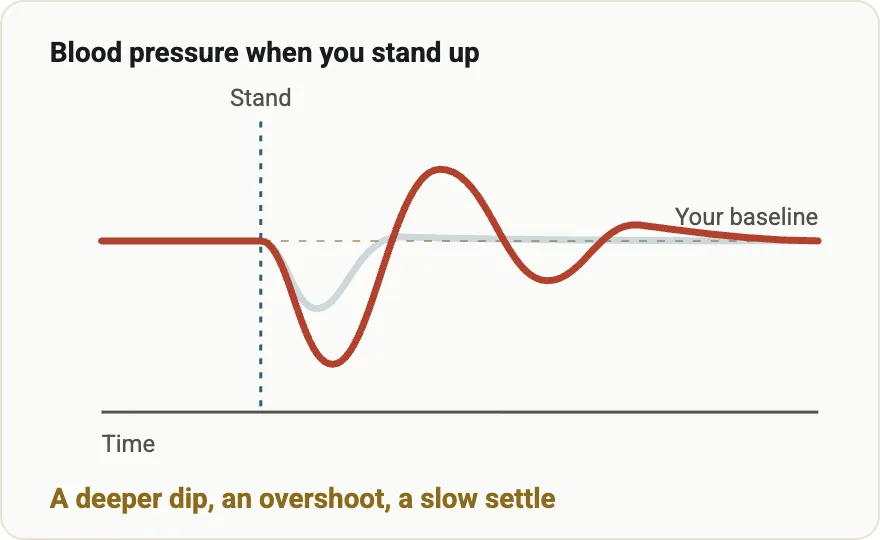
A concussion can disturb the baroreflex, the reflex that holds blood pressure steady. Why readings swing after a head injury and when to see a physician.
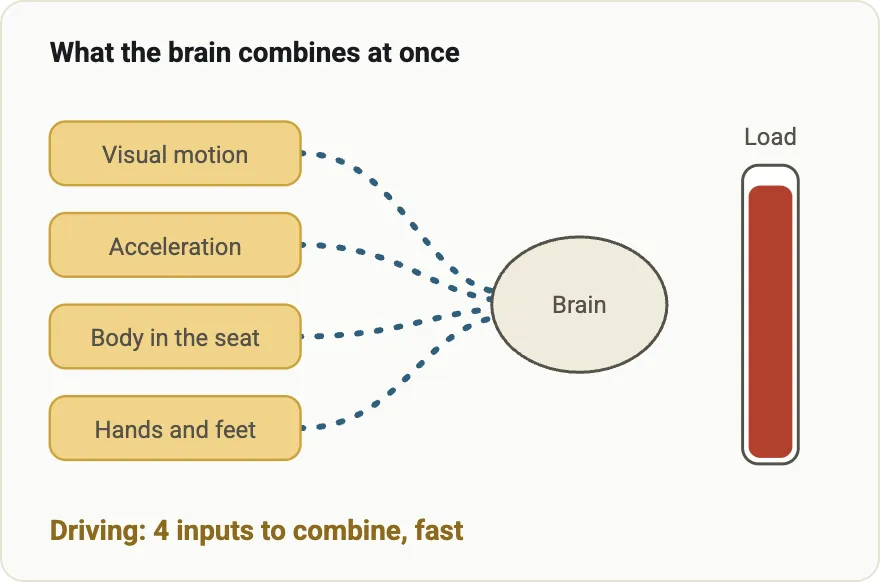
Driving after a concussion can bring on nausea, anxiety and exhaustion, and reaction time stays slower after symptoms clear. Why it happens and what helps.
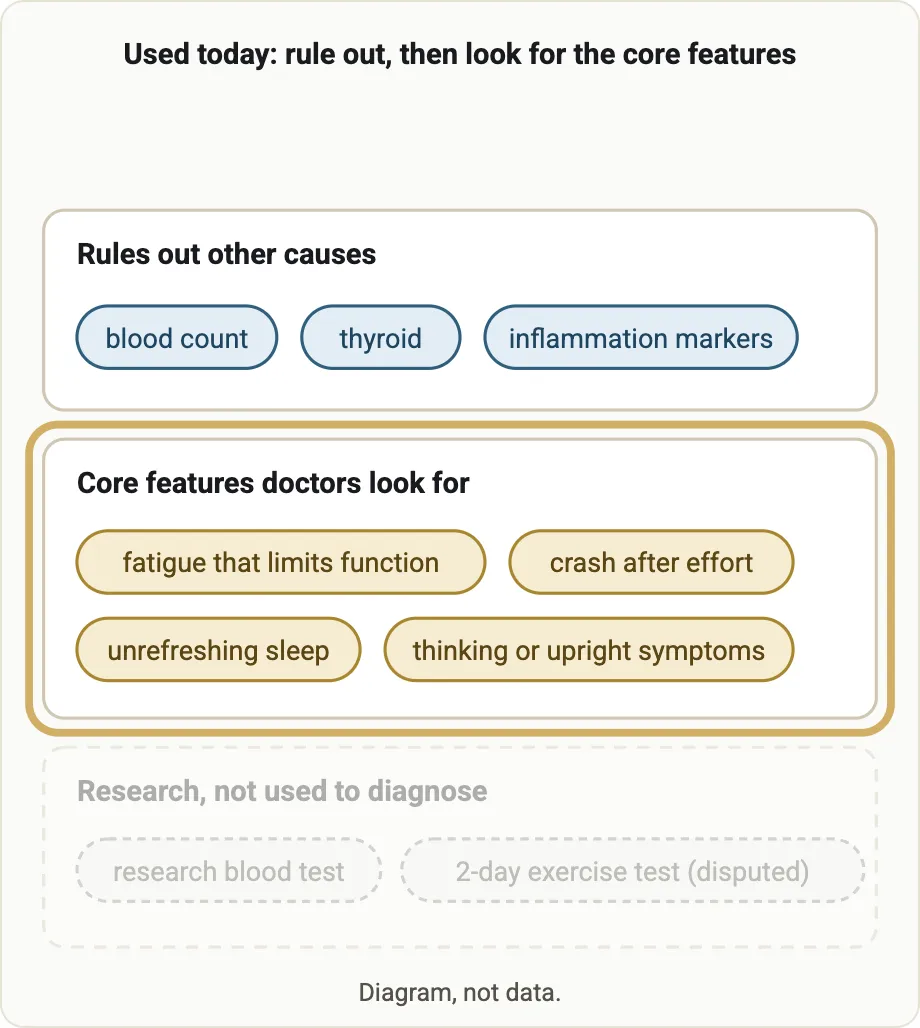
Why no single test diagnoses ME/CFS, what routine labs are for, the criteria doctors use, where upright testing fits, and what the blood-test research found.
No articles match your search. Try a different keyword or topic.
Find and fix the driver of your neurological symptoms.
We combine advanced diagnostic technologies with the latest in clinical neuroscience and a patient centered approach to identify and correct the imbalances driving your symptoms.

